Owner’s manual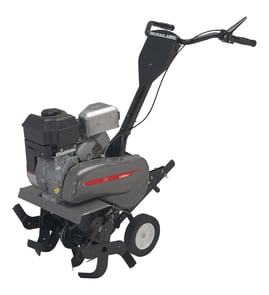




Where is the model number on a Craftsman tiller?
On the Craftsman front-tine tiller model 917292200, the model number is printed on the product identification label; it’s commonly found on the tine shield/guard area, and on some units it may be on or near the fuel tank or front of the frame. Confirm the exact label location using the owner's manual.
Common places to check on a Craftsman tiller
Look for a sticker or metal tag in these spots:
- On the tine shield (tine guard) above or behind the tines
- On the main frame near the engine mounting area
- On or near the fuel tank
- On the front of the tiller frame (some larger layouts)
- Near the handle support brackets
What the label looks like (and what to copy)
The label usually includes multiple identifiers. Write them down exactly as shown:
- Model number (for this unit: 917292200)
- Serial number (helps match production runs)
- Engine model/type (often listed separately on the engine itself)
Quick ID guide
| Item you need | Where it’s usually found | Why it matters |
|---|---|---|
| Tiller model number (917292200) | Tiller frame or tine shield label | Ensures correct Craftsman tiller parts lookup |
| Tiller serial number | Same label as model number | Helps confirm exact version |
| Engine model/type | Engine shroud label | Needed for engine-specific parts |
Why it matters
Using the correct model number prevents ordering the wrong parts, especially for wear items like tines and hardware that can vary by production run.
Last updated: February 2026
What would cause a tiller to not start?
On the Craftsman 917292200 front-tine tiller, a no-start is usually caused by a fuel issue (old gas, clogged carburetor, blocked fuel flow), an ignition issue (no spark), or an incorrect starting setup (choke/throttle position). Use the starting steps and specs in the owner's manual to narrow it down fast.
Quick checks (most common causes)
- Drain and refill with fresh unleaded regular fuel (stale fuel is the top no-start cause after storage).
- Confirm the spark plug type and gap: Champion J19LM, 0.030 inch gap.
- Make sure the choke is ON for a cold start; if the engine fires but will not keep running, move to half-choke, then to RUN as it warms.
- Clean or replace the air cleaner cartridge (do not oil it; do not blow it out with compressed air).
- Check the spark plug wire connection; remove and re-seat it firmly.
- If you have spark and fresh fuel, the carburetor mixture may need adjustment (especially below 32°F or above 3,000 feet).
Step-by-step no-start troubleshooting
- Safety first: disconnect the spark plug wire before inspecting or adjusting anything.
- Fuel: empty the tank and refill; verify fuel is reaching the carburetor.
- Air: inspect the air cleaner cartridge and the engine air screen; clean debris from cooling fins and blower housing area.
- Spark: remove the plug, inspect for fouling, set the gap, and test for spark.
- Starting controls: set choke for cold start; once it fires, reduce choke gradually to RUN.
Specs to verify (from the manual)
| Item | Spec |
|---|---|
| Engine | 3.75 HP, 148 cc |
| Fuel capacity | 2 quarts |
| Engine oil | SAE 30 (above 32°F) or SAE 5W-30 (below 32°F), 20 oz |
| Spark plug | Champion J19LM, 0.030 inch gap |
Why it matters
A tiller needs the right fuel, airflow, and spark at the correct time. One weak link (stale gas, restricted air filter, incorrect choke use, or a fouled plug) can stop the engine from starting even when other maintenance looks good.
Last updated: February 2026
What tiller is made in the USA?
Some tillers are made in the USA, but it varies by brand, model, and even specific production runs. For your Craftsman 917292200 front-tine tiller, the most reliable way to confirm country of origin is to check the identification label on the machine and the documentation in the 917292200 owner's manual.
How to confirm “Made in USA” on a tiller
Use these quick checks so you are relying on the exact unit, not a general brand claim:
- Look for a “Made in …” statement on the tiller’s ID plate (often near the engine, frame, or handle support)
- Check the engine model label separately (engine origin can differ from the tiller’s assembly origin)
- Review the product identification and specifications sections in the 917292200 owner's manual
- If you are shopping, compare the exact model number and serial range, not just the brand name
- Verify replacement parts match your model so you are comparing the correct configuration
What “Made in USA” can mean (and why it varies)
Manufacturers may describe origin in different ways. Here is how it commonly breaks down:
| Label wording you see | What it usually indicates | What to do next |
|---|---|---|
| Made in USA | Final assembly and major manufacturing in the US | Confirm on the ID plate for that exact model/serial |
| Assembled in USA | Final assembly in the US; parts may be global | Check the ID plate and packaging details |
| Made in USA with global materials | US manufacturing with some imported components | Confirm the exact wording on the label |
Model-specific notes for Craftsman 917292200
Your Craftsman 917292200 is a front-tine tiller with a 3.75 HP, 148cc engine listed in the manual specifications. When you are comparing “USA-made” options, keep in mind that the engine and the tiller chassis can have different origins, so the ID plate on the tiller is the deciding reference.
Why it matters
Country-of-origin claims are easiest to verify on the actual machine. That avoids buying the wrong model, ordering mismatched parts (like tine hardware), or assuming a brand is always made in one place.
Last updated: February 2026
Are Craftsman tillers any good?
Yes. Craftsman tillers like the Craftsman 917292200 are built to handle typical home garden work well when they are assembled correctly and maintained on schedule. Overall performance depends most on safe operation, routine tune-ups, and replacing normal-wear items (like tines and belts) before they fail.
What “good” looks like for a front-tine tiller
A front-tine tiller is a solid choice for garden beds and seasonal soil prep. With the 917292200, the owner's manual lists these key specs:
| Spec | What to expect on 917292200 |
|---|---|
| Engine output | 3.75 HP |
| Displacement | 148 cc (9.03 cu. in.) |
| Fuel capacity | 2 quarts, unleaded regular |
| Engine oil | SAE 30 above 32°F; SAE 5W-30 below 32°F |
What affects durability and user experience most
Many “good vs. not good” complaints come down to setup, fastener tightness, and wear parts.
- Tighten all assembled hardware securely after shipping and recheck it periodically
- Check engine mounting bolts and other fasteners at frequent intervals
- Avoid overloading the machine by trying to till too deep too fast
- Use controlled speeds, especially on uneven or slippery ground
- Replace worn tines promptly so the tiller cuts instead of bouncing or pulling
Common wear items (and why that is normal)
Wear items are expected to be replaced during normal use. The manual specifically calls out expendable items such as tines, spark plugs, air cleaners, and belts.
Here are examples of parts on this model that often get replaced during service work:
- Outer tine, left 583017601 (worn, bent, or rounded tine edges reduce tilling performance)
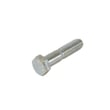
- Tiller shoulder bolt 532121117 (hardware can loosen or wear at pivot points)
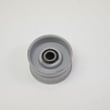
- Tiller idler pulley 532161806 (pulley wear can affect belt tracking and tine engagement)
Why it matters
A tiller that is powerful but not maintained can feel “hard to control” in rocky or hard soil. The manual notes that tines can catch and propel the tiller forward; proper technique and keeping wear parts in good shape makes the machine safer and more effective.
Last updated: February 2026