Owner’s manual
 Error Codes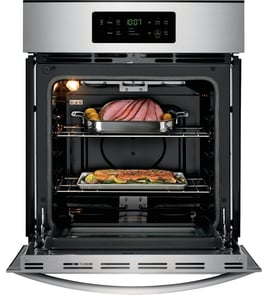



How much are electric wall ovens?
Electric wall ovens typically cost about $500 to $5,000+, depending on size (single vs. double), features (self-clean, convection), and brand. For your Kenmore wall oven model 79048839901, the 79048839901 owner's manual helps you confirm which features you have so you can compare like-for-like when shopping.
What drives the price most
- Configuration: single wall oven vs. double wall oven
- Cooking features: convection, air fry, steam assist, probe cooking
- Cleaning system: manual clean vs. self-clean
- Controls: basic knobs vs. touch controls, smart connectivity
- Finish and trim: stainless, black, white, custom panel-ready
Typical price ranges (quick guide)
| Type of electric wall oven | Common price range | Best for |
|---|---|---|
| Basic single wall oven | $500 to $1,500 | Simple baking and broiling |
| Mid-range single wall oven | $1,500 to $3,000 | More features, better controls |
| Double wall oven | $2,500 to $5,000+ | High-volume cooking, holidays |
Matching features to your current oven
Use your current oven as the baseline so you do not overpay for features you will not use. Your manual notes that features can vary by model and shows core items like oven venting, racks, and electronic controls. Check the feature list and control panel layout in the 79048839901 owner's manual.
Why it matters
Comparing ovens by price alone can be misleading; two 30-inch electric wall ovens can differ a lot in performance, cleaning method, and control style. Matching your existing feature set first helps you choose an upgrade that fits your cooking habits and cabinet cutout.
Last updated: January 2026
Are wall ovens hard wired or plug in?
Kenmore wall ovens like model 79048839901 are typically hard wired (direct wired) to a junction box, not plugged into a standard outlet. This matches common wall-oven installation practice and the manual’s guidance that the oven connects to a junction box (a cord and plug are not supplied).
What to expect for model 79048839901
Most installations use a dedicated circuit and a junction box behind or near the oven cutout. The oven’s supply leads connect to the house wiring with approved connectors, then the junction box cover is secured.
- Power is supplied through a junction box, not a receptacle.
- A dedicated breaker is normally used for the oven circuit.
- The oven is installed in a cabinet cutout; wiring is routed to the junction box.
- A cord and plug are typically not included with wall ovens.
- Installation should follow local electrical code and the instructions in the 79048839901 owner's manual.
Quick comparison: hard wired vs plug-in
| Connection type | Common for wall ovens? | What it looks like | Typical use case |
|---|---|---|---|
| Hard wired (junction box) | Yes | House wires spliced to oven leads inside a metal box | Built-in wall ovens, permanent installs |
| Plug-in (cord + outlet) | Rare | 3/4-prong cord plugged into receptacle | Some ranges or specialty setups |
Why it matters
A wall oven draws high current and is designed for a permanent built-in installation. Hard wiring to a junction box helps provide a secure connection, proper strain relief, and code-compliant protection for the wiring.
Safety and install notes we follow
- Turn OFF the breaker before touching any wiring.
- Use proper wire connectors and a junction box cover.
- Confirm the oven is secured in the cabinet and follow anti-tip guidance in the manual.
- If the house wiring is aluminum, damaged, or undersized, have a qualified electrician correct it.
Last updated: January 2026
Can a 30 inch wall oven fit in a 30 inch cabinet?
Yes. A “30-inch” wall oven like Kenmore model 79048839901 is designed to fit a standard 30-inch cabinet cutout, but the fit is based on the cabinet’s cutout dimensions, not the cabinet’s outside width. Always match the required cutout width, height, and depth in the 79048839901 owner's manual.
What “30-inch” really means
A 30-inch wall oven is a nominal size. The actual oven chassis and the required cabinet opening are slightly different so the oven can slide in, be secured, and vent properly.
- Measure the cabinet cutout width, height, and depth (not just the face frame)
- Confirm there is clearance for the power junction/terminal area
- Make sure the cabinet is square and level so the oven sits correctly
- Keep the oven vent area unobstructed (warm air exits at the trim/control area depending on model)
Quick fit checklist (before you buy or reinstall)
Use this checklist for a typical 30-inch electric wall oven installation:
- Cutout width is typically about 28 1/2 to 28 5/8 inches
- Cutout height varies by single vs. double oven; measure carefully
- Cutout depth is typically 24 inches or more (plus room for wiring)
- Cabinet and cutout floor are level; misalignment can make the oven look unlevel
- Vent path is clear; do not block the trim venting area
Typical dimensions vs. what you must verify
| Item | Typical for “30-inch” wall ovens | What to use for 79048839901 |
|---|---|---|
| Cutout width | ~28 1/2–28 5/8 in. | Manual’s cutout spec |
| Cutout height | Varies widely | Manual’s cutout spec |
| Cutout depth | ~24 in. minimum | Manual’s cutout spec |
Why it matters
If the cutout is too small, the oven can bind, sit crooked, or restrict venting. If it is too large, the trim may not cover gaps and the oven may not mount securely.
Last updated: January 2026