Owner’s manual
 View engine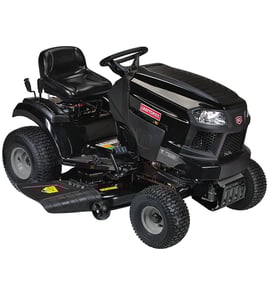


What engine does Craftsman riding mower use?
The Craftsman lawn tractor model 917271831 uses a 21.0 HP, electric-start, low-emission gasoline engine (as listed on the tractor’s manual cover). For the exact engine manufacturer and model family, we recommend matching the engine ID label on your engine to the specifications in the 917271831 owner's manual.
How to identify the exact engine on your 917271831
Use these quick checks to confirm the engine make and model so you get the right tune-up and repair parts:
- Look for the engine ID label on the blower housing, valve cover, or near the starter
- Record the model, type, and code (common on Briggs and Stratton engines)
- Compare those numbers to the engine section in the 917271831 owner's manual
- If the label is missing, use the tractor’s model number 917271831 plus the engine’s visible features (single-cylinder, electric start) to narrow it down
- Keep the engine ID handy when ordering maintenance items like spark plugs, air filters, and belts
What we can confirm from the manual (model-specific)
The manual for Craftsman 917271831 identifies these key powertrain details:
| Spec | What it means for you |
|---|---|
| 21.0 HP | Stronger torque for mowing and light towing |
| Electric start | Uses a battery and starter motor for push-button/key starting |
| Low-emission engine | May have different starting and warm-up behavior than older engines |
| 6-speed transaxle | Manual gear selection; stop fully before shifting |
Related parts that often come up with engine and drive questions
If you are troubleshooting power delivery (engine runs but tractor will not move), the ground drive belt is a common wear item on this platform.
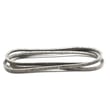
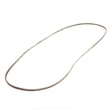
- V-belt 532138255 (ground drive belt) can slip, glaze, or stretch over time
- Check belt routing and tensioner movement during inspection
- Replace any belt that is cracked, shiny, or has missing chunks
Why it matters
The engine’s exact make and model determines the correct spark plug, air filter, oil type, and some carburetor and ignition parts. Confirming the engine ID first prevents wrong-part returns and speeds up repairs.
Last updated: January 2026
Who makes Craftsman push mower engines?
Craftsman push mower engines are commonly supplied by major small-engine manufacturers such as Briggs & Stratton, Kohler, and Kawasaki. For your Craftsman lawn tractor model 917271831, the exact engine maker is identified on the engine label and in the 917271831 owner's manual.
How to identify the engine manufacturer on your mower
Use these quick checks on the actual engine (not the tractor hood decal):
- Look for the engine brand badge on the recoil cover or valve cover (Briggs & Stratton, Kohler, Kawasaki).
- Find the engine model and type code on the blower housing label.
- Check the emissions label; it often lists the engine family and manufacturer.
- Match the engine model to the parts list section in the manual.
- If the label is missing, use the tractor model number (917271831) to cross-reference engine parts diagrams.
What “Craftsman engine” usually means
Craftsman is the equipment brand; the engine is typically built by an engine OEM and installed on the mower/tractor. That is why two Craftsman mowers from different years can have different engine brands.
Common engine suppliers (typical)
| Engine brand | Where you’ll see it most often | What to look for |
|---|---|---|
| Briggs & Stratton | Many Craftsman walk-behind and riding models | Model-type-code label |
| Kohler | Some mid to higher power models | Spec number on ID tag |
| Kawasaki | Some premium models | Engine model on emissions label |
Why it matters
Knowing the engine manufacturer helps you buy the correct tune-up parts (spark plug, air filter, oil filter) and follow the right maintenance specs for oil type, gap settings, and service intervals.
Last updated: January 2026
How much does it cost to replace a riding lawn mower engine?
For a Craftsman lawn tractor model 917271831, a typical engine replacement (parts plus labor) usually runs about $800 to $2,500 total, depending on the engine type, whether the job includes related repairs, and local labor rates. Most shops bill about 4 to 8 labor hours for a riding mower engine swap.
What drives the total cost?
Engine replacement pricing varies because the “engine” job often includes extra parts and setup work beyond bolting in a new motor.
- Engine itself: new OEM-style engines typically cost more than used or rebuilt options
- Labor time: removal, transfer of pulleys/cables, wiring, and test run
- Related wear items: belts, pulleys, battery cables, fuel line, or mounting hardware
- Deck and drive condition: a worn drive belt or frozen idler can add time
- Pickup/delivery: common add-on charge for riding mowers
Typical cost ranges (parts + labor)
| Scenario | What you’re paying for | Typical total |
|---|---|---|
| Budget repair | Used/rebuilt engine, minimal extras | $500 to $1,200 |
| Most common | New replacement engine, standard labor | $800 to $2,500 |
| High end | New engine plus multiple related repairs | $2,000 to $3,500 |
Before you replace the engine, check these common “not starting” causes
Many tractors get quoted for an engine when the real issue is electrical, fuel, or a safety interlock.
- Weak battery or poor cable connections
- Safety interlock problem (seat switch, brake/clutch switch, PTO switch)
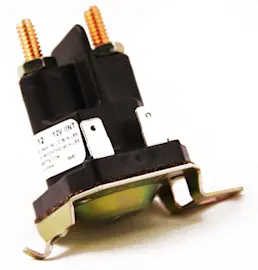
- Starter/solenoid issue (clicks but won’t crank)
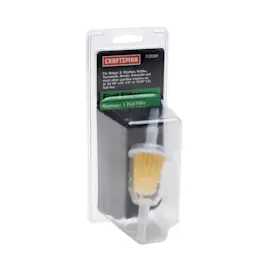
- Fuel delivery or stale fuel
- Ignition key or switch wear (a spare key can help rule this out)
If you need a replacement key for this model, we stock the molded ignition key 532140403.
Why it matters
An engine is one of the most expensive repairs on a riding mower. Confirming the starting system and interlocks first helps you avoid paying for an engine when a battery, switch, or wiring fix solves the problem.
For model-specific operating and safety interlock checks, use the 917271831 owner's manual.
Last updated: January 2026
Is it worth replacing a lawn mower engine?
Replacing the engine on your Craftsman lawn tractor model 917271831 is worth it when the deck, chassis, and drive system are in solid condition and the total swap cost stays well below the price of a comparable new rider. If multiple major systems are worn, replacement makes more sense.
Quick checks before you buy an engine
Use these decision points first:
- Deck and chassis: Deck is not rusted through, chassis is straight, and mounting points are solid.
- Drive and steering: Transaxle drives smoothly, steering is tight, brakes hold.
- Cut quality basics: A clean underside and sharp blades still produce an even cut.
- Safety interlocks: Seat, brake, and PTO interlocks work as designed; confirm the exact tests in the 917271831 owner's manual.
- Budget rule: If the engine swap plus needed belts, pulleys, and hardware approaches about half the cost of a comparable new tractor, buying new is the better value.
Cost and effort comparison
Engine replacement is a moderate-to-advanced DIY job because you typically transfer linkages, wiring, exhaust, and pulleys, then verify safe operation.
| Option | Best when | What you get |
|---|---|---|
| Replace engine | Tractor is otherwise strong | Biggest life extension |
| Repair existing engine | Issue is fuel/ignition/compression related and isolated | Lowest cost if successful |
| Replace tractor | Deck, drive, and steering all show wear | Fastest reliability |
“While you’re in there” items that protect the investment
If you keep the tractor, address common wear points so the new engine is not fighting the rest of the machine:
- Clean built-up grass and debris from the deck and chassis after use.
- Keep blades sharp; replace bent blades.
- If blades slip or won’t spin, inspect the deck drive and replace worn parts such as the v-belt 532138255.
Why it matters
An engine swap only pays off when the tractor can safely use that power. A solid deck, working interlocks, and a healthy drive system turn the repair into years of dependable mowing.
Last updated: January 2026