Installation guide
 Owner’s manual
 Error Codes




How to force a Kenmore Elite washer to drain?
To force-drain a Kenmore Elite washer model 41741102000, we recommend using the drain pump cleanout (filter) to manually release water, then correcting the cause of the no-drain (clog, kinked hose, or a failed drain pump). Follow the safety steps in the installation guide.
Safe way to get the water out (manual drain)
- Unplug the washer (power off at the outlet or breaker).
- Locate the lower front access area where the drain pump filter is typically reached.
- Put towels and a shallow pan under the opening.
- Slowly open the filter cap to let water drain out in a controlled way.
- Remove debris from the filter, then reinstall the cap snugly.
What to check next (common no-drain causes)
- Drain hose is kinked, pinched, or crushed behind the washer
- Standpipe or laundry tub is backed up
- Drain pump filter is blocked (coins, lint, small socks)
- Drain pump impeller is jammed or the pump is electrically failed
- Washer is not completing the cycle due to an out-of-balance or control issue
Parts that commonly fix a no-drain problem
If the filter and hose are clear but the washer still will not drain, these model-matched parts are common suspects:
| Symptom | Most likely part | Notes |
|---|---|---|
| Hums but won’t drain | Drain pump | Pump may be jammed or weak; replace if impeller is damaged |
| Drains slowly | Drain pump filter | Filter housing/cap issues can restrict flow |
| Overfills or won’t sense water level correctly | Water-level pressure switch | Can affect cycle logic and draining behavior |
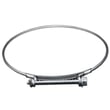
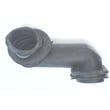
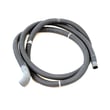
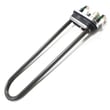
Recommended model parts:
Why it matters
A forced drain gets the door unlocked sooner and prevents water damage, but the real fix is removing the restriction or replacing the failed component so the washer can complete drain and spin normally.
Last updated: February 2026
What model is my Kenmore Elite washer?
Your Kenmore Elite washer’s model number is printed on the appliance’s rating label. On Kenmore front-load washers like model 41741102000, the label is most often in the door opening (door jamb) or just behind the door; it can also be on the back of the control panel or along the cabinet edge.
Where to look first (fastest checks)
- Open the washer door and check the door jamb around the opening
- Look just behind the door on the front frame
- Check the back of the control panel
- Inspect the side of the main cabinet near the bottom
- If the washer is installed tight in a closet, use a flashlight and take a photo to zoom in
What the model number looks like
For this Kenmore Elite series, the model number is typically a long number (for example, 41741102000). Write it down exactly as shown; one missing digit can pull up the wrong parts list.
| What to capture | Example | Why it matters |
|---|---|---|
| Model number | 41741102000 | Ensures parts fit your exact washer |
| Serial number | (varies) | Helps confirm production run for service and compatibility |
| Label location | Door jamb / control panel | Speeds up troubleshooting and ordering |
Why it matters for parts and troubleshooting
We use the model number to match the correct Kenmore parts diagrams and common repair items (like a water inlet valve, drain pump, or pressure switch). It also helps when you’re following setup steps and safety guidance in the documentation.
Helpful documentation to keep handy
- Use the 41741102000 installation guide for installation checks and console prompts.
Last updated: February 2026
What is the average lifespan of a Kenmore washer?
A Kenmore washer typically lasts 10 to 15 years with normal household use and basic maintenance. For your Kenmore Elite 41741102000 washer, good installation, proper draining, and avoiding overloads are the biggest factors that help you reach the high end of that range; see the installation guide for setup details.
Typical lifespan and what changes it
Most washers land in the 10 to 15 year window, but these factors move the needle:
- Load habits: frequent overloading increases wear on the drive system and tub support
- Water quality: hard water can speed up valve and dispenser buildup
- Drain health: slow draining strains the pump and can leave odors behind
- Vibration and leveling: an unlevel washer increases shock and bearing wear
- Routine cleaning: keeping the door boot and pump filter clean reduces leaks and clogs
Quick maintenance checklist (high impact)
We recommend these simple habits to extend life:
- Keep loads balanced; avoid packing the drum tight
- Use the right amount of HE detergent; excess suds can cause longer run times
- Clean the pump filter regularly; replace a damaged filter with the washer drain pump filter 134640200
- Inspect fill hoses and watch for slow filling (a common sign of valve restriction)
- Leave the door slightly open between loads to help the door boot dry
Common “end-of-life” symptoms vs. fixable issues
| Symptom | Often fixable? | Common area to check |
|---|---|---|
| Won’t drain or drains slowly | Yes | Pump, filter, drain hose |
| Won’t fill or fills very slowly | Yes | Inlet screens, water inlet valve |
| Loud banging or walking | Sometimes | Leveling, shocks, load balance |
| Repeated control or motor faults | Sometimes | Control board, wiring, motor |
Why it matters
Knowing the typical lifespan helps you decide whether to repair or replace. If your 41741102000 is under 10 years old, many issues (drain, fill, vibration) are usually worth repairing; after 10 to 15 years, repeated major failures often signal it is time to plan for replacement.
Last updated: February 2026
Is the Kenmore Elite a HE washer?
Yes. The Kenmore Elite washer model 41741102000 is a high-efficiency (HE) front-load style washer; it’s designed to use less water than a traditional top-load washer while still delivering strong cleaning and high-spin water extraction. For cycle and detergent guidance, follow the 41741102000 owner’s manual.
How to tell it’s an HE washer
Most HE front-load washers (including Kenmore Elite models like 41741102000) share these traits:
- Uses a low-water wash action (clothes tumble through a small pool of water)
- Runs longer cycles to clean effectively with less water
- Spins faster to remove more water, reducing dryer time
- Works best with HE detergent (low-sudsing)
- Often has a door boot (bellows) and a front door latch system
What to use (and what to avoid)
Using the right detergent and load habits prevents oversudsing, odors, and drain issues.
- Use HE detergent only; measure carefully (too much causes excess suds)
- Avoid “extra suds” boosters unless the product is HE-safe
- Don’t overload; leave room for tumbling
- Use the correct cycle for the fabric type
- If you see frequent imbalance or vibration, recheck leveling per the installation guide
Quick comparison: HE front-load vs. traditional top-load
| Feature | HE front-load (41741102000) | Traditional top-load |
|---|---|---|
| Water use | Lower | Higher |
| Wash action | Tumbling | Agitator or impeller |
| Detergent | HE required | Standard or HE |
| Spin extraction | Higher | Lower |
Why it matters
HE washers save water and energy, but they depend on proper detergent dosing, correct loading, and a level installation to prevent vibration, draining problems, and excess suds.
Last updated: February 2026
Does my Kenmore Elite washing machine have a filter?
Yes. The Kenmore Elite washer model 41741102000 uses a drain-pump filter (often called a coin trap) that catches lint and small items before they reach the drain pump. Cleaning it regularly helps prevent slow draining, standing water, and drain-related error codes.
Where the filter is and what it does
On most Kenmore front-load designs like 41741102000, the filter is accessed from a small service panel at the lower front of the washer. It protects the drain system by trapping debris.
Common items we find in the filter:
- Coins, hair pins, screws, and small toys
- Lint and pet hair buildup
- Sock fibers and fabric strings
- Buttons and bra wires
How to clean the drain-pump filter (safe, quick steps)
- Unplug the washer.
- Place a shallow pan and towels under the lower front access area.
- Open the service panel; slowly loosen the filter cap to let water drain out.
- Remove the filter and clean debris from the screen and housing.
- Reinstall the filter snugly (hand-tight), close the panel, then run a rinse and drain.
For model-specific panel access and any cautions, follow the 41741102000 installation guide.
Parts that relate to filtering and draining
If the washer still will not drain after cleaning the filter, these parts are commonly involved:
| Symptom | Most likely area | Example part for 41741102000 |
|---|---|---|
| Hums but will not drain | Drain pump jammed or failing | Washer drain pump 137240800 |
| Drains slowly, debris keeps returning | Filter damaged or not sealing | Washer drain pump filter 134640200 |
| Fills but acts like it will not drain correctly | Water level sensing issue | Washer water-level pressure switch 134762010 |
Why it matters
A clogged filter can make the washer stop mid-cycle, leave water in the tub, and strain the drain pump. Keeping the filter clean is one of the simplest ways to prevent no-drain and slow-drain problems.
Last updated: February 2026
How to hard reset a Kenmore Elite washer?
To hard reset a Kenmore Elite washer model 41741102000, we power the washer off, fully remove power for at least 1 minute, then restore power and restart a cycle. This clears many temporary control glitches without replacing parts.
Hard reset steps (safe, no tools)
- Press POWER to turn the washer off.
- Unplug the washer (or switch the breaker off).
- Wait at least 60 seconds (the control can take about a minute to fully reboot after power is restored).
- Plug the washer back in (or turn the breaker on).
- Press POWER, select a cycle, then press START.
If the washer still acts “stuck”
A reset helps when the control is confused, but it will not fix a real fill or drain problem. Use these quick checks:
- Make sure both water supply valves are fully open.
- Confirm the door is fully closed and latched.
- If it will not fill, check the inlet screens and consider the washer water inlet valve 134637810.
- If it will not drain, clean the pump filter area and consider the washer drain pump filter 134640200.
- If it is vibrating or walking, re-level the washer using the leveling legs (level front-to-rear and side-to-side).
What to do next (best match by symptom)
| Symptom after reset | Most common cause | What we do first |
|---|---|---|
| Won’t start | Door not latched, control not rebooted | Power cycle again; verify door closure |
| Won’t fill | Water supply issue, inlet valve issue | Check valves/hoses; inspect inlet screens |
| Won’t drain | Clogged filter, pump issue | Clean filter; check drain hose for kinks |
| Loud vibration | Not level, load off-balance | Re-level; redistribute load |
Why it matters
A hard reset is the fastest way to clear a temporary electronic lockup. If the washer immediately shows the same symptom after a reset, that points to a real condition (no water, no drain, imbalance) that needs a targeted fix.
For model-specific operating and diagnostic guidance, use the 41741102000 installation guide.
Last updated: February 2026
What does F20 mean on a Kenmore Elite washer?
On the Kenmore Elite washer model 41741102000, the F20 code points to a water fill problem: the washer is not getting enough water fast enough (or is not sensing the water level rising). In most cases, restoring proper water supply and flow clears the code.
What to check first (fast fixes)
- Make sure both hot and cold faucets are fully open.
- Confirm the supply faucets are within the typical hookup distance; the installation instructions call for faucets within 42 inches of the washer’s water inlet.
- Check for kinked, crushed, or frozen inlet hoses.
- Clean the inlet hose screen filters at the washer connection (sediment can restrict flow).
- Verify home water pressure is strong at the laundry faucets (low pressure can trigger fill errors).
- Power reset: unplug the washer (or switch off the breaker) for 2 minutes, then retry a cycle.
Parts that commonly cause an F20 fill error
If the supply and hoses are good, the issue is usually a failed valve or a water-level sensing problem.
| Symptom you notice | Most likely area | Common part to inspect/replace |
|---|---|---|
| No water enters at all | Water inlet valve not opening | Washer water inlet valve 134637810 |
| Water trickles in slowly | Clogged screens or weak valve | Washer water inlet valve 134637810 |
| Water enters but code returns | Water level not sensed correctly | Washer water-level pressure switch 134762010 |
Why it matters
A fill error can stop the cycle mid-wash, leave detergent undissolved, and cause repeated restarts that stress components. Fixing the water supply issue quickly helps protect the control system and prevents incomplete cleaning.
Where to confirm model-specific setup requirements
For the correct hookup details (faucet location, grounding, and installation checklist), follow the installation guide.
Last updated: February 2026