Installation guide
 Owner’s manual
 Error Codes

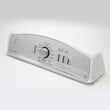
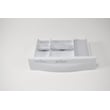
How many cubic feet is a Kenmore Model 11026002012 washer?
Most Kenmore model 11026002012 washers in this design class are about 3.2 cu. ft. of capacity. For the exact rated tub capacity for your specific unit, we recommend confirming it in the 11026002012 owner's manual.
Capacity is sometimes listed as “capacity,” “tub volume,” or “basket volume.” Check these common places:
- The specifications section in the 11026002012 owner's manual
- The model and serial tag (sometimes lists a series that matches a spec table)
- Product literature pages included with the washer at purchase
- Comparable Kenmore 110-series listings that match your control panel and tub style
A 3.2 cu. ft. top-load washer is typically sized for everyday family laundry.
| Load type | Typical fit in ~3.2 cu. ft. washer | Notes |
|---|---|---|
| Small | A few shirts, underwear, light items | Best agitation and rinse performance |
| Medium | Mixed clothing for 1 to 2 people | Avoid packing items down |
| Large | Towels or jeans (not overfilled) | Leave space at the top for turnover |
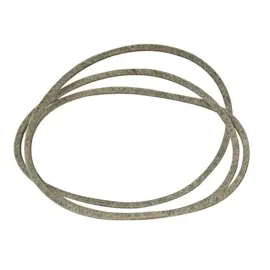
Using the right load size helps the washer clean better, spin out more water, and reduces wear on drive components like the washer drive belt WPW10006384 and suspension.
- Load items loosely; do not press them down
- Keep bulky items balanced (towels, hoodies, jeans)
- If the tub struggles to turn or the load bangs, reduce the load size
- Use the correct cycle and water level settings for the fabric type
Last updated: February 2026
How to hard reset kenmore washer?
To hard reset a Kenmore washer model 11026002012, unplug it for 1 minute, then plug it back in and start a new cycle. This clears many temporary control glitches and restores normal operation without changing your cycle settings.
- Press START/PAUSE/UNLOCK LID to stop the cycle.
- Unplug the washer from the wall outlet.
- Wait 60 seconds.
- Plug the washer back into a grounded 3-prong outlet.
- Select a cycle (try Rinse/Spin if you are troubleshooting).
- Press START/PAUSE/UNLOCK LID to run the cycle.
For model-specific button names and indicator lights (like Lid Locked and Cycle Complete), follow the 11026002012 owner's manual.
These checks fix the most common “dead” or “won’t run” symptoms:
- Confirm the lid is fully closed; the washer will not run with the lid open.
- If Lid Locked is on, press START/PAUSE/UNLOCK LID and wait for movement to stop; unlocking can take several minutes after high-speed spin.
- Check the outlet and reset the circuit breaker (or replace a blown fuse).
- Avoid using an extension cord; plug directly into the outlet.
- If you have heavy suds, cancel the cycle and run Rinse/Spin (too much detergent can stall operation).
| What you see | What it usually means | What to do |
|---|---|---|
| Lid Locked light on | Basket is stopping or control is holding lock | Press START/PAUSE/UNLOCK LID and wait |
| Humming before fill | Load sensing/unbalance check | Wait 2 to 3 minutes; this is normal |
| Stops mid-cycle | Suds control or pause phase | Run Rinse/Spin; use HE detergent |
A hard reset is the fastest way to clear a temporary electronic control issue before replacing parts like a lid lock or control board. It also helps you confirm whether the problem is power, lid locking, suds, or normal load-sensing behavior.
Last updated: February 2026
How to identify a Kenmore washer model?
Your Kenmore washer model number is printed on the appliance’s model and serial tag; on Kenmore model 11026002012, it’s the key identifier we use to match the correct washer parts and installation information. Check under the lid, around the lid opening, or on the rear panel near the power cord.
Most Kenmore washers place the model tag in one of these spots:
- Under the lid on the top panel or along the lid opening (common on top-load washers)
- On the back of the cabinet near the power cord entry
- Behind the control panel area (less common)
- Inside the cabinet edge near the tub opening (some designs)
If the tag is hard to read, use a flashlight and take a photo; zooming in usually makes the full model number clear.
Kenmore model numbers are often long and may include a prefix such as 110 followed by additional digits. For parts lookup, we match the full model number exactly as shown on the tag.
| What to capture | Example for this washer | Why we need it |
|---|---|---|
| Model number | 11026002012 | Ensures parts fit your exact design |
| Serial number | (varies) | Helps confirm production range for some parts |
| Brand | Kenmore | Narrows parts families and diagrams |
Once you confirm the model number, use it to cross-check parts that commonly wear on this style of Kenmore top-load washer:
- Lid won’t lock or cycle won’t start: washer lid lock assembly W10404050
- Won’t drain or leaves water in tub: washer drain pump assembly WPW10276397
- Won’t spin or makes belt noise: washer drive belt WPW10006384
- Shifts poorly between agitate and spin: washer actuator WPW10006355
Kenmore washers can look similar across multiple series, but internal components (like the electronic control board, lid lock, and drive system) can differ by model. Using the exact model number prevents wrong-part returns and speeds up troubleshooting.
For diagrams, safety notes, and model-specific identification details, use the 11026002012 owner's manual and the 11026002012 installation guide.
Last updated: February 2026
What is the average lifespan of a Kenmore washer?
A Kenmore washer typically lasts 10 to 15 years with normal household use. For Kenmore model 11026002012, consistent maintenance (especially using HE detergent correctly and keeping hoses in good condition) is what most often determines whether you land closer to 10 years or 15.
- Load size and frequency: frequent oversized loads shorten drive and suspension life.
- Detergent habits: using too much detergent can cause residue buildup and odor.
- Water quality: hard water can increase mineral buildup and wear.
- Installation and leveling: an unlevel washer increases vibration and component stress.
- Hose condition: aging hoses raise leak risk and can lead to downtime.
We follow the care guidance in the 11026002012 owner's manual and recommend these habits:
- Use High Efficiency (HE) detergent and do not exceed the recommended amount.
- Run occasional warm or hot washes to help reduce residue.
- Keep the lid area and tub clean to prevent odor.
- Inspect for unusual vibration, squealing, or slow draining early.
- Replace inlet hoses on schedule (see table below).
| Item | Typical interval | Why it matters |
|---|---|---|
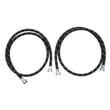
| Water inlet hoses | Every 5 years | Reduces risk of hose failure and leaks |
| Drive belt | As needed (wear symptoms) | Prevents slipping, poor spin, or no agitation |
| Lid lock | As needed (lock or start issues) | Helps the washer run and spin safely |
Repair is often worth it when the issue is isolated and the tub and cabinet are in good shape.
Common repair-type symptoms and related parts for this model:
- Won’t spin or has weak agitation: check the washer drive belt WPW10006384
- Won’t start or won’t lock: check the washer lid lock assembly W10404050
- Won’t drain or drains slowly: check the washer drain pump assembly WPW10276397
Knowing the typical 10 to 15 year lifespan helps you decide whether to invest in a repair (belt, lid lock, drain pump) or plan for replacement, especially if multiple major components are wearing out at the same time.
Last updated: February 2026