Owner’s manual


How do I tell what model my Kenmore dryer is?
Your Kenmore dryer’s model number is printed on the model and serial number plate; on model 11062612100, that plate is on the cabinet and is easiest to read with the door open. Use the full model number (and serial number) any time you look up parts, specs, or service info in the 11062612100 owner's manual.
Check these common locations first (in this order):
- Inside the dryer door opening on the cabinet frame
- On the back panel of the dryer cabinet
- On the cabinet near the lint screen housing (depending on console style)
- On the side panel edge near the door opening
Kenmore model numbers are typically a long string of digits. For parts lookup, enter the model exactly as shown on the plate (no extra spaces).
| What to record | Example for this dryer | Why you need it |
|---|---|---|
| Model number | 11062612100 | Matches the correct parts diagrams and compatible parts |
| Serial number | (from the plate) | Helps identify production run details for service |
| Purchase date | (your date) | Useful for maintenance history and reference |
- Copy the model number directly from the plate, character for character
- Record the serial number too; keep it with your paperwork
- If the plate is hard to read, take a clear photo and zoom in
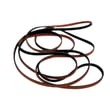
- Use the model number when selecting common wear items like the dryer drum belt 341241 or thermostats
Kenmore dryers share similar styling across many series, but internal components (like the heating circuit, motor, and drum support parts) can vary by model. Using 11062612100 ensures you get the right Kenmore electric dryer parts and the correct troubleshooting steps.
Last updated: February 2026
What is the average lifespan of 11062612100?
A Kenmore electric dryer like model 11062612100 typically lasts 13 years with normal household use and proper venting. Keeping airflow strong (lint screen, lint chute, and vent duct) is the biggest factor in reaching that lifespan.
- Vent restriction (long runs, crushed flex duct, clogged hood) that overheats the heater and thermostats
- Lint buildup inside the cabinet that stresses the blower and heating system
- Overloading that wears the drum belt, rollers, and motor faster
- High heat cycles only that increase thermal stress on the heating circuit
- Delayed repairs when you hear squealing, thumping, or smell overheating
| Component | Common symptom | Typical timing |
|---|---|---|
| Wear parts (belt, rollers, idler) | Squeal, thump, drum not turning | Mid-life |
| Heating circuit (element, fuses, thermostats) | No heat, overheating, shuts off | Mid to late-life |
| Motor | Hums, won’t start, stops mid-cycle | Later-life |
- Clean the lint screen every load; wash it monthly to remove fabric softener film.
- Inspect and clean the vent path at least yearly; shorten and straighten the duct when possible.
- If drying times increase, stop using the dryer until airflow is corrected.
- Follow the cleaning and care steps in the 11062612100 owner's manual.
Restricted airflow is the top cause of overheating, blown thermal fuses, and premature heater failure in electric dryers; fixing airflow early prevents repeat breakdowns and reduces drying time.
Last updated: March 2026
What replacement parts are most commonly needed for the 11062612100?
For Kenmore electric dryer model 11062612100, the most commonly replaced parts are the drum belt and drive wear parts, plus heating and safety parts that fail when airflow is restricted. We use the parts diagram and troubleshooting steps in the 11062612100 owner's manual to match symptoms to the right part.
- Drum won’t turn or you hear slapping: dryer drum belt 341241
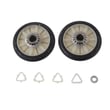
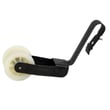
- Squealing or grinding: idler pulley, drum rollers, or shafts (drive wear items)
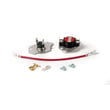
- No heat or heat cuts out: dryer thermal cut-off fuse kit 279816
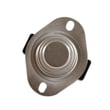
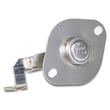
- Overheats or shuts off on high heat: dryer high-limit thermostat WP3977767 or dryer operating thermostat WP3387134
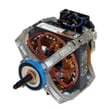
- Long dry times with weak airflow noise: dryer blower wheel WP694089
- Runs but won’t start with button press: dryer push-to-start switch WP3977456
| What you notice | What to check first | Why |
|---|---|---|
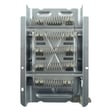
| Runs but no heat | Thermal cut-off kit, heating element | Heat circuit opens for safety or element burns out |
| Stops mid-cycle | High-limit thermostat, airflow | Overheat protection trips |
| Loud squeal | Idler pulley, belt path | Friction wear in the drive system |
| Thumping | Drum support parts | Flat spots or worn support surfaces |
- Confirm the dryer is getting full power (electric dryers need proper 240V supply).
- Clean the lint screen and verify strong airflow at the outside vent.
- Unplug the dryer before opening panels; use a meter for electrical tests.
- Use how to tell if a fuse is blown to verify a thermal fuse issue before replacing parts.
Replacing the correct part the first time prevents repeat failures; for example, a blown thermal cut-off often points to a venting problem that will also damage the heating element and thermostats.
Last updated: March 2026