 Owner’s manual


Are Whirlpool washer parts interchangeable?
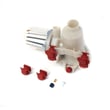
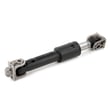
Whirlpool washer parts are sometimes interchangeable, but only when the replacement is factory-specified for your exact washer model. For Whirlpool model WFW9500TW01, we recommend using FSP factory specified parts so the part fits right and works right; check the part listing in the WFW9500TW01 owner's manual.
What “interchangeable” really means
Parts can look identical across Whirlpool-built washers, but small differences (mounting points, electrical connectors, software compatibility, seals) can cause leaks, error codes, or repeat failures.
Common examples where exact matching matters:
- Electronic parts (main control, motor control board)
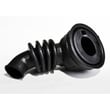
- Door system parts (door lock, hinge, door boot)
- Water handling parts (pump, inlet valve, hoses, clamps)
- Tub and suspension components (outer tub, springs, counterweights)
How we match the right part for WFW9500TW01
Use this quick checklist before ordering:
- Confirm the full model number: WFW9500TW01 (not just “Duet” or “WFW9500”)
- Match by part ID on the part page, not only by appearance
- Compare any wiring plugs, hose ports, and mounting holes to your original part
- If your washer shows an error, use the code to narrow the correct circuit/part
Examples of model-matched parts (from this model’s parts list)
| System | Example part | What it affects |
|---|---|---|
| Draining | Pump 280187 | Won’t drain, slow drain, standing water |
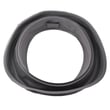
| Door seal | Washer door boot WP8182119 | Leaks at the door, odors, mold at gasket |
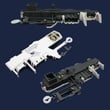
| Door safety | Washer door lock WP8183270 | Door won’t lock/unlock, won’t start |
Why it matters
Using the correct Whirlpool-specified part protects wash performance and prevents secondary damage (like leaks into the motor area or repeated drain failures). It also reduces the chance of chasing the same symptom after a repair.
For troubleshooting by symptom or display message, use Whirlpool duet alpha front load washer error codes.
Last updated: February 2026
Is 4.8 cubic feet a large capacity washer?
Yes. A 4.8 cu. ft. washer is considered large capacity; it is above the common “large capacity” threshold (about 4.5 cu. ft.), so it’s designed to handle fewer, bigger loads like bulky bedding and more towels in one cycle. For cycle and loading guidance specific to Whirlpool WFW9500TW01, use the WFW9500TW01 owner’s manual.
What “large capacity” means in real laundry terms
Large capacity is about how much you can wash effectively without overloading.
- Wash more items per load (fewer total loads per week)
- Better fit for bulky items (comforters, bedspreads, jackets)
- More room for items to tumble, which improves cleaning and rinsing
- Helps reduce wear from cramming items tightly into the drum
Practical load examples (typical)
These are typical examples for a 4.8 cu. ft. front-load washer when you load loosely (not packed tight):
| Load type | Typical fit | Best practice |
|---|---|---|
| Bath towels | Large towel loads | Mix sizes to keep the load balanced |
| Bedding | King or queen bedding pieces | Use a bulky/large items cycle if available |
| Everyday mixed laundry | Bigger family loads | Leave space at the top for tumbling |
Why it matters (performance and reliability)
With a high-efficiency front-load design, capacity affects cleaning, spin performance, and vibration. The WFW9500TW01 is built to wash larger, bulkier items because it uses a high-efficiency wash system and automatic water level sensing; overloading still reduces tumbling and can lead to poor rinsing or imbalance during spin.
Tips to get the best results from a large-capacity front-load washer
- Load items loosely; don’t pack the drum tight
- Balance heavy items (for example, pair towels with smaller items)
- Use HE detergent and avoid oversudsing (extra suds can extend drain routines)
- Run a washer-cleaning cycle periodically to help prevent odor-causing residue
- If the washer shakes, re-level the feet and redistribute the load
Last updated: February 2026
What does F03 and E01 mean on a Whirlpool washer?
On the Whirlpool WFW9500TW01, the F03 E01 code combination points to a drain system problem (the washer is not draining correctly, or it is draining too slowly). Start by canceling the cycle, removing power, then checking for a kinked or clogged drain path as outlined in the WFW9500TW01 owner's manual.
What to check first (fast, no parts)
- Press PAUSE/CANCEL twice to stop the cycle; select DRAIN/SPIN if there is standing water.
- Unplug the washer (or shut off the breaker) before inspecting hoses or internal components.
- Check the drain hose for kinks, crushing, or freezing.
- Check for a clog in the drain hose or household standpipe.
- Confirm the drain hose height is not more than 96 in. (2.4 m) above the floor.
Common causes and the most likely fixes
| What’s happening | Most common cause | Typical fix |
|---|---|---|
| Washer won’t drain or drains very slowly | Blockage in hose/standpipe | Clear obstruction; correct hose routing |
| Drains sometimes, then errors | Intermittent restriction or weak pump | Inspect for debris; replace pump if needed |
| Loud humming during drain | Pump jammed or failing | Check pump for debris; replace pump |
If the hose and standpipe are clear and the code returns, the drain pump is a primary suspect on this model. The replacement part listed for this washer is the pump 280187.
Why it matters
A drain fault can leave water in the tub, prevent high-speed spin, and trigger repeated stops mid-cycle. Fixing the drain path quickly helps protect the motor control system and prevents odor from standing water.
Helpful related reference
For additional Whirlpool front-load code definitions and what to check next, use Whirlpool duet high efficiency front load washer error codes.
Last updated: February 2026
What problems are common with the WFW9500TW01?
Common issues we see with the Whirlpool WFW9500TW01 front-load washer are water inlet and drain errors (F20, F21), excessive suds (SUD), and no-start symptoms tied to power, door closure, or the door latch. Many problems are resolved with basic checks in the WFW9500TW01 owner's manual.
Most common symptoms and what they usually point to
- F20 (water inlet problem): faucets off, kinked/frozen inlet hoses, clogged inlet screens, low water supply
- F21 (drain problem): kinked/frozen/clogged drain hose, standpipe too high (over 96 inches)
- SUD (excess suds routine): too much detergent, non-HE detergent, overdosing for load size
- Won’t start: not plugged into a grounded outlet, no power at receptacle, door not fully closed/latched, START not held long enough
- Door won’t latch/looks closed but isn’t: overloaded basket or items caught at the door opening
Quick checks we recommend before replacing parts
- Cancel the cycle (PAUSE/CANCEL twice), then unplug the washer for 1 minute.
- Confirm both hot and cold faucets are fully open.
- Inspect inlet hose screens for debris; straighten any kinks.
- Verify the drain hose is not kinked or clogged and the drain height is within spec.
- Reduce detergent and use HE detergent only; run a rinse cycle if suds persist.
Parts that commonly solve these problems (when checks don’t)
| Symptom | Common fix | Example part for this model |
|---|---|---|
| F21 drain error, won’t drain | Replace a failed drain pump | Pump 280187 |
| Door won’t lock, won’t start | Replace door lock assembly | Washer door lock WP8183270 |
| Leaks at door, odors, water at front | Replace torn door boot | Washer door boot WP8182119 |
Why it matters
Inlet, drain, and suds issues can stop the cycle to protect the washer. Catching a kinked hose, clogged screen, or overdosing detergent early prevents repeat error codes, poor rinsing, and unnecessary part replacement.
Last updated: February 2026
Where is the drain pump filter on a whirlpool duet washer?
On the Whirlpool WFW9500TW01 (Duet-style front-load) washer, the drain pump filter is accessed from the lower front of the cabinet, behind the bottom access panel (toe panel). You open that panel, then use the pump’s clean-out area to drain water and remove debris; see the WFW9500TW01 owner's manual.
How to access and clean the drain pump filter
- Unplug the washer (or switch off the breaker) before opening the access area.
- Remove the lower front access panel (toe panel) to reach the drain pump clean-out.
- Place a shallow pan and towels under the pump area.
- Use the small drain hose (if equipped) to slowly drain water into a container.
- Open the pump clean-out cap gradually; clear lint, coins, buttons, and small socks.
- Reinstall the cap firmly, reinstall the panel, then run a quick rinse and drain to confirm no leaks.
What to do if it will not drain
A drain problem is commonly tied to a clogged filter, a restricted hose, or a failing pump.
- Check the drain hose for kinks, crushing, or freezing.
- Make sure the standpipe is not blocked and the hose is not shoved too far down.
- If the filter area is clear but draining is still slow or noisy, inspect the pump 280187 for damage or a jammed impeller.
- If you see water leaking at the front after cleaning, re-seat the cap and check the pump O-ring area.
Quick symptom guide
| Symptom | Most likely cause | What we recommend |
|---|---|---|
| Hums but will not drain | Pump jam or clogged filter | Clean filter; inspect pump impeller |
| Drains slowly | Partial blockage in filter or hose | Clear filter; check tub-to-pump hose |
| “F21” drain-related code | Drain restriction or pump issue | Clean filter; check hose routing |
Why it matters
Keeping the drain pump filter clear helps the washer drain and spin correctly, prevents standing water and odors, and reduces strain on the drain pump during high-speed spin cycles.
Last updated: February 2026






