 Owner’s manual




How do I tell which Kenmore washer I have?
You can tell which Kenmore washer you have by finding the model number tag on the machine and matching that number to your parts list and manual. For Kenmore model 79641383411, the tag is typically on the cabinet opening (door area) or on the back/side of the cabinet; confirm the exact location in the 79641383411 owner's manual.
Where to find the model number tag
Check these common spots on Kenmore washers (especially front-load models like 79641383411):
- Behind the washer door, on the door opening (door jamb)
- Along the inner edge of the front panel near the door opening
- On the back of the control panel or rear cabinet panel
- On the side of the main cabinet near the bottom
- Occasionally under the lid area on top-load designs (less common for 796 models)
What to write down (so you get the right parts)
Record the information exactly as shown on the label.
- Model number (example: 79641383411)
- Serial number (helps confirm production version)
- Brand name (Kenmore)
- Any revision or manufacturing code listed near the model/serial
| Label item | Why it matters | Example format |
|---|---|---|
| Model number | Matches diagrams and part fit | 79641383411 |
| Serial number | Helps confirm version changes | Alphanumeric |
| Brand | Confirms correct product family | Kenmore |
Why it matters
Kenmore model numbers are the fastest way to avoid ordering the wrong washer parts. Even small differences in a control panel, door lock, or drain pump can change which replacement part fits.
Last updated: February 2026
How to replace Kenmore washer drain hose?
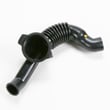
To replace the drain hose on your Kenmore washer model 79641383411, we disconnect power, remove the old hose from the pump and outlet, then install the new hose with the clamps fully seated and the hose routed without kinks. Use the 79641383411 owner's manual for access panels and routing details.
Safety and prep
- Unplug the washer (or switch off the breaker).
- Turn off both water supply valves.
- Have towels and a shallow pan ready for residual water.
- Pull the washer forward enough to access the rear and lower front.
- Wear gloves; hose clamps and cabinet edges can be sharp.
Replacement steps (typical for this Kenmore front-load design)
- Drain remaining water: If the washer is full of water, run a drain/spin if possible; otherwise be ready for water when the hose is removed.
- Access the pump area: Remove the lower access panel (many front-load units use a lower front panel).
- Remove the old hose:
- Loosen the clamp at the pump outlet and slide it back.
- Twist and pull the hose off the pump port.
- Free the hose from any retaining clips, then remove it from the standpipe or laundry tub.
- Install the new hose:
- Slide the clamp onto the hose first.
- Push the hose fully onto the pump outlet until it bottoms out.
- Position the clamp over the port bead and tighten or release it (depending on clamp type).
- Route the hose along the original path and secure it in the same clips.
- Set the drain height: Place the hose into the standpipe and secure it so it cannot fall out.
Clamp and routing checklist
- Clamp sits behind the raised bead on the pump outlet.
- Hose is not kinked or pinched behind the washer.
- Hose is not pushed too far down the standpipe (helps prevent siphoning).
- No rubbing against the cabinet or moving parts.
Quick troubleshooting after replacement
| Symptom | Most common cause | What we do next |
|---|---|---|
| Leak at pump connection | Clamp not centered or hose not fully seated | Reseat hose; reposition clamp |
| Slow drain or “ND” style drain issue | Hose kinked or standpipe restriction | Re-route hose; check standpipe |
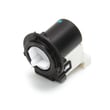
| Washer will not drain at all | Pump problem, not the hose | Consider testing/replacing the drain pump motor (4681EA2001T) - washer part by lg electronics 4681EA2001T |
Why it matters
A correctly installed drain hose prevents leaks, siphoning, and drain errors; it also protects the drain pump from overworking due to restrictions.
Last updated: February 2026
Is it worth repairing a Kenmore washing machine?
Yes, repairing a Kenmore washer is usually worth it when the fix is a common, long-lasting repair and the total cost (parts plus labor) is clearly less than replacing the washer. For Kenmore model 79641383411, we recommend pricing the repair using the troubleshooting steps in the 79641383411 owner's manual and comparing that to the cost of a comparable new washer.
Quick rule of thumb we use
- Repair when the washer is otherwise in good shape and the problem is isolated (drain, fill, door lock, leak).
- Replace when multiple major systems are failing (leaks plus no-spin plus control issues) or the tub and bearing area is damaged.
- Always start with a diagnosis; it prevents buying the wrong part.
Common repairs that are often worth it
These are frequent failure points on front-load washers and typically restore full operation when correctly diagnosed:
- Not draining or stopping mid-cycle: drain pump motor (4681EA2001T) - washer part by lg electronics 4681EA2001T
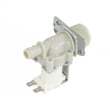
- Not filling or filling slowly: lg washer water inlet valve 5220FR2075L
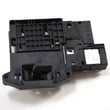
- Door will not lock or cycle will not start: lg washer door lock EBF61315802
- Leaks at the door opening: lg washer door boot MDS47123602
- Excessive shaking or banging: suspension springs and shock absorbers (inspect for wear)
Cost comparison checklist
Use this table to decide quickly after you know the failed part.
| What you found | Typical outcome | Usually worth repairing? |
|---|---|---|
| Single failed component (pump, valve, door lock) | Predictable fix | Yes |
| One leak source (boot or hose) | Predictable fix if no rust damage | Yes |
| Repeated out-of-balance, worn suspension | Improves stability | Often |
| Control/display problems plus other symptoms | Can become expensive fast | Sometimes |
| Tub/bearing damage or multiple major failures | High labor, cascading issues | No |
Why it matters
A targeted repair can extend the life of a washer for years, but replacing parts without confirming the root cause can turn a simple drain or fill issue into an expensive trial-and-error project.
Last updated: February 2026
What is the average lifespan of a Kenmore washer?
A Kenmore washer like model 79641383411 typically lasts 10 to 15 years with normal household use. Consistent care (proper loading, routine cleaning, and quick attention to leaks or draining issues) helps you reach the upper end of that range; neglected maintenance shortens it.
What affects lifespan the most
- Overloading or consistently unbalanced loads (extra stress on suspension and bearings)
- Using too much detergent (buildup, odors, and poor draining)
- Hard water scale (valves and heater performance)
- Ignoring slow-drain symptoms (pump strain)
- Door boot and seal care (leaks that damage components)
Maintenance that adds years
We recommend these habits for Kenmore front-load washers:
- Run a monthly tub-clean cycle (or hot cycle) and wipe the door gasket dry after use
- Use HE detergent and measure carefully
- Leave the door slightly open between loads to reduce moisture and odor
- Check pockets and use a mesh bag for small items to prevent drain clogs
- Level the washer and avoid repeated off-balance spinning
Common wear items and what they usually cause
| Symptom | Often related to | Example part for 79641383411 |
|---|---|---|
| Won’t drain, drains slowly | Drain pump or a clogged hose/filter | Drain pump motor (4681EA2001T) - washer part by lg electronics 4681EA2001T |
| Won’t fill or fills slowly | Water inlet valve | Lg washer water inlet valve 5220FR2075L |
| Door won’t lock or won’t start | Door lock/strike | Lg washer door lock EBF61315802 |
Why it matters
A washer near the 10 to 15 year mark can still be a great candidate for repair when the issue is a common service part (pump, inlet valve, door lock). Catching symptoms early helps prevent secondary damage to the tub, motor, or control.
For model-specific care and cleaning steps, follow the 79641383411 manual.
Last updated: February 2026


