Owner’s manual
 View engine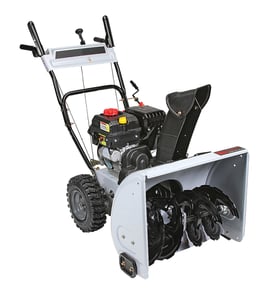


How do I tell how old my snowblower is?
You can tell the age of your MTD snow thrower model 31A-32AD752 by decoding the date code on the ID tag (often near the frame or engine area). On many MTD-built units, the code format is: 1st character = product type, 2nd = month (letter), 3rd and 4th = day, 5th = year; confirm the exact tag location and format in the owner's manual.
Where to find the date code
Look for a product identification label or stamped tag on the machine. Common locations include:
- Rear of the frame between the handles
- Side of the auger housing
- Near the engine mounting area
- Under the belt cover area (after the unit is off and cooled)
- On the chassis near the wheels
How to decode the code (typical MTD format)
Use this as a practical guide when your tag matches the 5-character pattern:
- 1st character: product type
- 2nd character: month (letter)
- 3rd and 4th characters: day of the month (01 to 31)
- 5th character: year (single digit)
Quick example
If your code looks like X B 15 1 (spacing added for clarity):
| Position | Meaning | Example value |
|---|---|---|
| 1 | Product type | X |
| 2 | Month (letter) | B |
| 3-4 | Day | 15 |
| 5 | Year (single digit) | 1 |
Why it matters
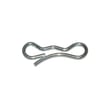
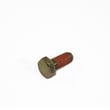
Knowing the build date helps us match the right replacement parts and service procedures for your 31A-32AD752, especially for wear items like belts, skid shoes, and shear pins. For example, if your auger jams, replacing a broken shear pin such as craftsman snowblower shear pin 738-04124A is a common fix.
Last updated: February 2026
What is the typical lifespan of a gas snowblower?
For the MTD snow thrower model 31A-32AD752, the operator’s manual lists an average useful life of 7 years or about 60 hours of operation. With consistent maintenance and timely replacement of normal-wear items, many gas snowblowers deliver reliable service beyond that window.
What “lifespan” means for this model
The manual’s useful-life guidance is a safety and wear benchmark, not a hard stop date. It helps you plan inspections and maintenance as the machine ages.
| Measure | What to expect | What to do |
|---|---|---|
| Years | About 7 years | Inspect key wear points yearly after this age |
| Hours | About 60 hours | Track run time if you use it heavily |
| Condition | Depends on maintenance and storage | Replace worn belts, cables, and skid shoes as needed |
Maintenance that extends service life
We recommend following the maintenance schedule in the owner's manual and focusing on the items that most often limit performance.
- Change engine oil on schedule and use clean, fresh fuel
- Check and adjust control levers so they engage and disengage correctly
- Inspect belts for glazing, cracking, or stretching
- Inspect cables for fraying, binding, or poor return to “disengaged”
- Check fuel lines, tank, cap, and fittings for cracks or leaks
- Before storage, run the machine briefly to clear snow and reduce freeze-up
Common wear parts that affect “how long it lasts”
A snowblower often feels “worn out” when a few normal-wear parts are overdue, not because the whole machine is done.
- Auger protection hardware: craftsman snowblower shear pin 738-04124A
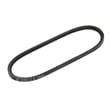
- Auger drive system: MTD snowblower auger drive belt, 3/8 x 27-1/8 in 954-04014
- Ground drive system: MTD snowblower ground drive belt, 3/8 x 43-3/16-in 954-04013
- Traction and handling: skid shoes (adjust/replace when unevenly worn)
Why it matters
As a gas snowblower ages, worn belts, misadjusted controls, and damaged chute components can reduce throwing performance and increase the chance of jams or unsafe operation. Staying ahead of wear keeps your 31A-32AD752 dependable in heavy snow.
Last updated: February 2026
What are common gas snow blower problems?
Common problems on the MTD 31A-32AD752 gas snowblower include no-start from fuel/carburetor issues, poor snow discharge from clogs or broken shear pins, and drive or auger problems caused by loose or damaged belts or misadjusted control cables. Use the owner's manual troubleshooting chart to match symptoms to fixes.
Most common symptoms and what they usually mean
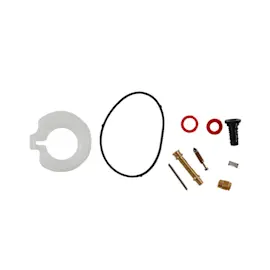
- Won’t start or runs rough: old fuel, dirty carburetor, fouled spark plug, or restricted fuel flow
- Won’t throw snow (or throws weakly): chute or auger housing clogged, shear pin(s) broken, auger belt loose/worn
- Auger keeps turning when disengaged: auger control cable needs adjustment (safety issue)
- Auger hesitates while engine stays at speed: auger control cable too loose or belt slipping
- Won’t self-propel: ground drive belt loose/damaged, or transmission issue
Quick checks we recommend (safe, fast, and effective)
- Shut the engine off and disconnect the spark plug wire before clearing jams or inspecting moving parts.
- Check the chute and auger housing for packed snow; clear with a clean-out tool, not your hands.
- Inspect shear pins on the auger; replace any broken pins with the correct part.
- Look for belt wear (glazing, cracking, stretching) and verify belt tension.
- Verify the auger control cable has very little slack when released (not tight), and that the auger fully disengages.
Parts that commonly fix “no discharge” and “no drive” complaints
| Problem you notice | Likely cause | Common fix/part |
|---|---|---|
| Auger turns but snow won’t discharge | Shear pin broken | Replace craftsman snowblower shear pin 738-04124A |
| Auger hesitates or won’t engage | Auger belt loose/worn | Replace MTD snowblower auger drive belt, 3/8 x 27-1/8 in 954-04014 |
| Unit won’t self-propel | Drive belt loose/worn | Replace MTD snowblower ground drive belt, 3/8 x 43-3/16-in 954-04013 |
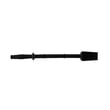
| Chute/auger housing packed | Clog | Clear using the clean-out tool; replace if missing: MTD snowblower clean-out tool 931-2643 |
Why it matters
Many “performance” problems are actually safety problems. For example, if the auger continues to rotate with the control disengaged, the manual directs shutting the engine off and readjusting the cable immediately to prevent unintended auger movement.
Last updated: February 2026
Is a 3 stage snow blower better than a 2 stage?
A 3-stage snow blower is better than a 2-stage when you regularly face deep, heavy, or icy snow and want faster clearing; for normal driveway snowfalls, a 2-stage is usually the best balance of cost, control, and maintenance. Your MTD 31A-32AD752 is a two-stage snow thrower (per the owner's manual).
2-stage vs 3-stage: what changes
A 2-stage uses an auger to pull snow in and an impeller to throw it. A 3-stage adds an accelerator (a third rotating component) that helps break up and move snow faster into the impeller.
In real use, 3-stage tends to help most when:
- Snow is wet, dense, or plow-packed
- You need to clear large areas quickly
- You want stronger intake in deep drifts
Pros and cons (quick comparison)
| Feature | 2-stage (like 31A-32AD752) | 3-stage |
|---|---|---|
| Best for | Typical driveway and sidewalk snow | Heavy, deep, end-of-driveway piles |
| Clearing speed | Strong | Typically faster in tough snow |
| Complexity | Lower | Higher |
| Maintenance | Usually simpler | More moving parts to maintain |
| Cost | Usually lower | Usually higher |
How to get the best performance from your 2-stage
If your 2-stage is struggling, it is often a setup or wear-item issue, not a “stage count” issue.
Check these common items first:
- Skid shoe height: Set higher for hard-packed snow; set lower for gravel (the manual calls this out). Consider replacing worn skid shoes such as skid shoe 784-5580.
- Shear pins: If the auger is not turning correctly after hitting an object, a shear pin may have broken. Keep spares like craftsman snowblower shear pin 738-04124A.
- Belts: Slipping or worn belts reduce auger or drive power; common replacements include MTD snowblower auger drive belt, 3/8 x 27-1/8 in 954-04014 and MTD snowblower ground drive belt, 3/8 x 43-3/16-in 954-04013.
- Chute clogs: Never clear a clogged chute by hand; use the clean-out tool. A replacement option is MTD snowblower clean-out tool 931-2643.
Why it matters
Choosing 3-stage vs 2-stage is really about matching the machine to your snow conditions. For many owners, a well-maintained 2-stage throws snow efficiently and is easier to keep running season after season.
Last updated: February 2026