Installation guide
 Owner’s manual
 Error Codes


How do I tell what model Kenmore dryer I have?
Your Kenmore dryer’s model number is printed on the model and serial number label. On Kenmore model 11076832500, that label is located at the top inside the dryer door well; write down the full model number and serial number exactly as shown.
Where to look on the dryer
Check these common label locations (start with the door area first):
- Top inside the dryer door well (most common on this Kenmore style)
- Inside the door opening on the cabinet frame
- On the back of the dryer near the top
- Behind the lower access panel (on some designs)
What to record (and why)
Use the label to capture the details you will need for parts and service.
- Complete model number (example format: 110.XXXXXXXX)
- Serial number
- Purchase date (if available)
- Gas type/burner info if it’s a gas dryer (often listed on the rating plate in the door well)
| Item on label | What it’s used for | Example |
|---|---|---|
| Model number | Matching the correct parts diagrams and parts | 11076832500 |
| Serial number | Identifying production series and compatible revisions | Varies |
| Rating plate details | Confirming gas type and installation requirements | Natural gas or LP capable |
Tips to avoid ordering the wrong part
- Copy the model number exactly; one missing digit changes the parts list.
- If the label is worn, take a clear photo and zoom in.
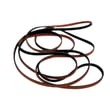
- Match parts to the exact model; for example, a belt like the dryer drum belt 341241 must match the model’s parts list.
Why it matters
Kenmore dryers share many similar-looking designs, but parts such as the dryer timer, door switch, thermostats, and gas burner components can vary by model and production series. Using the exact model number keeps fit and function correct.
For more label and record details, see the 11076832500 owner’s manual.
Last updated: February 2026
Will Kenmore dryer run if thermal fuse is blown?
On the Kenmore 11076832500 dryer, a blown thermal fuse commonly stops the dryer from heating; the drum can still run, but you will get no heat. Use the troubleshooting steps in the 11076832500 owner's manual to confirm whether you have a heating problem or a power-supply issue.
What you’ll typically see when the thermal fuse is blown
- Dryer runs but clothes stay cold and damp
- Cycle completes, but drying performance is poor
- No flame/heat on gas cycles (even though the motor runs)
- Problem returns quickly if the venting is restricted
Quick checks before replacing parts
- Confirm the cycle selection: make sure you are not on an air-fluff/air-dry setting.
- Check house power: many dryers can tumble with only part of the supply; verify fuses/breakers are fully OK.
- Inspect airflow: clean the lint screen and check the exhaust duct and outside hood for blockage.
What to test and what it usually means
| Symptom | Most likely cause | What to do next |
|---|---|---|
| Drum runs, no heat | Blown thermal fuse or open thermostat | Test thermal fuse and thermostats; correct vent restriction |
| No run at all | Door switch, timer/control, motor circuit, power issue | Check door closure and test the dryer door switch WP3406107 |
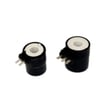
| Heat starts then stops | Restricted venting, failing gas coils (gas models) | Check venting; consider the dryer valve coil kit 279834 |
Why it matters
A thermal fuse is a safety device that opens when the dryer overheats. Replacing the fuse without fixing the overheating cause (most often restricted venting or lint buildup) can lead to repeat failures and longer dry times.
Last updated: February 2026
What is the average lifespan of 11076832500?
The average lifespan of a Kenmore dryer like model 11076832500 is about 13 years with normal household use. Keeping airflow strong (clean lint screen, proper venting) and replacing wear parts on time helps this dryer reach that typical service life.
What affects lifespan the most
- Vent length and bends: long runs and too many elbows reduce performance and shorten dryer life.
- Lint buildup: restricted airflow overheats components.
- Wear parts: belts, rollers, and idler pulleys wear gradually and can strain the motor.
- Heat system health (gas models): ignition and flame sensing issues can cause repeated cycling.
- Load habits: frequent overloading increases drum and drive wear.
Quick maintenance checklist (high impact)
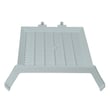
- Clean the lint screen every load; replace a damaged screen such as the dryer lint screen W11778253.
- Keep the vent path as straight and short as possible; use rigid metal duct when you can.
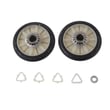
- Inspect for thumping or squealing; a dryer repair kit 4392065 is a common fix for drum support wear.
- If the drum stops turning but the motor runs, check the dryer drum belt 341241.
- Follow spacing and venting guidance in the installation guide.
Typical lifespan by condition
| Condition | What you usually see | Typical outcome |
|---|---|---|
| Well maintained | Strong airflow, normal dry times | Reaches about 13 years |
| Restricted venting | Long dry times, hotter cabinet | Shorter life, more part failures |
| Heavy use/overloads | Noisy drum, belt wear | More frequent repairs |
Why it matters
A dryer that is vented correctly and kept clean runs cooler and dries faster; that reduces stress on the motor, thermostats, and gas ignition parts, which is the biggest driver of long-term reliability.
Last updated: March 2026