Owner’s manual
 Error Codes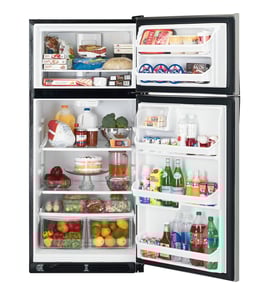



What are the disadvantages of a top mount fridge?
Top-mount refrigerators like the Whirlpool WRT318FZDB02 are reliable and efficient, but their main disadvantages are convenience and features: you bend more to reach fresh foods, the freezer can feel less organized, and many models skip built-in ice and water dispensing.
Common disadvantages (what you will notice day to day)
- More bending for fresh food: the refrigerator section sits lower, so produce drawers and lower shelves take more reaching.
- Freezer organization can be basic: fewer bins and dividers compared with many bottom-freezer designs.
- Fewer premium features: top-mount units often do not include an exterior water dispenser or in-door ice.
- Less “eye-level” storage: the items you use most may end up below waist height.
- Door swing clearance: in tighter kitchens, you may notice door clearance limits more than with some counter-depth styles.
What to check on your WRT318FZDB02
Use your WRT318FZDB02 owner's manual to confirm which features your exact configuration supports (ice maker readiness, control settings, shelf positions, and door reversal details).
Quick comparison
| Feature | Top-mount refrigerator | Bottom-freezer refrigerator |
|---|---|---|
| Fresh food access | Lower, more bending | Higher, less bending |
| Freezer access | Eye-level | Lower drawer |
| Organization | Often simpler | Often more flexible |
| Dispenser options | Less common | More common |
Why it matters
Most shoppers choose a top-mount for value, simplicity, and proven cooling performance. If you prioritize ergonomics (less bending), freezer organization, or dispenser features, a different layout may fit better.
Last updated: January 2026
Are top mount or bottom mount fridges better?
Top-mount and bottom-mount refrigerators are both good choices; the better option depends on how you use your kitchen. A top-mount design like Whirlpool WRT318FZDB02 typically costs less and is often more energy-efficient, while a bottom-mount puts fresh food at eye level for easier daily access (with the freezer lower).
Quick comparison
| Feature | Top-mount (freezer on top) | Bottom-mount (freezer on bottom) |
|---|---|---|
| Fresh-food access | Requires more bending | Easier, more eye-level access |
| Freezer access | Easier, more convenient | More bending for freezer items |
| Typical price | Lower | Higher |
| Energy use (typical) | Often lower | Often higher |
| Best for | Value, efficiency, simple layout | Convenience for fresh-food use |
When a top-mount is the better pick
- You want strong value and a simpler, proven layout.
- You use the freezer often and want it at a comfortable height.
- You prefer fewer premium features and a more straightforward repair profile.
- You want to keep energy use down (top-mounts commonly have an efficiency edge).
For model-specific features and recommended clearances, follow the WRT318FZDB02 owner’s manual.
When a bottom-mount is the better pick
- You cook frequently and want fresh food (produce, dairy, leftovers) at eye level.
- You have back or knee discomfort and want less bending for the refrigerator section.
- You store heavier items in the refrigerator and want easier access.
Why it matters
Your choice affects daily ergonomics, operating cost, and how you organize food. If you open the refrigerator section far more than the freezer, a bottom-mount can feel more convenient; if you want efficiency and value, a top-mount is hard to beat.
Last updated: January 2026
What is the life expectancy of a top freezer refrigerator?
A top-freezer (top-mount) refrigerator like the Whirlpool WRT318FZDB02 typically lasts 10 to 15 years. With consistent basic maintenance (cleaning condenser coils, keeping door gaskets sealing, and maintaining airflow), it commonly reaches the upper end of that range.
What affects lifespan the most
- Condenser coil cleanliness: Dust buildup makes the compressor run hotter and longer.
- Door seal condition: Air leaks force longer run times and can cause frost issues.
- Airflow inside the cabinet: Overpacking blocks vents and stresses the cooling system.
- Room conditions: Hot garages and tight enclosures shorten compressor life.
- Defrost system health: A failing defrost heater or sensor can lead to heavy frost and poor cooling.
Maintenance checklist (best return for the effort)
- Vacuum and brush the condenser area every 6 to 12 months.
- Keep food from blocking interior air vents.
- Wipe door gaskets with warm, soapy water; dry fully.
- Confirm doors close on their own and sit level.
- Follow the cleaning and care schedule in the WRT318FZDB02 owner’s manual.
Common “wear items” vs. major repairs
| Item type | Examples | What you usually notice |
|---|---|---|
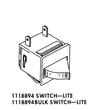
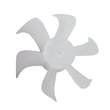
| Wear/maintenance items | Door gasket, light switch, fan blade | Warm spots, moisture, light issues, noise |
| Cooling system components | Evaporator fan motor, thermistor, electronic control | Temperature swings, no airflow, inconsistent cycling |
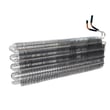
| Major sealed-system parts | Compressor, evaporator, condenser | Not cooling, long run times, unusual heat/noise |
If you’re chasing a cooling or noise problem, the evaporator fan is a frequent culprit; the refrigerator evaporator fan motor WP2315539 is one of the model-matched parts we commonly see replaced.
Why it matters
A refrigerator’s lifespan is mostly about run time and heat. Clean coils, good door sealing, and proper airflow reduce stress on the compressor and help your Whirlpool top-freezer refrigerator stay efficient and reliable longer.
Last updated: January 2026
What is the most common problem with Whirlpool refrigerators?
The most common Whirlpool refrigerator problem is a cooling issue: the fridge or freezer runs but temperatures rise, or the unit runs almost constantly. On the Whirlpool WRT318FZDB02, the most frequent root causes are airflow problems (dirty condenser coils, a weak evaporator fan) or a defrost system issue that lets frost block airflow.
Most common symptoms we see
- Fresh food section warm but freezer still fairly cold
- Frost or ice buildup on the freezer back wall
- Loud humming, rattling, or a fan noise that comes and goes
- Compressor running a lot with poor cooling
- Water leaking inside or under the refrigerator after heavy frost
Quick checks that fix many “not cooling” complaints
- Clean the condenser coils (usually underneath or behind). Dust buildup is a top reason for poor cooling and long run times.
- Confirm airflow: do not block vents with food packages; leave space around items.
- Verify temperature settings and allow 24 hours after changes.
- Check door sealing: a poor seal pulls in warm, moist air and drives frost and run time.
Parts that commonly solve the underlying issue
If cleaning and airflow checks do not restore normal temps, these are common repair paths on top-mount Whirlpool units like WRT318FZDB02:
| Problem pattern | Likely area | Common part to inspect/replace |
|---|---|---|
| Warm fridge, freezer OK, weak/no fan sound | Evaporator airflow | Refrigerator evaporator fan motor WP2315539 |
| Rattling or scraping fan noise | Fan blade interference/damage | Fan blade WP2163777 |
| Heavy frost on freezer back wall, warm fridge | Defrost system | Refrigerator defrost heater WPW10316428 |
| Temps swing, odd cycling | Temperature sensing | Refrigerator thermistor W11438736 |
Why it matters
Cooling problems usually start as an airflow or frost issue; if ignored, food safety suffers and the compressor can run excessively. Addressing coil cleanliness, door sealing, and fan/defrost performance restores stable temperatures and normal run times.
Helpful references
- Use the WRT318FZDB02 manual for temperature setting guidance, airflow/vent locations, and basic troubleshooting steps.
- If your model shows diagnostic indicators, our Whirlpool refrigerator error codes guide helps you interpret them.
Last updated: January 2026