Installation guide
 Owner’s manual
 Error Codes




Is side by side better than a French door?
For the KitchenAid KBSN608ESS01 (a side-by-side), “better” depends on how you use your refrigerator. Side-by-sides typically give you easier freezer organization and narrower door swing, while French door models usually offer wider fresh-food shelves for platters and large trays.
Quick comparison (what most owners notice)
| Feature | Side-by-side (like KBSN608ESS01) | French door |
|---|---|---|
| Fresh-food shelf width | Narrower | Wider (better for platters) |
| Freezer access | Eye-level, more shelves | Bottom drawer, deeper bins |
| Door swing clearance | Often needs less side clearance | Often needs more clearance |
| Organization style | Vertical zones, lots of door bins | Wide shelves, big freezer drawer |
When a side-by-side is usually the better choice
- You use the freezer daily and want items at eye level.
- You like lots of door storage for condiments and beverages.
- Your kitchen layout is tight and you want narrower door swing.
- You prefer “zones” (left freezer, right fresh food) for quick sorting.
- You buy more frozen foods than oversized fresh-food platters.
When a French door is usually the better choice
- You regularly store wide items (party trays, pizza boxes, sheet pans).
- You want the most flexible fresh-food space at eye level.
- You prefer a large bottom freezer drawer for bulk bags and boxes.
- You want a more open, wide-shelf layout for meal prep.
Why it matters
Choosing the right layout reduces door-open time, improves organization, and can help your refrigerator hold steadier temperatures. That can mean better food freshness and fewer “where did I put that?” moments.
Model-specific tip for KBSN608ESS01 owners
If you already own the KBSN608ESS01, we recommend using the shelf and bin adjustment guidance in the KBSN608ESS01 use & care manual to tailor the vertical storage to your household’s habits.
Last updated: January 2026
What is the most common problem with a KitchenAid refrigerator?
For the KitchenAid KBSN608ESS01 side-by-side refrigerator, the most common day-to-day complaints we see are ice maker and water dispenser issues (slow or no ice, weak water flow, odd-tasting ice) and cooling performance problems (temps too warm or fluctuating). Many of these trace back to water supply, a clogged filter, airflow restrictions, or dirty condenser coils; see the KBSN608ESS01 use & care manual.
Most common issues (and what to check first)
Start with the simplest, highest-payoff checks before assuming a major failure:
- Ice maker not making ice or low ice output: confirm the ice maker is ON, the shutoff valve is fully open, and the water line is not kinked.
- Water dispenser flow is weak: a clogged or incorrectly installed water filter is a top cause.
- Off-taste or gray/dirty-looking ice: often improves after flushing the water system and replacing the filter.
- Refrigerator or freezer too warm: check for blocked air vents and allow 24 hours after changes for temps to stabilize.
- Runs a lot or seems noisy: can be normal with high-efficiency compressors, but dirty condenser coils can make it worse.
Parts that commonly affect these symptoms on KBSN608ESS01
If troubleshooting points to a replaceable component, these are common “first parts to suspect” for this model:
| Symptom | Commonly related part | What it does |
|---|---|---|
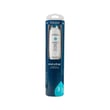
| Weak water flow, poor ice quality | Refrigerator filter EDR3RXD1 | Filters incoming water for the dispenser and ice maker |
| Leaks or filter won’t seat correctly | Refrigerator water filter housing WPW10121140 | Holds and seals the filter in place |
| Fridge warm but freezer OK (or uneven temps) | Refrigerator evaporator fan blade WP2169142 | Moves cold air through compartments |
Why it matters
Ice and cooling problems can look “serious,” but they are often caused by maintenance items (filter changes, coil cleaning) or airflow/water-supply issues. Fixing those early helps protect food temperatures and reduces strain on the compressor.
Helpful DIY guidance
- For step-by-step filter replacement and flushing, use how to replace the water filter in a KitchenAid refrigerator.
Last updated: January 2026
What size are side-by-side refrigerators?
Side-by-side refrigerators commonly range from about 32 to 36 inches wide, but KitchenAid model KBSN608ESS01 is a built-in side-by-side that’s typically in the 48-inch-wide class. For the exact opening and clearance requirements, use the KBSN608ESS01 installation guide.
Typical side-by-side refrigerator size ranges
Most freestanding side-by-side refrigerators fall into these general ranges:
- Width: ~32–36 inches (some built-in models are wider)
- Height: ~65–72 inches (built-in models are often taller)
- Depth (cabinet): ~28–35 inches (counter-depth units are shallower)
- Depth (with doors/handles): usually several inches deeper than cabinet depth
What to measure for your KBSN608ESS01 installation
Because KBSN608ESS01 is a built-in design, the “right size” is the required cutout plus clearances, not just the cabinet width.
- Cutout width, height, and depth (measure at front and back)
- Door swing clearance (especially near walls or an island)
- Ventilation space (top grille and surrounding airflow)
- Water line location (if using ice maker and dispenser)
Quick comparison table
| Type | Typical width | Typical depth (cabinet) |
|---|---|---|
| Freestanding side-by-side | 32–36 in. | 28–35 in. |
| Built-in side-by-side (like KBSN608ESS01) | Often ~42–48 in. | Often shallower cabinet depth with required clearances |
Why it matters
If the opening is even slightly undersized, a built-in refrigerator can bind during installation, restrict door swing, or reduce ventilation, which can affect cooling performance and noise.
Last updated: January 2026