Owner’s manual



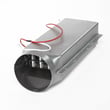
How to clean kenmore connect dryer vent?
For Kenmore dryer model 79681282310, we clean the dryer vent by unplugging the dryer, pulling it out to access the transition duct, removing the duct, and brushing or vacuuming lint from the duct and wall outlet; then we reconnect using proper clamps or duct tape per the 79681282310 owner's manual.
Safe vent-cleaning steps
- Unplug the dryer (and shut off gas if you have a gas model).
- Pull the dryer forward carefully so you can reach the transition duct.
- Loosen the clamp, then remove the semi-rigid metal duct from the dryer outlet.
- Vacuum loose lint at the dryer outlet and inside the duct.
- Use a long, flexible vent brush to scrub the duct interior, then vacuum again.
- Check the wall duct opening for lint buildup and remove what you can reach.
- Reconnect the duct with clamps or duct tape (do not use screws).
Venting rules that prevent poor drying and overheating
Your Kenmore dryer performs best when the exhaust path is clean and built correctly.
| Item | Recommended | Avoid |
|---|---|---|
| Duct material | Rigid or semi-rigid metal | Plastic or thin foil duct |
| Fastening method | Clamps or duct tape | Screws through the duct |
| Maintenance | Check monthly; clean at least yearly | Waiting until drying slows |
How often to clean the vent
- Check monthly for lint buildup in the ductwork.
- Clean at least once per year.
- Clean immediately if you notice longer dry times, reduced airflow, or excess heat.
Why it matters
A restricted exhaust system reduces airflow, causes longer dry times, and can trigger overheating symptoms. Keeping the vent path clear helps protect key components like the heating circuit and thermostats, and it keeps drying performance consistent.
Last updated: February 2026
Why does my dryer keep saying clean lint filter?
On Kenmore dryer model 79681282310, the Check Filter/Clean lint filter message is normally a reminder that blinks every time you start the dryer, even if the screen looks clean. If it stays on or returns mid-cycle, restricted airflow (lint trap housing or vent duct) is the most common cause.
What to do first (fast checks)
- Remove the lint screen, clear lint, and reinstall it fully seated.
- Shine a light through the screen; if it looks dark or “filmy,” wash it with hot soapy water and a stiff brush, then dry completely.
- Vacuum inside the lint screen opening and around the housing to remove packed lint.
- Check the exhaust duct for kinks, crushed sections, or heavy lint buildup.
- Run a timed dry cycle and confirm strong airflow at the outside vent hood.
Why the light can come on when the filter is “clean”
The dryer is sensitive to airflow. Even with a clean screen, airflow drops when lint builds up in the lint screen housing, blower area, or vent ductwork. The manual also calls out that vent ductwork should be checked monthly for lint buildup and cleaned at least yearly, and that a clogged filter increases drying time.
Airflow checklist (most common root cause)
| Symptom | Likely cause | What we recommend |
|---|---|---|
| Long dry times, hot cabinet | Vent restriction | Inspect and clean vent run; confirm strong outside airflow |
| Light comes back quickly | Lint packed below screen | Vacuum lint chute and housing thoroughly |
| Filter looks “waxy” | Fabric softener residue | Wash and brush lint screen; dry fully before reinstall |
| Musty odor, lint around dryer | Leaks or poor sealing | Re-seat duct connections; replace damaged ducting |
Why it matters
Good airflow prevents overheating, reduces drying time, and lowers lint accumulation inside the dryer and vent system. Keeping the area around the exhaust opening clear and cleaning the lint filter every load are key safety and performance steps.
For model-specific cleaning and maintenance steps, follow the 79681282310 owner's manual.
Last updated: February 2026
How to hard reset a Kenmore dryer?
To hard reset your Kenmore dryer model 79681282310, we recommend a simple power reset: turn the dryer off, unplug it (or switch the breaker off) for 1 to 5 minutes, then restore power and press POWER to restart. This clears most control glitches and many non-heating or non-start symptoms.
Reset steps (safe and effective)
- Press POWER to turn the dryer off.
- Unplug the dryer (or turn the circuit breaker off).
- Wait 1 to 5 minutes.
- Restore power.
- Press POWER, select a cycle, then press START/PAUSE.
- If the dryer was paused, remember it can turn off automatically after about 4 minutes of being stopped.
For control and cycle details specific to this model, use the 79681282310 owner's manual.
If it still will not run: quick checks that look like a “reset” problem
- Make sure the door is fully closed (a door switch issue can stop operation).
- Confirm the cycle is actually started with START/PAUSE.
- If Control lock is on, press and hold CONTROL LOCK for about 5 seconds to unlock.
- Check the home breaker: a tripped breaker can leave the dryer with partial power.
- If the dryer shuts down mid-cycle, check airflow and the vent path for restrictions.
If the issue is “runs but no heat” after the reset
The manual’s heating test is a fast way to confirm heat output.
Heating test (from the manual):
- Close the door.
- Press POWER.
- Set the cycle to Normal.
- Press START/PAUSE.
- After 3 minutes, open the door and check whether the air inside feels warm.
What the result usually means
| Result after 3 minutes | Most likely direction | What to do next |
|---|---|---|
| Air is warm | Heat system is working | Focus on venting, load size, cycle selection |
| Air is not warm | Heat or fuel/airflow issue | Check venting first; then heat components |
If you suspect a heating component problem, a common repair part for this model is the lg dryer heating element 5301EL1001H.
Why it matters
A proper reset restores normal control operation, but repeated shutdowns or no-heat symptoms often trace back to restricted venting or a failed heating component. Keeping the vent system clear also helps prevent overheating and long dry times.
Last updated: February 2026
What is the CL code on a Kenmore dryer?
On Kenmore model 79681282310, the CL code means Control Lock is turned on, so most buttons won’t respond. To turn it off, press and hold TOUCH UP for about 5 seconds until the controls unlock (the display changes and buttons work again). See the 79681282310 owner's manual.
What Control Lock does (and what you’ll notice)
When Control Lock is active, it’s designed to prevent accidental setting changes during a cycle.
Common symptoms include:
- CL shows on the display
- Most buttons are disabled
- The dryer may still run, but you can’t change settings
- The issue returns if Control Lock is turned on again
How to clear the CL code
Use these steps for Kenmore 79681282310:
- Press POWER (if needed) to wake the control panel
- Press and hold TOUCH UP for 5 seconds
- Confirm the display no longer shows CL
- Try changing a setting (Temp, Time Dry, etc.) to verify buttons respond
If CL won’t clear
CL is usually a normal feature, not a failed part. If it won’t turn off, focus on control-panel input issues.
Check these quick items:
- Make sure you’re pressing TOUCH UP, not a similarly labeled key
- Press firmly in the center of the button (some overlays need a solid press)
- Unplug the dryer for 1 minute, plug back in, then try again
- If multiple keys don’t respond, the console may have a control issue
Related parts that can affect button response
If the dryer won’t start or behaves inconsistently along with CL, these parts are commonly involved:
| Symptom | More likely cause | Less likely cause |
|---|---|---|
| CL shows, buttons don’t change | Control Lock is on | Control panel input problem |
| Dryer won’t run at all | Door not sensed closed | Control board issue |
If the dryer also won’t start, check the dryer door switch EBF61496102.
Why it matters
Control Lock prevents cycle changes that can lead to poor drying results, longer dry times, or interrupted cycles. Knowing how to toggle it saves time and avoids unnecessary part replacement.
Last updated: February 2026
What is the cubic foot of my Kenmore dryer model 79681282310?
Your Kenmore dryer model 79681282310 is a full-size dryer; its capacity is typically about 7.0 cu. ft. For the exact capacity rating for your specific 796.8128# series unit, confirm it in the 79681282310 owner's manual.
How to confirm the exact capacity for your unit
We recommend checking the capacity where Kenmore lists model specifications.
- Open the 79681282310 owner's manual and look for Specifications or Product features
- Check the model tag (usually inside the door opening) to confirm the full model and color code (the manual lists 796.8128# series)
- If your dryer is installed on a pedestal or stacked, verify you are reading the correct section for your configuration
- If you still cannot find it, use the model number to match the spec sheet information in the manual set
Why capacity matters
Capacity affects load size, cycle time, and drying performance. Overloading a 7.0 cu. ft. class dryer can reduce airflow and lead to longer dry times and higher heat stress on components like the heating system and drum support parts.
Typical capacity guide (for context)
| Dryer type | Typical capacity range | What it means for loads |
|---|---|---|
| Compact electric/gas | 3.4 to 4.4 cu. ft. | Smaller loads, tighter drum space |
| Full-size (standard) | 6.5 to 7.5 cu. ft. | Most family loads, everyday use |
| Extra-large | 7.6 to 9.0+ cu. ft. | Bulky items, fewer loads |
Tips to get the best drying results in a 7.0 cu. ft. class dryer
- Clean the lint screen before every load
- Avoid packing the drum tight; leave room for tumbling
- Use timed dry for heavy items if sensor cycles end too soon
- Keep the exhaust venting clear to maintain strong airflow
- If you see an error code, use the Kenmore 796 model dryer error codes guide to narrow down the cause
Last updated: February 2026
Can you get parts for a Kenmore dryer?
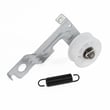
Yes. We can help you get replacement parts for your Kenmore dryer, including model 79681282310. Common repairs use wear items like a drum belt, idler pulley, support rollers, thermostats, and heating components; matching parts to the exact model keeps fit and performance correct.
Parts you can commonly replace on Kenmore model 79681282310
These are some of the most frequently ordered part types for this dryer:
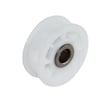
- Drum drive parts (belt, idler pulley, drum support rollers)
- Heating parts (heating element, high-limit thermostat, blower thermostat)
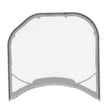
- Airflow and lint parts (lint screen housing, blower wheel)
- Sensors and switches (moisture sensor, door switch)
- Major assemblies (motor, control boards, door and cabinet parts)
Quick part examples for this model
If your symptoms match, these model-specific parts are typical starting points:
| Symptom | Common part area | Example part for 79681282310 |
|---|---|---|
| Drum will not tumble, squeals, or slips | Belt and idler system | Dryer drum belt 4400EL2001F |
| Dryer runs but clothes stay damp | Heat and airflow system | Heating element, thermostats, venting |
| Thumping or rumbling noise | Drum support | Support rollers, drum seals |
How we recommend you confirm the right part
Use these checks before ordering so you only buy what you need:
- Confirm the full model number from the dryer’s ID tag: 79681282310
- Compare your symptom to the troubleshooting section in the 79681282310 owner's manual
- Inspect for obvious wear (cracked belt, seized roller, lint buildup, loose wiring)
- If the dryer shows an error code, use Kenmore 796 model dryer error codes to narrow the failure
- For heat complaints, also verify airflow (lint filter, duct, outside hood) before replacing parts
Why it matters
Dryers often share similar-looking parts across Kenmore model families, but mounting points, wiring connectors, and temperature ratings can differ. Using model-matched parts helps prevent repeat failures, overheating, and poor drying performance.
Last updated: February 2026
How to open Kenmore dryer front panel?
To open the front panel on your Kenmore dryer model 79681282310, we start by unplugging the dryer, then releasing the top (usually with spring clips) so we can remove the screws that secure the front panel and lift it off the lower retaining tabs. Use the 79681282310 owner's manual for the exact fastener locations.
Safety first
- Unplug the dryer before removing any panels.
- If it is a gas dryer, shut off the gas supply valve as well.
- Wear cut-resistant gloves; cabinet edges can be sharp.
- Avoid pulling on wires; support the front panel as it comes free.
- If the dryer was running, let the heater area cool before reaching inside.
Typical steps to remove the front panel
- Remove the lint screen (if it pulls out from the top) and check for screws near the lint screen opening.
- Release the top panel: insert a flat screwdriver or putty knife under the front edge of the top and press the spring clips to pop the top up.
- Disconnect the door switch harness (note the connector orientation).
- Remove front panel mounting screws (commonly at the upper inside corners once the top is raised).
- Lift the front panel up and off the lower tabs, then set it aside.
What you can access once the front is off
| Area you need to reach | Common reason | Related part for this model |
|---|---|---|
| Drum drive system | Squealing, thumping, drum not turning | Dryer drum belt 4400EL2001F |
| Idler pulley area | Belt slipping, chirping noise | Dryer idler pulley 4560EL3001A |
| Heater housing (electric models) | No heat, weak heat | Lg dryer heating element 5301EL1001H |
Why it matters
Removing the front panel the right way prevents broken clips, stripped screws, and damaged door switch wiring. It also makes common repairs (belt, idler pulley, rollers, heating circuit checks) faster and safer.
Last updated: February 2026
Where to find model number for Kenmore dryer?
On a Kenmore dryer like model 79681282310, the model number is printed on the appliance’s rating label. You’ll typically find that label on the door opening (cabinet frame) when you open the dryer door, or on the back of the dryer near the top.
Most common places to check
- Open the dryer door and look along the door opening/cabinet frame (often on the right or left side)
- Check the inside edge of the door itself
- Look on the back panel near the top of the dryer
- If the dryer is stacked or in a tight closet, use a flashlight and check the upper rear corners
What the label looks like (and what to write down)
The rating label usually includes several identifiers. For parts lookup and service, we recommend recording:
- Model number (example format: 796.8128###)
- Serial number
- Power type (electric or gas)
Use the model number exactly as shown on the label when referencing parts for Kenmore 79681282310.
Quick ID guide
| You see on the label | What it means | Why it matters |
|---|---|---|
| Model number | The exact dryer version | Ensures correct part fit |
| Serial number | Production identifier | Helps match revisions |
| Electrical/gas info | Voltage or gas type | Helps with safe troubleshooting |
Why it matters
Kenmore model numbers can look very similar across different series. Using the exact model number from the rating label prevents ordering the wrong dryer drum belt, heating element, thermostat, or control board.
For diagrams and model identification details specific to this dryer series, use the 79681282310 owner's manual.
Last updated: February 2026
How much does it cost to replace a heating element in a Kenmore dryer?
Replacing the heating element in a Kenmore dryer like model 79681282310 typically costs $80 to $350 total. The heating element part itself is commonly $50 to $300 depending on whether you’re buying the element only or a complete heater assembly; professional labor often adds $100 to $200.
Typical cost breakdown
- DIY parts-only: usually $50 to $300
- Service call + labor: usually $100 to $200
- Total installed by a technician: usually $180 to $350
- Extra costs (sometimes): vent cleaning, thermal fuse or thermostat replacement, damaged wiring repair
| Scenario | What you pay for | Typical total |
|---|---|---|
| DIY replacement | Heating element only | $50 to $300 |
| Technician repair | Part + labor | $180 to $350 |
| “No-heat” diagnosis first | Trip charge + testing | $100 to $150 |
Parts that commonly get replaced with the heater
On Kenmore 796-series dryers, a “no heat” complaint is often caused by airflow restrictions or a failed safety control, not only the heater. If you’re already opening the cabinet, these are the most common related checks:
- Heating element continuity and visible breaks
- High-limit thermostat operation (overheating protection)
- Blower thermostat operation (temperature regulation)
- Lint buildup in the lint housing and exhaust duct
- Proper airflow at the outside vent hood
For this model, a common heater replacement option is the lg dryer heating element 5301EL1001H. For model-specific disassembly steps and safety notes, follow the 79681282310 use & care guide.
Why the price varies so much
The biggest cost drivers are (1) whether your dryer uses an element-only part or a larger heater assembly, and (2) whether overheating from poor venting also damaged thermostats or wiring. Fixing airflow issues helps prevent repeat heater failures.
Last updated: February 2026
What is the PF code on a Kenmore dryer?
PF on a Kenmore dryer means Power Failure; the dryer detected an interruption in electrical power during a cycle on model 79681282310. Clear it by pressing Stop/Clear, then restart the cycle once steady power is restored (see the 79681282310 owner's manual).
What to do when PF appears
- Press Stop/Clear to clear the display.
- Press Power, reselect your cycle and options, then press Start.
- If the drum is full of wet clothes, run Timed Dry for 10 to 20 minutes to get back on track.
- If PF returns, test the outlet by plugging in a lamp or small appliance to confirm steady power.
- Avoid using an extension cord; plug the dryer directly into a properly grounded outlet.
Common causes of PF (and quick checks)
- Loose plug or worn outlet: Make sure the plug is fully seated and the receptacle grips firmly.
- Tripped breaker: Reset the dryer’s breaker(s) fully OFF then ON.
- Power cord connection issue: Inspect the cord and terminal block area for heat damage (unplug first).
- Household voltage drop: PF can show up when large loads (HVAC, space heaters) start.
When PF points to a dryer problem vs. a home power issue
| What you notice | Most likely cause | Best next step |
|---|---|---|
| PF happens during storms or neighborhood outages | Utility interruption | Clear PF and restart |
| PF happens when the dryer is bumped or door is moved | Loose plug/outlet | Replace outlet or tighten fit |
| PF happens randomly, outlet tests OK | Cord/terminal connection | Check wiring per manual |
Why it matters
Repeated power interruptions can stop the heater and motor mid-cycle, leaving clothes damp and increasing cycle time. Fixing the underlying power issue helps protect components like the electronic control and motor.
For model-specific control behavior and button names, follow the steps in the 79681282310 owner's manual.
Last updated: February 2026
What is the code F23 on a Kenmore dryer?
On Kenmore dryer model 79681282310, error code F23 points to a problem with the outlet temperature sensor (thermistor) circuit. When the thermistor cannot read temperature correctly, the dryer can overheat, underheat, or stop the cycle to protect the unit. See the 79681282310 owner's manual for model-specific troubleshooting steps.
What you’ll notice with an F23 code
- Clothes take too long to dry or come out damp
- Dryer shuts off mid-cycle or won’t complete a cycle
- Heat seems inconsistent (too hot, then not hot)
- The drum tumbles normally but drying performance is poor
- The code returns after you clear it and restart
Quick checks we recommend first (safe, no parts needed)
- Unplug the dryer (or switch off the breaker) before inspecting anything.
- Clean the lint screen and housing; lint buildup can trap heat and skew temperature readings.
- Check airflow: make sure the vent hose is not crushed, kinked, or excessively long.
- Inspect the exhaust outlet outside your home for blockage.
- If the dryer is running hot, stop using it until airflow is corrected.
Parts commonly involved
If airflow is good and the code persists, the issue is often the sensor itself or a related overheat condition.
| Symptom | Most likely area | Example part for this model |
|---|---|---|
| F23 plus poor temperature control | Outlet thermistor circuit | Dryer thermistor AGM30045804 |
| Dryer runs very hot, then errors | Overheat protection opening | Dryer high-limit thermostat 6931EL3003D |
| Long dry times, weak airflow | Air movement through blower | Dryer blower wheel 5835EL1002A |
Why it matters
The thermistor helps the control board regulate heat. When it reads incorrectly (or airflow causes abnormal temperatures), drying results suffer and the dryer may shut down to prevent overheating.
For additional code help, use our Kenmore 796 model dryer error codes reference alongside the manual.
Last updated: February 2026