Owner’s manual
 Error Codes


What's the lifespan of a bottom freezer fridge?
Most bottom freezer (bottom-mount) refrigerators typically last about 12 to 15 years with normal household use. For your Samsung RF28HFEDTWW, real-world lifespan depends most on compressor health, door seal condition, and keeping airflow and defrost drainage clear; see the RF28HFEDTWW owner’s manual for model-specific care guidance.
Typical lifespan and what affects it
A bottom freezer fridge’s life is mainly driven by how hard the sealed system works and how well the cabinet stays sealed.
- Door gaskets that leak make the compressor run longer
- Dirty condenser area (dust and pet hair) raises operating temperatures
- Frequent door openings and warm kitchens increase run time
- Ice maker and defrost issues can cause frost buildup and airflow problems
- Power surges and repeated outages can stress control boards and the compressor
Quick “how long should I expect?” guide
| Usage and maintenance | Typical expectation | What you’ll notice first |
|---|---|---|
| Average use, basic cleaning | 12 to 15 years | Longer run times, warmer temps |
| Heavy use, minimal cleaning | 8 to 12 years | Ice issues, frost, noisy fans |
| Light use, good maintenance | 15+ years | Fewer temperature swings |
What to do to reach the high end of the range
These steps reduce compressor run time and prevent common cooling complaints.
- Clean dust from the condenser area regularly
- Keep door gaskets clean and ensure doors close squarely
- Avoid blocking interior vents with food containers
- Set stable temps (avoid frequent adjustments)
- If you see water under drawers, address drainage early (a clogged drain can lead to icing)
Why it matters
A bottom freezer refrigerator can “still run” while slowly losing efficiency. Catching gasket leaks, airflow restrictions, and icing early helps protect expensive components like the compressor and inverter.
Last updated: January 2026
Why is the bottom freezer refrigerator not popular?
Bottom-freezer refrigerators like the Samsung RF28HFEDTWW are less popular mainly because they cost more than basic top-freezer models and put the freezer (often the most-used compartment for some households) lower, which some people find less convenient. Performance and reliability vary more by brand and design than by freezer location.
What usually drives “popularity” for bottom-freezer fridges
- Price and features: Bottom-freezer and French-door designs typically cost more than top-freezer models.
- Ergonomics: Fresh food is at eye level (a plus), but freezer access requires bending (a minus for some users).
- Space tradeoffs: Drawer-style freezers can make it harder to organize bulky items compared with a swing door.
- Ice maker complexity: Many Samsung bottom-mount/French-door units use in-door ice systems; more components can mean more maintenance.
- Kitchen fit: Wider cabinets and door swing clearance can be limiting in smaller kitchens.
Bottom freezer vs top freezer: quick comparison
| Feature | Bottom freezer | Top freezer |
|---|---|---|
| Fresh-food access | Easier (eye level) | Requires bending |
| Freezer access | Requires bending | Easier |
| Typical price | Higher | Lower |
| Storage style | Pull-out drawer | Swing door + shelves |
If you are deciding whether to keep or repair yours
For the RF28HFEDTWW, we focus on fixing the specific symptom rather than the layout. These are common “make-or-break” areas to check first:
- Door sealing and alignment (warm temps, frost, sweating)
- Ice maker performance and water supply (slow ice, clumping, leaks)
- Evaporator airflow (warm fridge, noisy fan)
- Defrost drainage (water under drawers)
- Temperature sensing and control
Helpful references:
Why it matters
“Not popular” often gets confused with “not reliable.” In practice, day-to-day satisfaction comes down to temperature stability, airflow, door sealing, and ice maker design. When those systems are working correctly, a bottom-freezer refrigerator can be very comfortable to use.
Last updated: January 2026
What is the most common problem with Samsung refrigerators?
The most common Samsung refrigerator problem is cooling and ice-making trouble caused by airflow restrictions (frost buildup), fan issues, or temperature-sensing problems. On the Samsung RF28HFEDTWW, start by checking temperatures, door sealing, and the ice maker area using the RF28HFEDTWW owner's manual.
What we see most often (and what it looks like)
- Not making ice or slow ice production: small cubes, hollow cubes, or no ice at all
- Warm fresh food section: milk spoils early, top shelves warm, uneven temps
- Frost buildup: ice on the back wall or around vents, fan noise changes
- Water leaks or puddles: water under crisper drawers or on the floor
- Door sealing issues: condensation, frost near the door, or the door not closing smoothly
Quick checks you can do first
- Confirm settings: refrigerator about 37°F and freezer about 0°F.
- Make sure vents are not blocked by food packages.
- Inspect door gaskets for gaps, tears, or hardened sections.
- If ice maker is the issue, dump old ice and confirm the bin seats fully.
- If you see water pooling, check for a clogged drain path.
Common causes and likely parts involved
| Symptom | Common cause | Parts that often relate |
|---|---|---|
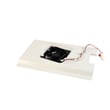
| Warm fridge, freezer OK | Frosted evaporator cover, weak airflow | Samsung refrigerator fresh food evaporator cover assembly DA97-12608A, temperature sensor |
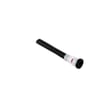
| No ice or clumping ice | Ice maker freeze-up, fill tube icing | Samsung refrigerator ice maker fill tube and heater DA97-00209Z, ice maker module |
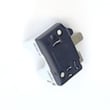
| Temps swing up and down | Sensor reading off | Refrigerator temperature sensor DA32-10104N |
| Condensation/frost at doors | Poor seal or misalignment | Door gasket, hinges |
Why it matters
Cooling and ice-making problems usually get worse over time. Catching airflow restrictions, gasket leaks, or sensor issues early helps protect food, reduces compressor run time, and prevents repeat ice maker freeze-ups.
When an error code is involved
If the display shows an error code, use a Samsung-specific guide to match the code to the system (ice maker, fan, defrost, sensor) before replacing parts: Samsung rf26 model french door refrigerator error codes.
Last updated: January 2026