Installation guide
 Error Codes



How to reset a KitchenAid side by side refrigerator?
To reset your KitchenAid KSSP42QKS00 side-by-side refrigerator, we recommend doing a simple power reset first: it clears many dispenser glitches and minor control hiccups by rebooting the control board and restoring normal operation.
- Unplug the refrigerator from the outlet, or switch OFF the dedicated circuit breaker.
- Wait 5 minutes (this lets the control fully power down).
- Restore power.
- Wait 1 to 2 minutes for the control to initialize.
- Test the dispenser and temperature controls.
A reset helps, but dispenser problems often come from air in the water line, a stuck lever/switch, or a restricted filter.
- Purge air by dispensing water for 2 to 3 minutes (in intervals) after restoring power.
- Check that the dispenser lever returns freely.
- Replace the water filter if flow is slow or the ice is hollow/small.
Helpful DIY: how to purge air from a refrigerator water dispenser video
| Symptom after reset | Most common cause | What to do next |
|---|---|---|
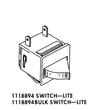
| No water, but you hear a click | Dispenser switch/lever issue | Inspect the lever area; consider refrigerator dispenser switch WP2162361 |
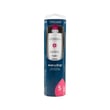
| Slow water flow | Clogged filter | Replace refrigerator water filter EDR5RXD1 |
| Ice maker not filling | Air in line or low flow | Purge air; replace filter; verify supply valve is fully open |
On built-in KitchenAid models like KSSP42QKS00, a power reset is the correct first step for intermittent display behavior. If the problem returns quickly, the control may be losing stable power or misreading temperatures.
- Confirm the doors close tightly and seals are making full contact.
- Make sure vents inside the compartments are not blocked by food.
- If temperatures swing widely, a sensor issue is a common next check.
A reset is a safe first step because it can clear temporary logic faults without replacing parts. If symptoms come back, the pattern you observe after the reset helps pinpoint whether the issue is filtration/flow, a dispenser input (switch/lever), or temperature sensing.
For model-specific installation and electrical requirements, use the installation guide.
Last updated: February 2026
Why is my KitchenAid side by side not making ice?
If your KitchenAid KSSP42QKS00 side-by-side refrigerator isn’t making ice, the most common causes are a restricted water supply (kinked line or low pressure), a clogged water filter, or an ice maker that isn’t cycling. Start with the water supply and filter, then move to the ice maker checks in the installation guide.
- Confirm the shutoff valve is fully open and the supply line behind the refrigerator is not kinked or pinched.
- Replace an overdue water filter; a clogged filter can slow fill enough to stop ice production.
- Make sure the ice bin is seated correctly and not jammed with clumped ice.
- Verify the freezer is cold enough; most ice makers need the freezer near 0°F to cycle normally.
- Check the dispenser area for stuck paddles or switches that can interfere with ice dispensing.
- Check water flow: Pull the unit forward slightly and straighten the water line. A kink can reduce flow and prevent the ice maker from filling.
- Change the filter: Install the correct filter and flush water through the dispenser to clear air and carbon fines. Use refrigerator water filter EDR5RXD1.
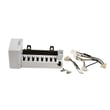
- Test the ice maker: If the mold never fills or the ejector never moves, the ice maker assembly is often the fix. Use ice maker assembly - refrigerator ice maker by whirlpool 4317943.
- Look for freezing or frost issues: Heavy frost or an iced-up evaporator area can reduce cooling and stop ice production; defrost system problems can be involved.
| What you notice | Most likely cause | What to do next |
|---|---|---|
| No ice and no water at dispenser | Supply valve closed, kinked line, low pressure | Correct supply, then retest |
| Water works but no ice | Ice maker not cycling, freezer too warm | Check temp, then ice maker |
| Slow water flow | Clogged filter | Replace filter |
| Ice maker makes a little, then stops | Freezer temp drifting, fill problem | Check airflow and water flow |
Ice makers are sensitive to both freezer temperature and water flow. Even a small restriction (kinked line or plugged filter) can prevent the fill cycle, and a slightly warm freezer can stop harvesting.
Last updated: February 2026
What is the most common problem with KitchenAid refrigerators?
Temperature inconsistency is the most common problem we see with KitchenAid refrigerators, including the KitchenAid KSSP42QKS00 built-in side-by-side. It typically shows up as warm fresh food, soft ice, or freezer burn, and it is often tied to airflow, sensors, or frost buildup (not just the thermostat). See the installation guide for model-specific setup details that affect cooling.
- Temperature swings or warm sections: blocked vents, dirty condenser area, weak evaporator fan, or a bad temperature sensor.
- Ice maker not making ice: water supply restriction, frozen fill tube, or a failing ice maker module.
- Water leaking or puddles: clogged defrost drain, cracked water tube, or loose fittings.
- Noisy operation: condenser fan issues, evaporator fan blade rubbing, or vibration from panels.
- Dispenser problems: stuck lever/switch, frozen water line, or low water pressure.
- Confirm doors seal fully and nothing blocks interior air vents.
- Set temps to typical targets: 37°F fresh food and 0°F freezer; allow 24 hours to stabilize.
- Clean dust from the condenser area (built-in units still need airflow).
- If water or ice is slow, replace the filter and purge air from the line.
- If the freezer is frosting up, suspect a defrost issue.
| Symptom | Common part to check | Example part on this page |
|---|---|---|
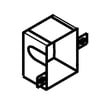
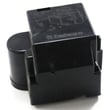
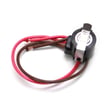
| Warm temps, frost buildup | Defrost system | Refrigerator defrost bi-metal WPW10225581 |
| Slow water, bad taste/odor | Water filtration | Refrigerator water filter EDR5RXD1 |
| No ice | Ice maker system | Ice maker assembly 4317943 |
| Clicking or dispenser won’t run | Dispenser switch/lever | Refrigerator dispenser switch WP2162361 |
A built-in refrigerator like the KSSP42QKS00 depends on steady airflow and accurate temperature sensing. When airflow is restricted or a sensor/defrost component drifts out of spec, temperatures can look “random” and food quality drops quickly.
Last updated: February 2026
What causes a KitchenAid refrigerator to stop cooling?
A KitchenAid built-in refrigerator like model KSSP42QKS00 usually stops cooling because airflow or heat removal is blocked (dirty condenser coils, failed fan), the defrost system isn’t working (ice buildup), or a temperature-sensing/control part is failing. Use the steps below to pinpoint the cause safely.
- Confirm the unit has power and the interior lights come on.
- Set fresh food to about 37°F and freezer to about 0°F; wait 24 hours for stabilization.
- Make sure vents inside both compartments are not blocked by food packages.
- Clean condenser coils and the grille area; restricted coils are a top cause of warm temps.
- Verify both doors close fully and the gaskets seal all the way around.
| Symptom | Likely area | What you’ll notice |
|---|---|---|
| Warm fridge and freezer, compressor running a lot | Condenser airflow | Little or no air movement near the condenser area |
| Freezer cold, fridge warm | Evaporator airflow | Weak/no airflow from fridge vents |
| Frost blanket on freezer back wall | Defrost system | Ice buildup, fan noise changes, temps rise over days |
| Temps swing or display seems “off” | Sensor/control | Random cycling, inconsistent temps |
Model KSSP42QKS00 parts on this page that often relate to cooling issues include the refrigerator condenser fan W10181323, refrigerator thermistor WP2188820, and refrigerator defrost bi-metal WPW10225581.
- Condenser coils and airflow: Clean coils; then listen for the condenser fan running when the compressor runs.
- Evaporator fan: If the freezer is cold but the fridge is warm, check for strong airflow; a damaged blade can reduce airflow (see refrigerator evaporator fan blade WP2169142).
- Defrost problem: If you see heavy frost, suspect the defrost circuit (bi-metal/thermostat, heater, control).
- Temperature sensing/control: If there’s no frost issue and airflow is good, a thermistor or control board can misread temps.
Cooling problems usually start as an airflow or defrost issue; fixing that early prevents food spoilage and reduces compressor run time and energy use.
For built-in access and service clearances specific to this model, follow the installation guide.
Last updated: February 2026