Owner’s manual
 Error Codes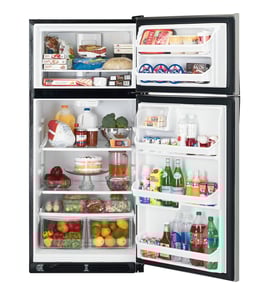


What is the top part of a refrigerator called?
On a Kenmore 79573952300 top-mount refrigerator, the top compartment is the freezer. It’s the section designed to keep foods frozen, and it also supplies cold air that circulates down into the fresh food (refrigerator) compartment.
In a top-mount design, the freezer is more than storage for frozen food; it’s also the starting point for airflow that cools the refrigerator section.
- Cold air enters through the bottom of the freezer section and moves upward
- Most air recirculates through freezer vents and under the freezer floor
- Some cold air flows into the refrigerator section through the top vent
- Blocking vents with packages can cause warm temperatures and moisture buildup
- Temperature controls regulate freezer temperature and overall cooling performance
| Term you might hear | What it usually means | Where it is |
|---|---|---|
| Freezer compartment | Frozen-food section | Top (on this model type) |
| Fresh food compartment | Main refrigerator section | Bottom |
| Air vents | Openings that move cold air | Between and within compartments |
If the freezer vents are blocked or the freezer door is left open, airflow drops and the refrigerator section can warm up or develop condensation. Keeping the freezer organized and vents clear helps both compartments hold steady temperatures.
For the exact feature layout and vent locations on your specific configuration, use the owner's manual.
Last updated: February 2026
How do I know what model Kenmore refrigerator I have?
Your Kenmore refrigerator’s model number is printed on the identification label inside the fresh food (refrigerator) compartment. For Kenmore model 79573952300, the manual specifies the label is on the right-hand side of the refrigerator compartment; once you have that number, you can match parts and diagrams correctly.
Check these common spots first (starting with the model-specific location):
- Right-hand side wall inside the refrigerator compartment (most common for this model)
- Side wall near the crisper drawers
- Ceiling area inside the fresh food section
- Behind or near the base grille (kick plate) area
- On the back exterior panel (less common)
For the exact location and how it’s referenced in the documentation, use the owner's manual.
Record both numbers exactly as shown on the label:
- Model number (example: 79573952300)
- Serial number
- Date of purchase (if available)
Kenmore refrigerators can look similar across different series. The correct model number ensures you get the right Kenmore parts (like a door bin, gasket, or water inlet valve) and the correct troubleshooting steps.
| Item | What it tells us | Used for |
|---|---|---|
| Model number | The exact design and parts list | Ordering correct replacement parts |
| Serial number | The unit’s unique production ID | Service history and unit identification |
Try these practical fixes:
- Wipe the label gently with a damp cloth and dry it
- Use your phone camera and zoom in for clarity
- Take a photo with flash off to reduce glare
- Copy the model number character-for-character (including any dashes)
Last updated: February 2026
What is the average lifespan of a Kenmore 79573952300 refrigerator?
A Kenmore 79573952300 top-mount refrigerator typically lasts 10 to 15 years. We see units reach the higher end when the condenser area stays clean, door gaskets seal tightly, and airflow is not blocked; sealed-system failures (compressor or refrigerant leaks) are the most expensive repairs.
Most refrigerator life is driven by heat management, door sealing, and how hard the compressor has to run.
- Condenser cleanliness: dust buildup raises temperatures and run time
- Door gasket condition: air leaks cause longer run cycles and frost issues
- Room temperature: hotter rooms make the compressor run more often
- Door openings and warm food loads: normal causes of longer run time
- Defrost drainage: clogs can lead to ice buildup and water leaks
Use this as a practical decision tool when a major part fails.
| Refrigerator age | Common approach | Why |
|---|---|---|
| 0 to 5 years | Repair | Value is high; many failures are straightforward |
| 6 to 10 years | Case-by-case | Depends on part cost and overall condition |
| 11 to 15 years | Lean replace if major failure | Higher chance of additional wear items failing |
| 16+ years | Replace | Efficiency and reliability usually drop |
These steps reduce compressor run time and temperature swings.
- Vacuum dust from the condenser area regularly
- Keep vents inside the refrigerator and freezer clear for proper air circulation
- Confirm doors close fully and the gasket grips paper all the way around
- Set stable temperatures (avoid frequent control changes)
- Clear defrost drain issues early; a clogged drain can cause puddles and icing
Longer compressor run time is normal in warm rooms or after loading groceries, but chronic long run times increase wear on the sealed refrigeration system. The troubleshooting section in the 79573952300 owner's manual also explains conditions that make the compressor run more often.
Last updated: February 2026
How to tell if a Kenmore refrigerator compressor is bad?
On a Kenmore 79573952300 top-mount refrigerator, a “bad compressor” usually shows up as poor or no cooling even though the unit has power, along with repeated clicking (start attempts) or unusual loud humming. Before condemning the compressor, we check airflow, condenser cleanliness, and the start relay because those issues can mimic compressor failure.
- Repeated clicking every few minutes with little or no cooling (overload protector cycling)
- Warm refrigerator and freezer while interior lights work and fans may still run
- Compressor is very hot to the touch and shuts off quickly after trying to start
- Loud buzzing or humming followed by a click and shutdown
- Breaker trips or the unit goes dead shortly after the compressor tries to start
The compressor can run longer than you expect on modern refrigerators; the owner's manual notes that at normal room temperatures the compressor may run about 40% to 80% of the time, and even more in warm conditions.
Check these items before focusing on the sealed system:
- Controls and power: make sure the refrigerator control is not set to OFF
- Condenser coils: dirty coils make the compressor work harder; clean them
- Door sealing: doors not closing fully can cause nonstop running and warm temps
- Airflow: listen for the evaporator fan moving air in the compartments
| Check | What you’re looking for | What it suggests |
|---|---|---|
| Listen at the back | Click, then silence; repeats | Start device/relay or compressor not starting |
| Feel for vibration | No vibration when it “should” be running | Compressor not running |
| Coil cleaning | Heavy dust buildup | Overheating and poor cooling |
For electrical tests (winding resistance, amp draw, start components), unplug the refrigerator and use proper meters and procedures; sealed-system and compressor diagnosis is typically technician-level work.
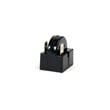
A failed start device can cause clicking and no-start symptoms that look like a bad compressor. If your symptoms match, the refrigerator compressor start relay 6749c-0014e is a common suspect on this model family.
Replacing a start relay is straightforward compared with sealed-system work. Doing the quick checks first helps you avoid replacing major components when the real issue is airflow, dirty coils, or a failed start device.
Last updated: February 2026
What are the common problems with Kenmore 79573952300 refrigerators?
Common problems with the Kenmore 79573952300 top-mount refrigerator include warm temperatures from dirty condenser coils or blocked air vents, doors not sealing or closing fully, ice maker slow or poor-tasting ice, water leaks (often tied to the defrost drain), and increased fan or compressor noise. Use the owner's manual troubleshooting tables to match symptoms to the right fix.
- Refrigerator or freezer too warm: frequent door openings, large food loads, controls set too warm, vents blocked by items
- Ice maker slow or not making ice: freezer not cold enough yet (allow up to 24 hours after hookup), door held open, heavy ice usage
- Water on the floor or puddles: defrost drain restriction or drain tube issue; humidity can also slow evaporation in the drain pan
- Doors will not close completely: unit not level, food packages blocking, bins or shelves out of position, sticky/dirty gaskets
- Bad-tasting or smelly ice: old ice, unwrapped food odors, mineral-heavy water, dirty ice bin
- Noisy operation: normal operating sounds, fan blade interference, or airflow restrictions
- Confirm doors close firmly and nothing is holding them open.
- Move food away from interior air vents so cold air can circulate.
- Clean condenser coils (dirty coils reduce cooling and make the compressor work harder).
- After changing temperature controls, wait 24 hours before adjusting again.
- If the door is hard to reopen right away, wait about 5 minutes for pressure to equalize.
| Symptom | Common area | Part on this model that may help |
|---|---|---|
| Water leaking or puddles | Defrost drain system | Refrigerator drain 5251JA3003D |
| Warm temps plus fan noise or poor airflow | Evaporator airflow | Refrigerator evaporator fan blade 5901JJ1003A |
| Water dispenser or ice maker not filling | Water supply/valve | Refrigerator water inlet valve 5220JA2009D |
| Door not sealing well | Door seal | Refrigerator gasket ADX52752651 |
Most “not cooling” and “ice maker not working” complaints trace back to airflow, door sealing, or dirty coils. Fixing those basics first prevents food spoilage, reduces compressor run time, and avoids repeat icing or leaking problems.
Last updated: February 2026