Error Codes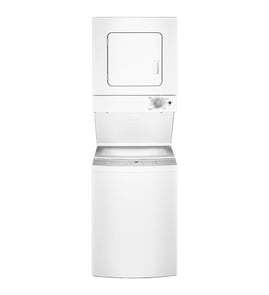


What is the average lifespan of a Kenmore washer?
A Kenmore washer typically lasts 10 to 15 years with normal household use. For a Kenmore stacked laundry center like model 11099575120, good loading habits and basic upkeep help you reach the longer end of that range, while chronic overloading and leaks shorten it.
- Load size and balance: frequent overloading strains the drive system and suspension.
- Water quality: hard water speeds up valve and internal wear.
- Drain performance: slow draining makes the pump work harder and can leave residue behind.
- Agitation and spin wear: worn drive parts reduce cleaning and increase stress on the transmission.
- Small leaks: even minor seepage can damage bearings, couplers, and electrical connections.
| Symptom you notice | Likely wear area | Example part for this model |
|---|---|---|
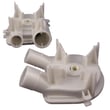
| Won’t drain or drains slowly | Drain pump or blockage | Washer drain pump WP3363394 |
| Won’t fill, fills slowly, or won’t stop filling | Water inlet valve | Inlet valve 285805 |
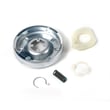
| Agitator moves poorly or “ratchets” | Agitator dogs | Agitator dog 80040 |
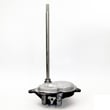
| Loud grinding, poor agitation/spin | Gear case or clutch | Gear case 3360629 |
- Keep loads below the top rim and distribute items evenly.
- Use the right amount of HE detergent (too much causes buildup and extra drag).
- Check fill hoses and connections for drips; fix leaks quickly.
- Empty pockets and wash small items in a mesh bag to reduce pump clogs.
- If draining slows, inspect the drain path and pump area before continued use.
A washer that is maintained and repaired early usually avoids secondary damage (for example, a small drain issue turning into a pump failure). Replacing a common wear part at the right time can extend the usable life of your Kenmore 11099575120 and keep wash performance consistent.
Last updated: February 2026
How can I tell how old my Kenmore washer is?
You can tell the age of your Kenmore laundry center model 11099575120 by finding the serial number on the unit and decoding the manufacturing date from the serial format. Kenmore serial formats vary by who built the washer (commonly Whirlpool-built), so we match the serial pattern to the correct date code chart.
Check these common locations on Kenmore stacked washer/dryer units:
- On the washer lid opening or under the washer lid
- On the inside of the washer front panel area (near the tub opening)
- On the back panel of the laundry center cabinet
- Behind the lower access panel (if your unit has one)
- On a model and serial tag near the dryer door opening (some stacked designs)
Once you have the serial number, use the format to identify the build date.
- Look for a month and year code embedded in the first several characters
- Some formats use letters for month and numbers for year
- Other formats use numbers for week and year
- The correct chart depends on the manufacturer that produced the Kenmore unit
A reliable way to do this is to use our guide: how to find your appliance model number (and what it means for parts).
Having these details makes it easy to match the right chart:
- Full model number: 11099575120
- Full serial number (copy every character)
- Where the tag is located (washer area vs dryer area)
- Whether the unit is gas or electric dryer (helps confirm the configuration)
Knowing the manufacture date helps us narrow down the correct parts and common wear items for your Kenmore laundry center, especially when designs change mid-series.
| What you’re doing | Why the manufacture date helps |
|---|---|
| Ordering replacement parts | Confirms the correct revision of the part |
| Troubleshooting symptoms | Points to common age-related failures |
| Planning a repair budget | Helps decide repair vs replace priorities |
If you are already seeing washer performance issues, common wear parts for this model family include the coupling 285753A and washer drain pump WP3363394.
Last updated: February 2026
How to find your Kenmore washer model number?
For your Kenmore stacked laundry center model 11099575120, the model number is printed on a rating label on the washer section. We most often see it on the back of the control panel, on the cabinet near the bottom, or around the door opening area (depending on the washer design).
- Back of the washer control panel (upper rear area)
- Side of the main washer cabinet near the bottom edge
- Behind the washer lid (top-load style washer section)
- Inside the washer door opening or door jamb (front-load style washer section)
- Rear panel of the laundry center cabinet
The rating label usually includes the model number and a serial number. Record both before ordering parts.
| What to capture | Example for this unit | Why you need it |
|---|---|---|
| Model number | 11099575120 | Ensures parts match your exact laundry center |
| Serial number | (varies) | Helps confirm production run details when parts changed |
Kenmore laundry centers can look similar across multiple model numbers, but internal components (like the washer drive system or water valve) can differ. Using the exact model number helps you select the correct replacement part the first time.
Once you confirm the model number, you can confidently shop common repair parts for this unit, such as:
- Inlet valve 285805 (fills the washer with hot and cold water)
- Washer drain pump WP3363394 (drains water out during drain and spin)
- Coupling 285753A (connects the washer motor to the transmission/drive)
Last updated: February 2026
How to remove front panel from Kenmore stackable washer?
On the Kenmore laundry center model 11099575120, the washer front panel typically comes off after you disconnect power, remove the lower access fasteners, and then lift and pull the panel forward to release the top retaining clips. This gives you access to the drain pump, motor coupling, and drive components.
- Unplug the laundry center (or switch off the breaker).
- Turn off both water supply valves.
- If you need to move the unit, protect the floor and avoid stressing the gas line (if your dryer is gas).
- Have a towel or shallow pan ready in case you access the pump area.
- Remove the lower access panel (if equipped). Many units have a small lower panel held by screws near the bottom edge.
- Remove the front panel mounting screws. These are usually at the bottom corners or just behind the lower panel.
- Release the top clips. With the bottom free, lift the front panel slightly and pull it toward you to unhook it from the top retaining clips.
- Disconnect any wiring (if present). If the panel has a door switch or harness routed to it, unplug the connector before fully removing the panel.
- Drain and leak checks around the pump area
- Drive system inspection (coupling, clutch, gear case)
- Hose and clamp inspection
If you are removing the panel because the washer will not drain, will not agitate, or makes grinding noises, these model-compatible parts are common fixes:
| Symptom | Common suspect | Example part on this model page |
|---|---|---|
| Will not drain / water left in tub | Drain pump or blockage | Washer drain pump WP3363394 |
| Motor runs but washer will not agitate/spin | Motor coupling | Coupling 285753A |
| Agitator moves poorly or “ratchets” | Worn agitator dogs | Agitator dog 80040 |
Removing the front panel the right way prevents bent sheet metal, broken retaining clips, and pinched wiring. It also makes it easier to correctly diagnose whether you need a pump, coupling, clutch, or gear case repair.
Last updated: February 2026
How many cubic feet is a Kenmore washer?
For the Kenmore laundry center model 11099575120, the washer’s exact cubic-foot capacity depends on the specific tub configuration used for this model series; most Kenmore top-load washers of this style are about 3.5 to 4.0 cu. ft. Use your model’s identification label and parts breakdown to confirm the correct tub size components.
If you want a practical estimate, we use the common tub-volume approach:
- Measure the inside diameter of the wash basket (inches)
- Measure the depth from the bottom to the top rim (inches)
- Convert cubic inches to cubic feet (divide by 1,728)
- Compare your result to typical top-load ranges
| Washer type | Typical capacity range |
|---|---|
| Compact top-load | 2.0 to 3.4 cu. ft. |
| Standard top-load (common in laundry centers) | 3.5 to 4.0 cu. ft. |
| Large top-load | 4.1 to 5.2 cu. ft. |
On model 11099575120, the washer capacity is tied to the basket and drive system design. When you’re matching parts, confirm you’re shopping by the full model number and the correct diagram section.
Common washer-side parts you may see while verifying configuration include:
- Washer drive block WP389140 (basket drive interface)
- Gear case 3360629 (transmission that drives agitation and spin)
- Washer drain pump WP3363394 (drains water during spin)
Capacity affects how much you can wash per load and how well the washer agitates and spins. Overloading a smaller-capacity tub can cause poor cleaning, off-balance spinning, and extra wear on the coupling, clutch, and gear case.
Last updated: February 2026