Error Codes

How do I know what model my garage door opener is?
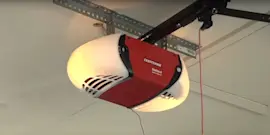
To identify your Craftsman garage door opener model, look for the model number label on the motor unit housing. On many units like model 139664953, it’s located under a light lens or on the side opposite the antenna; once you find it, match that number when searching parts on Sears PartsDirect.
Check the motor head (the unit mounted to the ceiling), not the wall button or remote.
- Under the front light lens cover
- Under the left light lens (when you’re facing the opener from inside the garage)
- On the side of the motor unit opposite the antenna wire
- On a sticker near the wiring terminals or logic board cover
- On the back or side panel of the motor housing
The label is usually a small sticker or plate with several lines of text.
| Label item | What it means | Example |
|---|---|---|
| Model number | Identifies the exact opener version for parts | 139664953 |
| Serial number | Manufacturing identifier | Varies |
| Electrical rating | Power info for troubleshooting | Varies |
Garage door opener parts (receiver components, logic board, safety sensor wiring, wall control compatibility) are model-specific. Using the exact model number helps us match the correct diagrams and replacement parts the first time.
- Turn off power at the outlet before removing a light lens or cover.
- Use a flashlight and take a photo; labels are often faded or placed in a recessed area.
- If the opener has two light lenses, check both sides.
Last updated: February 2026
How to find out garage door opener type?
To identify your garage door opener type (and the right remote/keypad programming method), we match what you see on the opener head and wall control to the radio system it uses. For Craftsman model 139664953, the fastest check is the learn button color and whether the remote uses DIP switches.
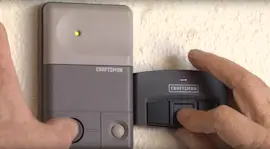
- Look for a learn button on the motor unit (usually under the light lens or a small cover). The button color is a strong clue to the radio system.
- Check the remote: if it has a row of tiny DIP switches inside, it is an older fixed-code style.
- Check the wall control: a wall button with a learn/program function usually indicates a rolling-code system.
- Check the safety sensor style near the floor: newer openers typically have photo eyes with LED indicators.
- Confirm the model number on the opener label to avoid mixing parts and remotes.
Use this as a practical identification shortcut.
| What you see | What it usually means | What to do next |
|---|---|---|
| Remote has DIP switches | Fixed-code opener/receiver | Match switch pattern on remote and receiver; replace remote like-for-like |
| Learn button present | Rolling-code style system | Program remote using the learn button sequence |
| No learn button and no DIP switches visible | External receiver or uncommon control setup | Identify receiver module and its programming method |
- Unplug the opener (or turn off the breaker) before opening covers.
- Remove the light lens/cover on the motor unit and locate the learn or program button.
- Open your remote and look for DIP switches (a small bank of numbered switches).
- Write down what you find (learn button color, remote type, any receiver module).
- Use that info to select compatible remotes/receivers and programming steps on Sears PartsDirect.
Garage door opener “type” determines remote compatibility, keypad programming, and whether you are dealing with a rolling-code receiver or an older fixed-code setup. Identifying it first prevents buying the wrong control parts and saves troubleshooting time.
Last updated: February 2026
Where can I buy Craftsman garage door opener parts?
You can buy replacement parts for your Craftsman garage door opener model 139664953 by using the model-specific parts listing for this opener, then ordering the exact components you need (such as a remote control, safety sensor, wall control, or receiver-related parts). For broader Craftsman parts searches by model number, use Sears PartsDirect.
- Match the model number 139664953 exactly; small number changes can mean different parts.
- Identify the failed system first (remote, wall button, safety sensors, rail/trolley, or logic/receiver).
- Compare part descriptions carefully (especially for remotes and receiver components).
- If your opener is intermittent, check wiring connections before ordering parts.
- Keep the old part until the repair is complete so you can confirm fit and connectors.
| Symptom | Most likely part area | What to check first |
|---|---|---|
| Door will not close | Safety sensor circuit | Sensor alignment, lens cleanliness, wire damage |
| No response from remote | Remote/receiver | Remote battery, reprogram steps, nearby interference |
| Wall button does nothing | Wall control wiring | Loose terminals, staple-punctured wire |
| Runs but door does not move | Drive/rail components | Trolley engagement, worn drive parts |
Garage door openers are safety devices; using the correct model-matched part helps ensure proper door travel, reliable reversing, and safe photo-eye operation.
If you suspect a wiring issue (common with sensors and wall controls), use how to repair broken or damaged wires video to confirm the wire is intact and properly reconnected.
Last updated: February 2026
How to find a compatible garage door opener?
To find a compatible garage door opener (or compatible remotes/keypads) for your Craftsman model 139664953, match the accessory to the opener’s radio system: brand family, learn-button programming style, and frequency/technology (rolling code vs dip switches). Start by confirming the exact model number on the motor head label, then shop by model on Sears PartsDirect.
Use the motor unit label and the programming button area to identify what your opener supports.
- Model number: confirm it reads 139664953 (not a similar Craftsman number)
- Learn/program button: note whether your opener uses a learn button (rolling code) or dip switches (older style)
- Receiver type: your unit is an electronic opener with receiver, so accessories must match that receiver’s system
- Remote type: universal remotes work only when they support your opener’s technology
- Wall control/keypad: some openers require a compatible wall console, not a basic push button
Most compatibility issues come from a mismatch in the radio protocol, not the door size or motor power.
| What you’re matching | Why it matters | What happens if it’s wrong |
|---|---|---|
| Rolling code vs dip switches | Determines how the remote “pairs” | Remote will not program |
| Learn-button system | Identifies the programming method | Remote may program then fail |
| Frequency/protocol family | Ensures the receiver can “hear” the remote | No response from opener |
- Read the opener label on the motor head and confirm Craftsman 139664953.
- Inspect the programming area (near the light lens) for a learn/program button or dip switches.
- Decide what you need:
- Replacement remote
- Wireless keypad
- Wall control
- Receiver/logic board related repair
- Search by model number first; that keeps you in the correct Craftsman accessory family.
A “universal” remote or smart controller can look right but still fail if it does not support your opener’s rolling-code system. Matching the receiver technology first saves time and prevents repeated programming attempts.
Last updated: February 2026
Is it worth repairing a 20 year old garage door opener?
For a 20-year-old garage door opener, repairing is usually not worth it; replacement is the better long-term choice for reliability, security, and safety. With a Craftsman 139664953 opener, we recommend repair only when the problem is minor and low-cost (like a sensor alignment or a loose wire).
A quick repair is a good “buy time” option when the opener still runs smoothly and the issue is isolated.
- The opener runs but the door will not close (often photo eye alignment or wiring)
- The wall control works but remotes are inconsistent (often receiver, interference, or programming)
- The unit is loud but otherwise functional (often hardware, rail, or door balance issues)
- The door reverses or stops randomly (often safety sensor, force setting, or binding door)
- The opener is completely dead, smokes, or trips breakers (replacement is the practical path)
Modern openers typically add meaningful upgrades that older units do not match.
| Area | Repairing an older opener | Replacing with a newer opener |
|---|---|---|
| Security | Older remote tech can be less secure | Rolling-code security is standard |
| Noise | Older drive systems are often louder | Belt drives are typically quieter |
| Reliability | More age-related failures | New motor and electronics |
| Convenience | Limited features | Smart controls and better lighting are common |
These checks help you avoid spending money on an opener when the real issue is the door or wiring.
- Confirm the outlet has power (test with a lamp)
- Check for a tripped GFCI or breaker feeding the garage
- Inspect low-voltage wires at the wall control and safety sensors for staples, cuts, or loose terminals
- Clean and align the photo eyes; verify both indicator lights are steady
- Disengage the trolley and hand-lift the door; a heavy or binding door points to a door hardware issue, not the opener
If you need guidance on safely fixing damaged conductors, use our how to repair broken or damaged wires video.
A garage door is a heavy moving system; as openers age, intermittent electronics, worn wiring, and outdated security features can turn a “small annoyance” into repeated failures. Replacing an older unit often reduces callbacks and improves day-to-day safety.
For parts lookup by model number and to explore replacement options, start with the Craftsman 139664953 parts list and search on Sears PartsDirect.
Last updated: February 2026