 Installation guide
 Owner’s manual
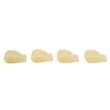


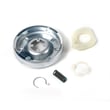
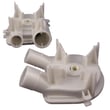
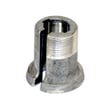
How to identify a Kenmore washer model?
To identify your Kenmore washer model, find the model and serial number label on your Kenmore washer; for model 11028422700, the label is located under the washer lid. Use that full model number when ordering parts like a lid switch assembly or drain pump and when looking up troubleshooting steps in the 11028422700 owner’s manual.
Where to look on model 11028422700
Check these common label locations (start with the first one):
- Under the washer lid on the top opening (primary location for this model)
- On the rim of the tub opening (near the lid opening)
- On the back of the control console
- On the rear panel of the cabinet
- Near the bottom edge of the main cabinet (side or back)
What to write down (and why)
Record the information exactly as shown on the label:
- Model number (example: 11028422700)
- Serial number (unique to your washer)
- Purchase date (helpful for service history)
Quick ID checklist
| Item on label | What it’s used for | Tip |
|---|---|---|
| Model number | Matching the correct parts diagrams and parts list | Copy every digit; do not shorten it |
| Serial number | Production details and service identification | Take a clear photo for reference |
| Purchase date | Maintenance tracking | Note it in your manual |
Why it matters
Kenmore model numbers can look similar, but internal parts can differ by revision. Using the exact model number helps ensure you get the right replacement part the first time, such as the washer lid switch assembly WP8318084 if the washer will not spin or agitate with the lid closed.
Last updated: February 2026
Is it worth repairing a Kenmore washing machine?
Yes, repairing a Kenmore washer is usually worth it when the fix restores reliable washing and spinning for far less than replacing the machine. For Kenmore model 11028422700, we recommend comparing the total repair cost (parts plus labor) to the washer’s overall condition and how long you plan to keep it.
Quick way to decide
Use these practical checkpoints before you spend money:
- Repair it if the problem is a common wear item (lid switch, drain pump, coupling, clutch).
- Repair it if the tub and cabinet are solid (no major rust-through, no severe leaks).
- Repair it if the washer still fills, agitates, and drains, but one function is weak.
- Replace it if multiple major systems are failing at once (leaking plus no spin plus loud grinding).
- Replace it if the repair requires repeated teardown and you have recurring breakdowns.
For model-specific safety and service guidance, follow the 11028422700 owner’s manual.
Common repairs that are often cost-effective
These parts frequently solve “won’t spin”, “won’t drain”, or “won’t start” symptoms on many Kenmore top-load designs:
- Washer lid switch assembly WP8318084 (washer will not run or spin with an open or failed lid switch)
- Washer drain pump WP3363394 (drain issues, water left in tub)
- Coupling 285753A (motor runs but agitation/spin is weak or stopped)
- Clutch 285785 (spin performance problems)
Cost and effort comparison
| Scenario | Typical outcome | Usually worth it? |
|---|---|---|
| Single part replacement (switch, pump, coupling) | Restores operation quickly | Yes |
| Multiple wear parts at once | Better reliability, higher cost | Often |
| Major drive or gearcase work | Higher labor, more downtime | Depends |
Why it matters
A targeted repair can extend the life of a dependable washer and avoid the learning curve and installation changes that come with a new machine. The manual also notes important safety points, including avoiding DIY repairs unless the procedure is specifically recommended and you have the skills to do it.
Last updated: February 2026
What is the average lifespan of a Kenmore washer?
A Kenmore washer typically lasts 10 to 15 years with normal household use. For your Kenmore model 11028422700, lifespan depends most on correct installation, avoiding overloads, and routine care steps outlined in the 11028422700 owner’s manual.
Typical lifespan and what affects it
Most washers reach the 10 to 15 year range when they are installed on a solid, level floor and used with balanced loads.
Common factors that shorten washer life:
- Frequent overloading or consistently unbalanced loads
- Operating in freezing conditions (at or below 32°F) without winterizing
- Poor installation conditions (soft flooring, excessive floor slope)
- Skipping basic care (cleaning, checking hoses, addressing leaks early)
- Running with worn drive components (coupling, clutch, lid switch issues)
Model-specific tips for 11028422700
Your installation requirements matter because vibration and strain accelerate wear.
From the installation guidance for this washer:
- Use a level floor with a maximum slope of about 1 inch under the washer
- Avoid installing on carpeting
- Ensure proper water supply conditions (hot and cold faucets nearby; adequate water pressure)
- Do not operate or store the washer at or below 32°F unless it is winterized
For the full setup checklist, use the 11028422700 installation guide.
Quick “repair vs replace” checklist
If your washer is within the typical lifespan, repairs often make sense when the issue is isolated to a common wear part.
| What you notice | Common cause | Typical next step |
|---|---|---|
| Agitator not moving correctly | Worn agitator dogs | Replace agitator dog 80040 |
| Washer will not spin or agitate | Worn motor coupling | Replace coupling 285753A |
| Won’t drain or drains slowly | Drain pump problem or blockage | Inspect/replace washer drain pump WP3363394 |
| Won’t start or stops when lid opens | Lid switch issue | Test/replace washer lid switch assembly WP8318084 |
Why it matters
Knowing the expected lifespan helps you plan: if your 11028422700 is near 10 to 15 years old, investing in maintenance and fixing small problems early can prevent bigger failures like drive system damage or chronic leaks.
Last updated: February 2026





