Error Codes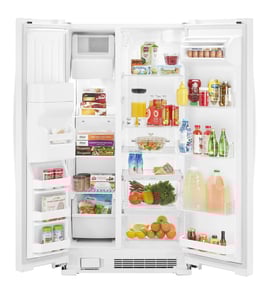




How big is the KSRS25QFWH00?
The KitchenAid KSRS25QFWH00 is a full-size side-by-side refrigerator; most units in this 25 cu. ft. class measure about 33 inches wide, 66 to 70 inches tall, and 32 to 35 inches deep (not counting door handles). Use your space and door-swing clearance to confirm fit.
Typical dimensions you can plan around
These are the measurements we see most often for side-by-side refrigerators like KSRS25QFWH00:
- Width: ~33 in.
- Height: ~66 to 70 in.
- Depth (cabinet): ~30 to 33 in.
- Depth (with doors): ~32 to 35 in.
- Depth (with handles): often 2 to 4 in. more than “with doors”
How to measure your refrigerator correctly
Measure the refrigerator itself and the opening; then compare.
- Measure width at the widest point (usually the cabinet).
- Measure height from floor to the top hinge cover area.
- Measure depth from the back to the front of the doors (and again to the front of the handles).
- Allow at least 1 inch of clearance behind the unit for airflow and water line routing.
- Confirm you can remove bins and shelves; the ice bin and door bins often need extra room.
Fit checklist (quick reference)
| What you are checking | What to allow for | Why it matters |
|---|---|---|
| Opening width | 33 in. fridge plus clearance | Prevents cabinet rub and vibration noise |
| Height under cabinets | Up to ~70 in. | Avoids hinge and top trim interference |
| Depth to walkway | 32 to 35 in. plus handles | Keeps doors from blocking traffic |
| Door swing | Several inches beyond cabinet | Ensures drawers and bins can pull out |
Why it matters
Correct sizing prevents installation headaches like doors that cannot open fully, restricted airflow that causes warm temperatures, and pinched water tubing to the ice maker.
If you are planning a water line route or replacing a pinched tube, the refrigerator water tube W10823511 is the model-matched part to reference.
Last updated: January 2026
How to adjust temperature on KitchenAid side by side refrigerator?
On the KitchenAid KSRS25QFWH00 side-by-side refrigerator, adjust temperature using the fresh food and freezer controls on the control panel; make small changes and give the unit 24 hours to stabilize before adjusting again.
How to set the controls (best practice)
- Set both compartments to the mid-range setting first.
- Change only one setting at a time (freezer or fresh food).
- Adjust in small steps (one click or one number at a time).
- Wait 24 hours between adjustments to see the true result.
- Aim for 0°F in the freezer and 37°F to 40°F in the refrigerator.
What the common settings mean
Many KitchenAid side-by-side models use either a numbered scale or “colder/warmer” style buttons.
| If you want… | Adjust this | Typical direction |
|---|---|---|
| Colder freezer | Freezer control | Toward “colder” or higher number |
| Colder refrigerator section | Refrigerator control | Toward “colder” or higher number |
| Better overall cooling after loading groceries | Use a temporary boost feature (if equipped) | Turn on, then turn off after it recovers |
If temperatures still seem off
These checks fix most “won’t get cold enough” or “freezing food” complaints:
- Confirm doors seal tightly and close fully; warm air leaks cause temperature swings.
- Do not block air vents with food packages.
- Keep the refrigerator about 2/3 full for stable temps (overpacking restricts airflow).
- Clean dust from the condenser area to improve heat removal.
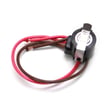
- If you see frost buildup on the back wall of the freezer, inspect the defrost system; the refrigerator defrost bi-metal WPW10225581 is one common component in that circuit.
Why it matters
Correct temperature settings protect food safety, reduce frost and ice buildup, and help the compressor and fans run in normal cycles instead of constantly trying to recover.
Last updated: January 2026
What is the most common problem with a KitchenAid refrigerator?
For the KitchenAid KSRS25QFWH00 side-by-side refrigerator, the most common customer-reported issues are ice maker problems (no ice, slow ice, leaking) and cooling problems caused by airflow restrictions or defrost-system trouble that leads to frost buildup and warm temperatures.
Most common symptoms we see
- Ice maker stops making ice or makes small/hollow cubes
- Water leaking inside the freezer or under the refrigerator
- Freezer cold but fresh-food section warm (or the reverse)
- Frost or ice buildup on the freezer back wall
- Unusual fan noise or intermittent cooling
Quick checks you can do first (no parts swapping)
- Confirm temperatures: Set freezer near 0°F and refrigerator near 37°F; allow 24 hours to stabilize.
- Check airflow: Make sure vents are not blocked by food packages or ice buildup.
- Clean condenser coils: Dusty coils commonly cause weak cooling and long run times.
- Inspect door sealing: Look for gaps, torn gasket areas, or doors not closing fully.
- Look for defrost clues: A solid frost sheet on the freezer back panel points to a defrost issue.
Parts that commonly solve these problems on KSRS25QFWH00
If your symptoms match, these model-compatible parts are frequent fixes:
| Symptom | Likely system | Example model-compatible part |
|---|---|---|
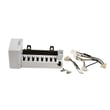
| No ice or slow ice | Ice maker assembly | Ice maker assembly - refrigerator ice maker by whirlpool 4317943 |
| Frost buildup, warm temps | Defrost system | Refrigerator defrost bi-metal WPW10225581 |
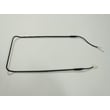
| Frost buildup, warm temps | Defrost system | Refrigerator heater WP2323198 |
| Warm fresh-food section | Airflow/damper | Refrigerator diffuser WP2209751 |
Why it matters
Ice maker and cooling complaints often share the same root causes: restricted airflow, poor heat rejection at the condenser, or a defrost failure that slowly chokes the evaporator with ice. Catching it early helps prevent food spoilage and reduces compressor run time.
Last updated: January 2026