Installation guide
 Owner’s manual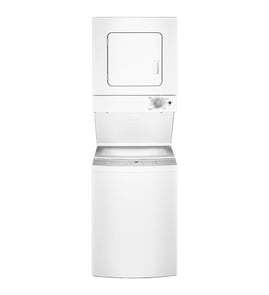


What is the average lifespan of a Whirlpool dryer?
For a Whirlpool dryer, the typical lifespan is 10 to 13 years with normal household use and basic maintenance. On a stacked laundry center like model LTE5243DQ2, good airflow, correct venting, and avoiding overloads are the biggest factors in reaching (or beating) that range.
What affects dryer life the most
- Venting quality: crushed, long, or restricted venting makes the dryer run hotter and longer
- Lint control: a clogged lint screen or lint buildup inside the cabinet strains the heater and motor
- Load size: frequent overloading wears drum support parts and the drive system faster
- Heat settings: high heat on every load increases thermal stress on wiring and heating components
- Electrical supply: loose connections or repeated breaker trips can damage controls over time
Maintenance that adds years (and prevents common failures)
Use these habits for Whirlpool laundry centers like LTE5243DQ2:
- Clean the lint screen every load
- Check airflow at the outside vent hood; strong airflow means the vent path is clear
- Use heavy 4 in. (10.2 cm) metal exhaust vent (not plastic or foil)
- Keep the unit level to reduce vibration and drum wear
- If drying times increase, clean the vent system before replacing parts
Quick lifespan expectations by usage
| Usage pattern | Typical dryer lifespan | What you usually notice first |
|---|---|---|
| Light (few loads/week) | 12 to 15 years | longer dry times, noisy drum |
| Average (most households) | 10 to 13 years | heat issues, timer wear |
| Heavy (daily loads) | 7 to 10 years | motor, drum support, heat circuit issues |
Why it matters
A dryer that is taking longer to dry is not just inconvenient; it often indicates restricted airflow or heat-system strain. Fixing airflow early can prevent overheating that damages wiring and drive components.
For model-specific venting, safety, and care details, follow the LTE5243DQ2 owner's manual.
Last updated: February 2026
What is the most common problem with Whirlpool washers?
For Whirlpool washers (including the Whirlpool LTE5243DQ2 washer/dryer laundry system), the most common customer complaints are won’t drain and won’t spin. Those symptoms are usually tied to a drain restriction, a failing drain pump, or a worn drive system component that prevents the basket from reaching full spin.
Quick checks we recommend first
- Make sure the load is not overloaded or severely unbalanced; redistribute items and retry spin.
- Verify the drain hose is not kinked, crushed, or shoved too far down the standpipe.
- Check for slow draining (water left in the tub); that often points to a pump or blockage.
- Listen for a humming motor with no movement; that can indicate a worn coupling or a jam.
- If the unit drains but will not spin, suspect a worn clutch or drive block.
Common causes and the parts that often fix them
| Symptom | What it usually means | Common part to check on LTE5243DQ2 |
|---|---|---|
| Won’t drain or drains slowly | Pump jammed, worn, or obstructed | Washer drain pump WP3363394 |
| Motor runs but washer won’t agitate/spin | Drive connection slipping or broken | Coupling 285753A |
| Spins weakly, burning smell, or intermittent spin | Worn clutch or transmission-related wear | Clutch 285785 or gear case |
| Loud grinding during spin | Drive block or basket drive wear | Washer drive block WP389140 |
Why it matters
A washer that does not drain or spin leaves clothes soaking wet and can strain the drive motor and gear case over time. Catching a restriction early (hose, pump, or coupling) often prevents bigger, more expensive repairs.
Where to confirm the exact procedure for your unit
We recommend following the model-specific steps and safety notes in the LTE5243DQ2 owner's manual, especially for access panels, draining water safely, and reassembly order.
Last updated: February 2026
What is the downside of a washer/dryer combo?
The biggest downside is capacity and convenience: combo units often dry less than they can wash, so you may need to dry in two batches or run longer cycles. With the Whirlpool LTE5243DQ2 stacked laundry center, you also need proper venting and electrical setup for safe, reliable drying (see the LTE5243DQ2 installation guide).
Common downsides to expect
- Smaller effective drying capacity than washing capacity, so loads may need splitting.
- Longer total laundry time because washing and drying happen in sequence.
- More heat and moisture management needs, especially in closets or tight spaces.
- Venting requirements: dryers perform best when exhausted outdoors.
- Harder troubleshooting: one appliance issue can interrupt your whole laundry routine.
Installation and safety items that matter most
For a stacked laundry center like the LTE5243DQ2, correct installation reduces poor drying, nuisance shutdowns, and safety risks.
| Area | What to do | Why it helps |
|---|---|---|
| Venting | Use a 4-inch heavy metal vent; exhaust outdoors | Better drying, less lint and moisture indoors |
| Electrical | Tight, correct terminal block connections | Prevents overheating and electrical hazards |
| Closet installs | Provide enough air for ventilation | Prevents heat buildup and moisture problems |
Quick tips to reduce the “combo” drawbacks
- Wash smaller loads when you know you will dry immediately after.
- Clean the lint screen every load and plan periodic vent cleaning per the LTE5243DQ2 owner’s manual.
- If drying is weak, check for crushed venting, long vent runs, or blocked exterior hoods.
- If the washer will not drain well, inspect the drain path; a failing pump such as the washer drain pump WP3363394 can also cause slow draining and longer overall laundry time.
Why it matters
Capacity mismatch and longer cycles are the main day-to-day frustrations, but installation details (especially venting) directly affect drying performance, energy use, and how much lint and moisture ends up in your home.
Last updated: February 2026
How much can a 4.7 cu ft washer hold?
A 4.7 cu. ft. washer holds a large, family-size load, but your Whirlpool LTE5243DQ2 stacked laundry center is a smaller-capacity washer. For LTE5243DQ2, plan on smaller loads and follow the load-size guidance in the LTE5243DQ2 owner's manual so clothes can move freely and the basket stays balanced.
What “4.7 cu. ft.” usually means (general guidance)
A 4.7 cu. ft. top-load washer is designed for bulky, high-volume loads. Typical real-world examples include:
- 1 king comforter (varies by fill and fabric)
- 2 to 3 full bath towel loads combined into one
- A large mixed load of everyday clothing
- Bulky items that need extra room to circulate
How to size loads correctly for Whirlpool LTE5243DQ2
Because LTE5243DQ2 is a compact stacked unit, correct loading is about leaving space for agitation and preventing out-of-balance spin.
- Load items loosely; do not pack or compress
- Keep the load even; mix small and large items
- Stop and redistribute if you hear repeated thumping in spin
- Avoid washing a single heavy item alone (like one wet blanket)
- Make sure the unit is level; leveling reduces vibration and basket shift
Quick comparison
| Washer size | Best for | Loading approach |
|---|---|---|
| 4.7 cu. ft. (typical large washer) | Comforters, big family loads | Fill loosely; leave room at the top |
| Whirlpool LTE5243DQ2 (stacked laundry center) | Smaller everyday loads | Smaller, balanced loads; avoid overfilling |
Why it matters
Overloading causes poor cleaning and rinsing, increases vibration, and can contribute to issues like water deflecting off the load during fill or spray rinses. The manual also emphasizes keeping loads balanced and not overloaded.
Last updated: February 2026