

Where to find model number on Kenmore canister vacuum?
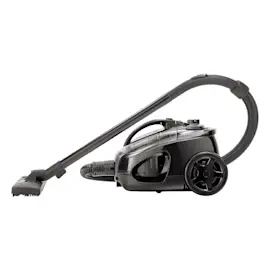
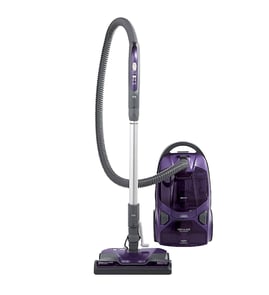
On the Kenmore canister vacuum model 12581214610, the model number is printed on the model and serial number plate attached to the vacuum body. We recommend writing it down exactly as shown because parts (like a hose or dust bag) are matched to that full number.
Common places to check on a Kenmore canister vacuum
Look for a sticker or plate on the canister itself (not the wand). Typical locations include:
- Bottom of the canister (flip the unit over and check near the wheels)
- Back of the canister near the cord exit or cord reel area
- Under the dust cover or bag compartment lid
- Near the power switch area on the canister housing
- On the underside of the carry handle area
What the label looks like and what to record
The plate usually lists MODEL and SERIAL. Record both, but use the model number to shop parts.
| Label item | What it’s used for | Example (what you’ll see) |
|---|---|---|
| Model number | Matching parts and diagrams | 12581214610 |
| Serial number | Production run identification | A longer letter/number code |
Why it matters for ordering the right parts
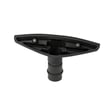
Kenmore canister vacuums often have similar-looking tools and nozzles across models, but connection styles and fit can differ. Using the exact model number helps ensure the replacement part fits and functions correctly.
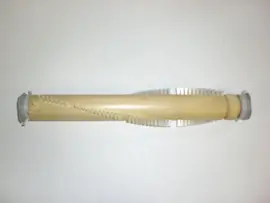
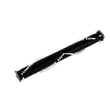
If you are replacing a worn floor nozzle roller or belt, match parts to your model first, then choose the correct item such as the vacuum beater bar KC84REEJZ000 or the vacuum beater bar belt KC28SBZTZ000.
Quick troubleshooting if you cannot find the plate
- Check the canister body carefully with a flashlight; labels can be low-contrast
- Look for a recessed area where a sticker is protected from wear
- Wipe dust off the surface; the print is often hidden under grime
- Avoid using solvents; a damp cloth is safest
Last updated: February 2026
How long do Kenmore canister vacuums last?
Most Kenmore canister vacuums, including model 12581214610, last 8 to 12 years with normal home use and basic maintenance. Lifespan is usually limited by airflow restrictions (bags and filters), brush roll wear, and hose or cord-reel issues rather than the motor itself.
Typical lifespan by use and care
These ranges fit most Kenmore canister vacuums used on mixed flooring.
| Use pattern | Typical lifespan | What shortens it fastest |
|---|---|---|
| Light (1 to 2 rooms, 1 to 2 times/week) | 10 to 15 years | Running with clogged filters or full bag |
| Average whole-home (1 to 3 times/week) | 8 to 12 years | Hair wrap on brush roll, belt slip, blocked hose |
| Heavy (pets, daily use) | 5 to 8 years | Overheating from restricted airflow |
Maintenance that adds years (and keeps suction strong)
We recommend these habits for the 12581214610 canister vacuum:
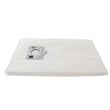
- Replace the bag before it is packed full; a full bag reduces airflow and runs the motor hotter.
- Clean or replace the pre-motor filter regularly; a clogged filter is the most common cause of weak suction.
- Inspect the brush roll for hair and string; cut debris off before it binds.
- Replace a stretched or slipping belt if the power nozzle stops agitating carpet.
- Check the hose and wand for clogs when suction drops suddenly.
- Avoid vacuuming fine drywall dust or fireplace ash unless your setup is designed for it.
Helpful model-matched parts to keep on hand:
Signs it is time to repair vs replace
Here is a quick way we separate “maintenance” from “major repair” on Kenmore canister vacuums.
| Symptom | Usually maintenance | Usually a part repair |
|---|---|---|
| Weak suction | Bag full, filter clogged | Hose assembly leaking or blocked |
| No carpet agitation | Belt worn, brush roll jammed | Brush roll worn or seized |
| Cord will not retract | Cord twisted | Cord reel assembly worn |
Why it matters
A canister vacuum that runs with restricted airflow overheats and wears out faster. Keeping the bag, filters, and brush roll system in good shape protects the motor and keeps cleaning performance consistent.
Last updated: February 2026
Does a Kenmore canister vacuum have a fuse?
Kenmore canister vacuums like model 12581214610 are protected against electrical faults and overheating, but that protection is usually built into the motor or powerhead as an overload protector rather than a simple, user-replaceable fuse. When the vacuum is completely dead, we troubleshoot the cord, switch, and wiring first.
What “fuse” protection looks like on canister vacuums
On most Kenmore canister designs, you typically see one of these protections:
- A motor thermal protector that opens if the motor overheats (often resets after cooling)
- A resettable overload on some power nozzles or powerheads
- Household circuit breaker/GFCI protection (the outlet trips instead of the vacuum)
A traditional plug-in, replaceable glass fuse is not the common design for canister vacuums.
No-power checklist for model 12581214610
Unplug the vacuum before inspecting anything.
- Test the outlet with another device
- Check the power cord for cuts, kinks, or heat damage
- If your model has a retracting cord, suspect the cord reel if power is intermittent
- Check the on/off control and handle wiring for looseness or damage
- Remove clogs and restore airflow (a clogged system overheats and triggers protection)
If the cord retracts poorly, loses power when you tug or wiggle it, or feels “dead” at certain cord lengths, the Kenmore vacuum cord reel assembly KC99NEEYZV06 is the part we commonly replace for that symptom.
What to test with a multimeter (unplugged)
Use continuity checks to isolate where power stops.
| What you’re checking | Where | What “bad” looks like |
|---|---|---|
| Power cord path | Plug to cord reel output | No continuity |
| Switch circuit | Switch terminals | No continuity when ON |
| Hose/handle wiring (if powered) | Hose contacts end-to-end | No continuity |
For help using a meter safely and correctly, use our how to use a multimeter to test electrical parts video.
Why it matters
Replacing a “fuse” without fixing the cause leads to repeat failures. Restoring airflow (bag, filters, clogs) and correcting cord or switch problems protects the motor and prevents overheating shutdowns.
Last updated: February 2026
Does the Kenmore 12581214610 canister vacuum have a retractable cord?
Yes. The Kenmore 12581214610 canister vacuum uses a retractable power cord that winds back into the canister for easier storage and fewer cord tangles after cleaning.
How to confirm and use the retractable cord
- Pull the cord out smoothly until you reach the length you need; stop before the last few inches to avoid stressing the cord.
- Press the cord rewind button (or cord reel pedal) and guide the cord in with your hand so it does not whip.
- If the cord retracts slowly or sticks, check for twists, kinks, or debris at the cord entry.
- If the cord will not retract at all, the internal reel spring or latch is typically the issue.
Parts that commonly affect cord rewind
If cord rewind is weak, jammed, or completely dead, these model-matched parts are the first places we look:
| Symptom | Most likely area | What to check first |
|---|---|---|
| Cord will not retract | Cord reel mechanism | Kenmore vacuum cord reel assembly KC99NEEYZV06 |
| Cord retracts but slips back out | Reel latch or worn reel | Kenmore vacuum cord reel assembly KC99NEEYZV06 |
| Power cuts in and out when cord moves | Cord, reel contacts, wiring | Inspect cord for damage; test continuity |
Why it matters
A properly working retractable cord helps protect the cord from damage, reduces trip hazards, and keeps the Kenmore 12581214610 canister vacuum easier to store. A failing reel can also lead to intermittent power if internal contacts are worn.
Last updated: February 2026