Owner’s manual
 Error Codes


How to hard reset a Kenmore Elite washer?
To hard reset your Kenmore washer model 11027802690, unplug the power cord for 1 minute, then plug it back in. This clears a temporary control “glitch” and restores normal operation without changing your cycle knob settings.
Hard reset steps (safe for this washer)
- Turn the cycle selector (timer) knob to Off.
- Unplug the washer from the wall outlet.
- Wait 60 seconds.
- Plug the washer back in.
- Set a Spin or Rinse cycle and pull the timer knob out to start.
If the washer still will not start
On this style of Kenmore top-load washer, the timer knob is also the stop and start control (push in to stop, pull out to run). Use these quick checks next:
- Confirm the lid is fully closed; a failed lid switch can prevent agitation or spin.
- Make sure the outlet has power (try a lamp or small appliance).
- Reseat the plug firmly; avoid extension cords.
- If it fills but will not drain, check for a clog or a weak pump.
Common parts related to “won’t run” symptoms
| Symptom | Most common check | Model-matched part to consider |
|---|---|---|
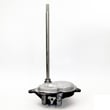
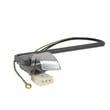
| No spin or no agitation with lid closed | Lid switch operation | Washer lid switch WP3949238 |
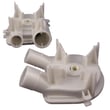
| Hums, drains slowly, or will not drain | Drain pump and hoses | Washer drain pump WP3363394 |
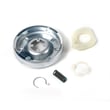
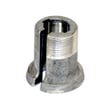
| Motor runs but basket does not move | Drive coupling | Coupling 285753A |
Why it matters
A hard reset fixes many intermittent issues caused by a brief power interruption or control timing problem. If the same symptom returns, it usually points to a mechanical or electrical failure (lid switch, drain pump, coupling) rather than a “memory” problem.
For model-specific operating steps (including stopping and restarting by pushing in and pulling out the timer knob), use the 11027802690 owner’s manual.
Last updated: February 2026
Is it worth repairing a Kenmore washing machine?
Yes, repairing a Kenmore washer is usually worth it when the fix restores reliable washing and spinning for far less than replacing the machine. For Kenmore model 11027802690, many common failures involve serviceable parts like the lid switch, drain pump, or motor coupling, which often makes repair a practical choice.
Quick way to decide (repair vs. replace)
We use these checkpoints to make the call:
- Repair it when the problem is a common wear item (lid switch, pump, coupling, clutch) and the tub is not leaking.
- Repair it when the washer still fills, agitates, and drains but has one clear symptom (no spin, no drain, won’t start).
- Consider replacing when there is major tub or bearing damage, repeated leaks, or multiple expensive failures at once.
- Repair it when the cabinet and controls are in good shape and the washer is not excessively vibrating.
- Consider replacing when repair cost approaches the price of a comparable new washer (including delivery and haul-away).
Common repairs that are often “worth it” on this style of Kenmore washer
These are frequent, straightforward fixes on many Kenmore direct-drive top-load designs:
| Symptom | Likely part to check | Example part for this model |
|---|---|---|
| Won’t start or won’t spin with lid closed | Lid switch | Washer lid switch WP3949238 |
| Won’t drain or drains slowly | Drain pump, hose restrictions | Washer drain pump WP3363394 |
| Motor runs but washer won’t agitate/spin | Motor coupling | Coupling 285753A |
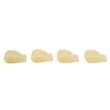
| Agitator “slips” or doesn’t move clothes well | Agitator dogs/cam | Agitator dog 80040 |
Why it matters
A targeted repair keeps a solid Kenmore washer running for years and avoids the cost and hassle of replacement. Also, a properly installed and leveled washer reduces vibration and prevents repeat issues; the setup checklist in the 11027802690 owner’s manual is a good reference.
Tips before you spend money on parts
- Confirm the symptom (no drain, no spin, no agitation, leaking) before ordering.
- Check for simple causes first: load balance, kinked drain hose, loose power cord, tripped breaker.
- If the washer vibrates, verify it is level and the front leg nuts are tight (installation checklist guidance).
- If you see water under the washer, identify whether it is from the pump area, hoses, or tub seal before proceeding.
Last updated: February 2026
What is the average lifespan of a Kenmore washer?
A Kenmore washer typically lasts 10 to 15 years with normal household use. For Kenmore model 11027802690, keeping loads balanced, using the right water level and detergent amount, and addressing early symptoms (no drain, no spin, agitation issues) helps you reach the upper end of that range; see the 11027802690 owner's manual for care and operating guidance.
Typical lifespan and what affects it
Most top-load, agitator-style washers like the Kenmore 11027802690 land in the 10 to 15 year range. Lifespan is mainly driven by load habits, water quality, and how quickly small problems are fixed.
- Avoid chronic overloading (it accelerates wear on the drive system and suspension)
- Keep loads evenly distributed to reduce out-of-balance stress
- Use the correct cycle and water temperature for the fabric type
- Don’t ignore slow draining or intermittent spinning
- Fix small leaks early to prevent corrosion and bearing damage
Common wear items that can shorten washer life
When these parts start failing, performance drops and other components can be stressed.
| Symptom | Commonly involved part | What you’ll notice |
|---|---|---|
| Won’t spin or stops mid-cycle | Lid switch | Lid must be closed; spin may not start |
| Won’t drain or drains slowly | Drain pump | Water left in tub, humming, slow emptying |
| Agitates poorly or “slips” | Motor coupling | Motor runs but tub/agitator movement is weak |
| Loud during spin, poor spin | Clutch | Slipping, burning smell, weak spin |
If your washer won’t spin consistently, the washer lid switch WP3949238 is a common fix on this platform.
Maintenance habits that extend life
These are the highest-impact habits for long-term reliability.
- Use the recommended amount of detergent; excess suds can cause poor draining and residue
- Run periodic cleaning cycles (hot wash with no laundry, if appropriate for your setup)
- Check fill hoses and drain hose routing for kinks and seepage
- Level the washer so the basket spins smoothly
Why it matters
A washer that is draining, spinning, and agitating correctly uses less time and stress per load. That reduces wear on the drive motor, coupling, clutch, and suspension, which is what usually determines whether you get 10 years or closer to 15.
Last updated: February 2026
Where is the model number on a Kenmore 80 series washer?
On Kenmore washer model 11027802690 (Kenmore 80 Series style), the model and serial numbers are printed on the model and serial number plate. On most top-load Kenmore washers, that plate is found on the washer frame under the lid area, where you can read it when the lid is open; confirm the exact location in the 11027802690 owner's manual.
Where to look first (fast checks)
- Open the lid and look along the top rim of the cabinet (front edge and side edges).
- Check the underside of the lid for a label or plate.
- Look around the lid opening near the hinge area.
- If you do not see it, inspect the rear of the control console and the back panel.
What the plate looks like and what to write down
The plate typically lists both identifiers you need for parts and service.
| Item on the plate | What it’s used for | Example format |
|---|---|---|
| Model number | Matching correct parts diagrams and fit | 11027802690 |
| Serial number | Dating the unit and service history | Letters and numbers |
Why it matters
We use the complete model number to match the correct Kenmore washer parts (like a lid switch, drain pump, or motor coupling) because similar-looking 80 Series washers can use different components.
If you’re ordering parts for common symptoms
These are frequent wear items on this style of Kenmore top-load washer:
- Washer lid switch WP3949238 (won’t spin or drain if the switch fails)
- Washer drain pump WP3363394 (won’t drain, leaks, or loud grinding)
- Coupling 285753A (motor runs but washer won’t agitate or spin)
Last updated: February 2026