Owner’s manual
 Error Codes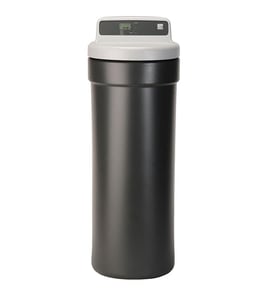



What are the most common issues with GXSF39E01?
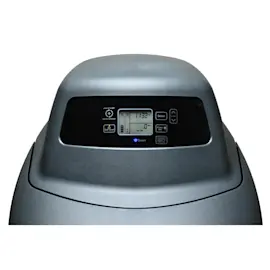
The most common issues we see with the GE GXSF39E01 water softener are no soft water, salt bridging or mush in the brine tank, leaks at seals or fittings, and regeneration problems tied to the valve and sensing components. Your GXSF39E01 owner's manual covers the correct settings and regeneration checks.
Common problems and what they usually point to
- No soft water: incorrect hardness setting, unit stuck in bypass, resin exhausted, or a flow/sensing issue.
- Softener not regenerating: timer/control settings, valve drive issues, or a position/switch problem.
- Leaks: worn seals or O-rings, loose connections, or a cracked tank or valve body.
- Brine tank issues (salt bridge, salt mush, overfill): restricted brine line, float problem, or nozzle/venturi restriction.
- Low water pressure: clogged screen, restricted valve, or debris in the inlet.
Quick checks we recommend first
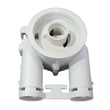
- Confirm the bypass valve is in the “service” position (not bypass). If yours is leaking or hard to turn, consider the bypass valve WS15X10012.
- Verify the hardness setting and time of day are correct; then run a manual regeneration.
- Look for salt bridging: break up hardened salt and keep salt level above the water line.
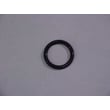
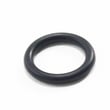
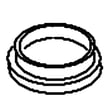
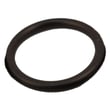
- Inspect for drips around the valve and fittings; a worn o-ring seal 7170319 is a common leak source.
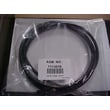
- If flow seems inconsistent, check the turbine/sensor area; the water softener turbine sensor WS28X10017 is the key metering component.
Symptoms and likely parts to inspect
| Symptom | Most likely area | Parts on this model to check |
|---|---|---|
| No soft water | Bypass, resin, metering | Bypass valve, turbine sensor, resin |
| Leaks at valve | Seals and O-rings | O-ring seal, seal kit |
| Brine problems | Brine line and float | Brine tube, float assembly |
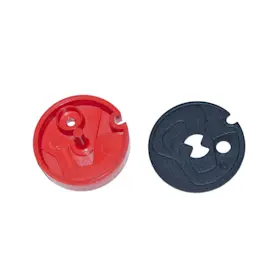
| Won’t advance cycles | Switch/positioning | Switch, rotor disc |
Why it matters
A water softener that is bypassed, mis-set, or leaking can waste salt and water, reduce softening performance, and cause scale buildup on plumbing and appliances. Catching seal wear and brine issues early prevents bigger valve and tank problems.
Last updated: March 2026
What does E1 mean on a water softener?
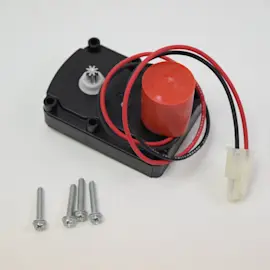
On the GE GXSF39E01 water softener, the display uses ERR01 (not “E1”) to indicate a likely problem with the control, drive motor, wiring harness/connection, or the rotor position switch. Clearing the code only works after the underlying defect is corrected; see the GXSF39E01 owner’s manual.
What to check first (safe, quick checks)
- Unplug the transformer, then plug it back in after you inspect connections.
- Confirm the outlet has power (try a lamp or meter).
- Check the wiring harness connections at the control and motor for looseness or corrosion.
- Look for pinched or damaged wires where the cabinet or cover could rub.
- If the unit is mid-cycle and stuck, try advancing a recharge cycle per the manual to see if the motor moves.
Common causes and the most likely fix
ERR01 is commonly tied to the drive system not moving to the expected position.
| What you see | Most likely cause | What usually fixes it |
|---|---|---|
| ERR01 returns after reset | Motor not running | Replace motor or repair wiring (service-level) |
| ERR01 with intermittent operation | Loose harness/connector | Reseat/repair harness connections |
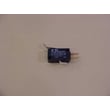
| ERR01 and the valve seems “stuck” | Position feedback problem | Replace the switch 7030713 |
How to clear the error code (after fixing the cause)
We use the manual’s reset sequence:
- Unplug the transformer.
- Correct the defect (connection, switch, motor, or control issue).
- Plug the transformer back in.
- Wait at least 6 minutes; the code returns if the problem is still present.
Why it matters
When the control cannot confirm valve position, the softener may stop regenerating correctly. That can lead to hard water symptoms, salt not being used as expected, or incomplete recharge cycles.
Last updated: January 2026
What is the life expectancy of a GE water softener?
A GE water softener like model GXSF39E01 typically lasts 10 to 15 years. Lifespan depends most on water hardness, iron content, salt quality, and whether the unit recharges and drains correctly; consistent maintenance usually keeps performance steady longer.
What affects lifespan the most
- Water hardness and usage: Higher grains per gallon and higher household demand increase recharge frequency.
- Iron and sediment: These can foul resin and clog the nozzle and venturi, shortening service life.
- Salt bridging or mush: Causes poor brine draw and incomplete regeneration.
- Drain setup: If the drain hose cannot discharge during recharge, the softener cannot regenerate properly.
- Wear parts in the valve: Seals, rotor/disc, and sensors wear over time.
Signs it is nearing end of life
- Soft water quality drops even after a manual recharge
- Salt level stays high but water remains hard (no brine draw)
- Frequent error codes or the unit gets “stuck” during recharge
- Leaks at the valve or around O-rings
- Noticeably higher salt use with no improvement in results
Quick checks to extend service life
Use the steps and maintenance intervals in the GXSF39E01 owner's manual.
| Check | What “good” looks like | What it points to if not |
|---|---|---|
| Salt condition | Loose pellets/crystals, no hard crust | Bridging or mush causing weak brine |
| Recharge drain flow | Strong flow to drain during recharge | Kinked hose, blockage, or back pressure |
| Nozzle/venturi area | Clean, no debris | Clogging that prevents brine draw |
| Water hardness setting | Matches your tested hardness | Under or over-regeneration |
Common parts that wear first
If the unit is otherwise in good shape, replacing common wear items often restores performance:
- Seal kit 7129716 (valve sealing surfaces)
- Rotor disc 7199232 (valve movement and sealing)
- Water softener turbine sensor WS28X10017 (flow sensing)
Why it matters
A softener that is past its effective lifespan can still run, but it often wastes salt and water while letting hardness through. Keeping the valve and brine system working correctly protects plumbing, water heaters, and fixtures from scale.
Last updated: January 2026