Owner’s manual
 Error Codes


How to identify a Kenmore washer model?
To identify your Kenmore washer model, we look for the model and serial number plate on the washer cabinet. For Kenmore model 11026832692, the plate lists the complete model number you will use to match the correct washer parts and service information in the 11026832692 owner's manual.
Where to find the model number plate
Check these common locations (your washer will typically have it in one of them):
- Under the lid on a top-load washer, around the tub opening
- Inside the door opening on a front-load washer
- On the back panel near the power cord entry
- Along the rear edge of the control console or cabinet
- On a metal plate or durable sticker labeled “Model” and “Serial”
What the model number looks like (Kenmore)
Many Kenmore washers use a numeric model format that starts with 110. Use the full number exactly as printed.
| What you see on the plate | What it means | What to do with it |
|---|---|---|
| Model No. (example: 11026832692) | Identifies the exact washer design | Use it to select compatible parts and diagrams |
| Serial No. | Production identifier | Helpful for service history and age reference |
Why it matters
Using the full model number prevents ordering the wrong items, especially for common repairs like a no-spin condition (often tied to a lid switch), a no-drain problem (drain pump), or agitation issues (agitator components).
Quick next steps after you find it
- Write down the full model number and serial number
- Match the number exactly when searching parts (no missing digits)
- Use the manual to confirm operating features and controls
- If you are troubleshooting, start with the symptom and then verify the related part
Last updated: February 2026
Is it worth repairing a Kenmore washing machine?
For a Kenmore washer like model 11026832692, repairing is worth it when the fix restores safe, reliable washing for less than replacing the machine, especially for common wear items (lid switch, drain pump, motor coupling) that are straightforward and cost-effective.
Quick way to decide (cost vs. value)
Use this simple rule of thumb:
- Repair it if the total repair (parts + labor) is under about 50% of the cost of a comparable new washer.
- Repair it if the problem is a single, common failure (no-spin, no-drain, won’t start).
- Replace it if the washer has multiple major failures (leak plus transmission plus electrical issues).
- Replace it if the tub or cabinet is severely rusted, or the unit is repeatedly flooding.
- Repair it if you want to keep a familiar, proven top-load design and the machine is otherwise solid.
Common repairs that are usually worth doing on this model
These are frequent, high-impact fixes on Kenmore 110-style top-load washers:
| Symptom | Likely part area | Example part for 11026832692 |
|---|---|---|
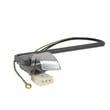
| Won’t start or won’t spin with lid closed | Lid safety circuit | Washer lid switch WP3949238 |
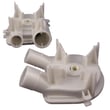
| Won’t drain or leaves water in tub | Drain system | Washer drain pump WP3363394 |
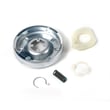
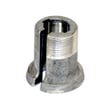
| Motor runs but washer won’t agitate/spin | Drive coupling | Coupling 285753A |
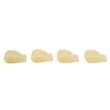
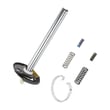
| Agitator moves poorly or “ratchets” | Agitator dogs/cam | Agitator dog 80040 |
Why it matters
A targeted repair keeps your Kenmore 11026832692 washing efficiently and can prevent secondary damage. For example, a weak drain pump can lead to standing water and odors, and a failing lid switch can stop spin cycles and leave loads soaking wet.
What we recommend before you spend money
- Confirm the symptom and any unusual sounds.
- Check installation basics that affect performance (leveling and vibration). The manual notes that loose front leg nuts can contribute to vibration when the washer is not properly leveled.
- Use the troubleshooting and operating guidance in the 11026832692 owner’s manual to narrow the failure to a specific system (drain, spin, agitation, fill).
Last updated: February 2026
What is the average lifespan of a Kenmore washer?
A Kenmore washer typically lasts 10 to 15 years with normal household use. For Kenmore model 11026832692, consistent care (proper loading, correct detergent, and routine cleaning) helps you reach the upper end of that range; neglected maintenance and repeated overloading shorten it.
What affects washer lifespan the most
- Load size and balance: frequent overloading strains the drive system and suspension.
- Water quality and temperature: very cold water can leave detergent undissolved, which increases residue and wear over time.
- Routine care: follow the cleaning and care steps in the 11026832692 owner's manual.
- Wear parts: lid switch, drain pump, and drive components are common service items.
- Vibration and noise: persistent banging can indicate suspension or drive issues that accelerate wear.
Common wear items for this style of Kenmore washer
These parts do not set the washer’s lifespan by themselves, but they are frequent reasons a washer stops working or performs poorly:
| Symptom | Common cause | Example part for model 11026832692 |
|---|---|---|
| Won’t spin or stops mid-cycle | Lid safety circuit not closing | Washer lid switch WP3949238 |
| Won’t drain or drains slowly | Pump jammed or worn | Washer drain pump WP3363394 |
| Agitator moves poorly or “slips” | Agitator dogs worn | Agitator dog 80040 |
| No agitation/spin, motor runs | Drive coupling worn | Coupling 285753A |
Maintenance habits that extend life
- Keep loads evenly distributed; avoid washing heavy items one-at-a-time.
- Use the right amount of detergent; too much increases residue and component wear.
- If your washer has features like a self-cleaning lint system, keep the drain path clear and the standpipe unobstructed.
- Address small issues early (slow drain, intermittent spin) before they stress the motor or gear case.
Why it matters
A washer can run for years with minor part replacements, but ignoring early symptoms often turns a simple fix (like a lid switch or pump) into bigger wear on the drive system and tub components.
Last updated: February 2026