Owner’s manual
 Error Codes




How do I remove the base grille on my Whirlpool refrigerator?
On your Whirlpool GB9FHDXWS04 bottom-mount refrigerator, we remove the base grille by gripping it firmly at the bottom front and pulling it straight toward you until it releases from the clips. Reinstall by aligning it and pressing it back into place; see the owner's manual for the exact steps.
Steps to remove the base grille
- Unplug the refrigerator if you will be working near wiring or moving the unit.
- Stand in front of the refrigerator and locate the base grille at the very bottom.
- Grasp the grille firmly with both hands.
- Pull the grille toward you to pop it free.
- Set it aside where it will not get stepped on or warped.
If it feels stuck
A base grille can feel tight if it has not been removed in a while or if the refrigerator is slightly tilted forward.
- Pull from both ends evenly (do not twist one corner outward).
- Check for packing tape, debris, or dried spills along the bottom edge.
- If your model has a bracket cover behind the grille, remove the grille first, then access the cover.
- Avoid prying hard with a screwdriver; that can crack the grille or damage the mounting tabs.
What you can access after the grille is off
Removing the base grille is commonly the first step for leveling and stability adjustments.
| Task | What you may see behind the grille | Tool commonly used |
|---|---|---|
| Leveling the cabinet | Roller adjustment screw(s) | 3/8-inch hex driver |
| Preventing the unit from rolling | Brake foot | Hand or wrench (varies) |
| Cleaning | Dust and pet hair near the front base area | Vacuum/brush |
Why it matters
A properly seated base grille helps protect the lower components and keeps airflow and clearances as designed. It also makes routine tasks like leveling and cleaning easier, which can improve door closing and overall performance.
Last updated: February 2026
Do you remove cardboard from the bottom of a Whirlpool refrigerator?
No. On a Whirlpool GB9FHDXWS04 bottom-mount refrigerator, any cardboard you see used for moving or floor protection should be removed, but a rear lower cover (sometimes fiberboard or a panel) that shields the compressor and condenser area should stay in place for proper protection and airflow. See the owner's manual.
What cardboard should be removed vs. left in place
Remove (packaging or temporary protection)
- Cardboard, foam, tape, and plastic used to secure doors, shelves, and drawers for shipping
- Any cardboard placed under the refrigerator while sliding it out to protect the floor
- Corner blocks, spacers, and wrap around bins or baskets
Leave in place (protective cover)
- The rear lower access cover or base cover that protects components and wiring
- Any factory-installed panel that directs airflow across the condenser area
- Any cover that is fastened with screws and fits like a finished part
Quick check: is it packaging or a permanent cover?
| What you notice | What it usually means | What to do |
|---|---|---|
| Loose, taped-on, or wrapped around parts | Shipping material | Remove and recycle/dispose |
| Screwed-on panel at the back bottom | Protective access/airflow cover | Leave installed |
| Cardboard used under the unit while moving | Floor protection | Remove after positioning |
Why it matters
That lower rear cover helps protect electrical components and helps manage airflow around the condenser area. Removing it can leave wiring exposed and can reduce cooling performance over time.
Related setup tips we recommend
- Move the refrigerator straight out on cardboard or hardboard to prevent floor damage
- Clean off tape and adhesive residue before turning the refrigerator on
- Keep vents clear and avoid pushing the cabinet tight against the wall
Last updated: February 2026
What's the average lifespan of a Whirlpool refrigerator?
Most Whirlpool refrigerators, including the Whirlpool GB9FHDXWS04 bottom-mount, typically last 10 to 15 years with normal household use and basic maintenance; 15 to 20 years is common when the condenser area stays clean, doors seal tightly, and temperatures are kept in range.
What affects lifespan the most
A refrigerator’s life is usually determined by how hard the sealed system and fans have to work day to day.
- Keeping condenser coils and the condenser fan area clean
- Maintaining good airflow around the cabinet (don’t block vents or pack it tight into a niche)
- Preventing warm air leaks with a good door seal
- Avoiding frequent overloading and repeated long door openings
- Fixing small issues early (noisy fan, weak cooling, water leaks)
Quick maintenance checklist (best return for the effort)
Use these habits to reduce compressor run time and wear.
- Vacuum dust from the lower rear or toe-kick area a few times per year
- Confirm the doors close on their own and sit level
- Keep refrigerator at about 37°F and freezer at about 0°F
- Clean and dry door gaskets; check for gaps with the “paper test”
- If you have an ice maker or water line, address slow fill or leaks promptly
Common “wear” parts vs. “big ticket” parts
Some parts are routine fixes; others signal a higher-cost repair decision.
| Category | Examples | What it usually means |
|---|---|---|
| Routine service parts | Door gasket, switches, ice maker components | Often worth repairing to extend life |
| Cooling airflow parts | Evaporator fan motor, condenser fan motor | Fixing restores proper temps and reduces strain |
| Sealed system parts | Compressor, evaporator, filter dryer | Higher cost; compare repair cost vs. age |
If you’re seeing warm temps, heavy frost, or loud fan noise, checking the evaporator fan system is a smart first step; the refrigerator evaporator fan motor W11024089 is one of the common cooling-airflow components for this model.
Why it matters
A refrigerator that runs longer than it should (dirty coils, poor door seal, weak fan) wears out the compressor faster, increases energy use, and can lead to temperature swings that spoil food.
For model-specific care, cleaning guidance, and troubleshooting steps, use the owner's manual.
Last updated: February 2026
What is the most common problem with Whirlpool refrigerators?
The most common Whirlpool refrigerator problem is a cooling complaint (warm fresh-food section, warm freezer, or temperature swings). On your Whirlpool GB9FHDXWS04 bottom-mount, the most frequent root causes are airflow and maintenance issues (dirty condenser coils, blocked vents), plus fan, defrost-drain, or control-related faults; the GB9FHDXWS04 owner's manual troubleshooting section walks through the first checks.
Most common symptoms and what they usually point to
- Refrigerator warm, freezer OK: restricted airflow, evaporator fan issue, frost buildup on evaporator
- Freezer warm, refrigerator warm: dirty condenser coils, condenser fan problem, sealed-system/compressor issue
- Ice maker not making ice: water supply issue, inlet valve issue, ice maker module failure
- Noisy operation: evaporator fan blade rubbing, condenser fan motor noise, compressor start components
- Water under the refrigerator: clogged/iced defrost drain
Quick checks we recommend first (no parts needed)
- Set temperatures to normal targets: 37°F fresh food, 0°F freezer.
- Make sure packages are not blocking air vents in either compartment.
- Clean condenser coils and confirm the condenser area has good airflow.
- Listen for the evaporator fan in the freezer; it should run when the compressor runs.
- Check door seals for gaps and confirm doors close fully.
Common parts involved on GB9FHDXWS04
If the quick checks do not fix the issue, these model-matched parts are commonly involved:
| Problem area | What you may notice | Model-matched part to check |
|---|---|---|
| Evaporator airflow | Warm refrigerator, weak airflow | Refrigerator evaporator motor W11024089 |
| Fan noise or rubbing | Chirping, ticking, scraping | Refrigerator evaporator fan blade WP2169142 |
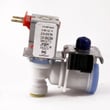
| Ice maker water fill | No ice, small cubes, slow fill | Refrigerator water inlet valve assembly WP2315576 |
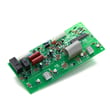
| Temperature control/electronics | Erratic temps, not responding to settings | Refrigerator electronic control WPW10503278 |
Why it matters
Cooling problems usually start as an airflow or heat-rejection issue; fixing those early helps prevent food spoilage and reduces compressor run time. When a fan or control is failing, addressing it quickly restores stable temperatures and normal ice production.
Last updated: February 2026