Owner’s manual

What does a thermal switch do on a dryer?
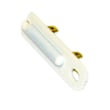
A thermal switch (often called a thermostat or thermal cut-off) helps protect your Amana NED5240TQ0 dryer from overheating by opening the circuit when temperatures get too high. If it trips or fails, the dryer may stop heating or shut down until the unsafe temperature condition is corrected.
What it does (and what it is not)
Thermal safety parts are easy to mix up. Here is how the common ones differ:
| Safety part | What it monitors | What happens when it trips | Typical symptom |
|---|---|---|---|
| Thermal cut-off | Heater housing temperature | Opens circuit at a high temp | No heat, may not run depending on design |
| High-limit thermostat | Heater temperature | Cycles power to heater, can open on overheat | Heat cuts in and out, long dry times |
| Thermal fuse | Exhaust temperature or airflow-related heat | Opens and stays open (one-time) | Dryer runs but no heat, or won’t run |
For part identification and location diagrams specific to your dryer, use the owner's manual.
Common reasons a thermal switch trips
Overheating is usually caused by restricted airflow, not a “bad heater.” Check these first:
- Lint screen clogged or coated with residue
- Vent hose kinked, crushed, or too long
- Exterior vent hood stuck closed or blocked
- Lint buildup in the lint chute or blower housing
- Overloading the drum (poor tumbling reduces airflow)
Parts that are commonly involved on NED5240TQ0
If you are diagnosing an overheat or no-heat condition, these model-compatible parts are often checked together:
Why it matters
When airflow is restricted, heat builds up inside the heater box and exhaust path. That can cause repeated shutdowns, long dry times, and premature failure of heating and safety components. The manual also emphasizes proper venting for safe, efficient drying.
Last updated: February 2026
How to fix a dryer that overheats?
For an Amana NED5240TQ0 dryer that overheats, we fix the root cause first: restricted airflow (lint screen or vent), a failed thermostat, or a heat circuit problem. Start with cleaning and inspection, then test and replace the correct safety parts instead of bypassing them. See the owner's manual for cleaning and safety guidance.
Step-by-step checks that solve most overheating problems
- Unplug the dryer before servicing.
- Clean the lint screen and make sure it is seated correctly; running with a loose, damaged, blocked, or missing screen can cause overheating.
- Inspect the exhaust duct from the dryer to the outside hood; remove lint buildup and fix crushed or kinked venting.
- Confirm strong airflow at the outside vent hood while the dryer runs.
- If airflow is good but it still overheats, check heat control and safety components (thermostats, thermal cut-off) and replace any failed part.
Parts that commonly cause overheating on this model
Overheating is usually tied to the heat circuit. These model-compatible parts are common fixes:
- Dryer high-limit thermostat WP3977767
- Dryer thermal cut-off fuse kit 279816
- Dryer element 279838 (if it is shorted to the heater housing)
Quick symptom-to-likely-cause guide
| What you notice | Most likely cause | What to do |
|---|---|---|
| Clothes very hot, cabinet hot, long dry times | Vent restriction | Clean venting and outside hood |
| Overheats quickly even on lower heat | High-limit thermostat not regulating | Replace thermostat |
| Runs but heat cycles oddly or shuts down from heat | Thermal cut-off opening from high temps | Fix airflow, then replace cut-off kit |
| Constant heat (no cycling) | Heater short or control issue | Inspect heater, wiring, and controls |
Why it matters
Overheating is hard on fabrics and can damage the dryer. The manual also stresses keeping the exhaust area free of lint and cleaning the lint screen every load to prevent overheating and performance problems.
Last updated: February 2026
How do I know if my dryer thermal fuse is blown?
On your Amana NED5240TQ0 dryer, a blown thermal fuse typically shows up as a dryer that will not run or runs with no heat. The sure way to confirm is a continuity test with a multimeter; a good fuse reads near 0 ohms (continuity), and a blown fuse reads OL or no continuity.
Quick symptoms to look for
- Dryer will not start even though the door is closed and a cycle is selected
- Drum tumbles but there is no heat (electric models can also lose heat if one house fuse/breaker trips)
- Dryer stops mid-cycle and will not restart until it cools
- Burning smell or very hot cabinet (often tied to restricted airflow)
How we test the thermal fuse (basic steps)
- Disconnect power to the dryer.
- Access the fuse location shown in the owner's manual.
- Pull at least one wire off the fuse terminal.
- Set the multimeter to continuity or the lowest ohms setting.
- Touch a probe to each terminal.
Reading the meter
| Meter result | What it means | What to do next |
|---|---|---|
| Beep or ~0 to 1 ohm | Fuse is good | Check airflow, thermostat, heater circuit, and power supply |
| OL, no beep, infinite resistance | Fuse is blown | Replace the fuse and correct the overheating cause |
What usually causes a thermal fuse to blow
A thermal fuse opens when the dryer overheats. The most common cause is poor airflow.
- Lint screen clogged or coated with residue
- Vent hose crushed, kinked, or too long
- Wall vent or outside hood blocked
- Lint buildup inside the blower housing
- Overloading the drum and restricting air movement
If you are also chasing long dry times, our dryer takes a long time to dry guide helps you pinpoint venting and airflow restrictions.
Parts that are commonly involved
If overheating damaged other safety parts, these model-compatible parts are commonly replaced during diagnosis:
Why it matters
Replacing a blown fuse without fixing the airflow problem often leads to repeat failures. Restoring proper venting protects the heating system, improves drying performance, and reduces overheating risk.
Last updated: February 2026