Owner’s manual
 Error Codes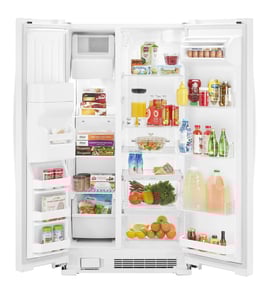


Are GE side-by-side refrigerators good?
GE side-by-side refrigerators, including model GSE26GSEBCSS, are a solid choice for everyday use because they typically deliver reliable cooling, easy access to both fresh food and freezer sections, and convenient features like an in-door water dispenser and ice maker. Long-term satisfaction usually comes down to maintenance (filters, airflow, and door sealing).
A side-by-side design is usually a good fit when you want consistent organization and quick access.
Common strengths
- Adjustable shelving and door bins for flexible storage
- Narrow door swing compared to many French door models
- In-door ice and water convenience (when the filter system is maintained)
- Good visibility with bright interior lighting on many GE models
Common tradeoffs
- Freezer section is narrower; wide pizza boxes can be harder to fit
- Ice makers can be louder than expected during harvest cycles
- Water and ice performance depends heavily on filter condition and water supply
Use this list to prevent the most common complaints: slow ice production, weak water flow, and temperature swings.
- Replace the water filter on schedule; a clogged filter restricts flow and can affect ice maker fill
- After a filter change, dispense water for a few minutes to clear air (initial spurting is normal)
- Keep vents inside both compartments unblocked for proper airflow
- Clean condenser area periodically to help the compressor run efficiently
- Confirm doors seal fully; warm air leaks cause frost and temperature issues
| Need | What to check first | Common related part |
|---|---|---|
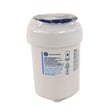
| Weak water flow | Filter condition, trapped air after replacement | GE refrigerator water filter MWFP |
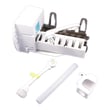
| No ice or slow ice | Water supply, filter restriction, ice maker function | GE refrigerator ice maker kit WR30X10093 |
| Warm temps or uneven cooling | Airflow, fan operation, sensor feedback | Refrigerator evaporator fan motor WR60X10307 |
Most “bad refrigerator” experiences are really water-flow restrictions, airflow blockages, or door-seal leaks. Staying ahead of the water filter and keeping airflow clear helps a GE side-by-side like GSE26GSEBCSS run quieter, cool more evenly, and make ice more consistently.
For model-specific feature details and care steps, use the GSE26GSEBCSS owner's manual.
Last updated: February 2026
How to reset GE refrigerator display panel?
To reset the display panel on your GE GSE26GSEBCSS side-by-side refrigerator, unplug the refrigerator (or switch off power at the breaker) for about 5 minutes, then restore power. This power-cycle clears many touch panel and display glitches.
- Unplug the refrigerator from the wall outlet.
- Wait 5 minutes.
- Plug it back in.
- Allow the control to reboot; the display should come back on.
- If the panel is locked, press and hold LOCK for 3 seconds.
Some “panel problems” are actually control settings or a locked dispenser.
- Remove any protective film over the temperature controls (some units ship with film on the touch panel).
- Try the LOCK reset (press and hold for 3 seconds).
- Confirm the refrigerator is not set to OFF at the controls (on some models, setting controls to the warmest setting until the display flashes “off” stops cooling).
- Check your home breaker or outlet; a loose plug can cause intermittent display behavior.
| Reset method | What it affects | When to use it |
|---|---|---|
| Unplug 5 minutes | Reboots main control and user interface | Frozen display, random lights, unresponsive keys |
| Hold LOCK 3 seconds | Unlocks dispenser/touch functions | Dispenser won’t work, panel seems “disabled” |
| Set controls to OFF (if equipped) | Stops cooling but does not remove power | Troubleshooting cooling behavior (not a true reset) |
The display panel is the user interface for temperature controls and dispenser functions. A simple power-cycle often restores normal operation after a minor software hiccup, brief power interruption, or a stuck key condition.
- Use the control and display details in the GSE26GSEBCSS owner's manual.
- If the issue is tied to dispenser lock behavior, follow how to reset the door alarm on a GE refrigerator for related control-panel steps.
Last updated: February 2026
How to tell if a GE water filter is clogged?
A clogged water filter in your GE GSE26GSEBCSS refrigerator usually shows up as slow water flow at the dispenser or weak ice production. A quick check is a timed flow test; if you dispense for 20 seconds and get under about 8 ounces, the filter is restricting flow.
Use this simple test to confirm a restriction:
- Hold a large measuring cup under the dispenser.
- Dispense water for 20 seconds.
- Measure the amount collected.
- If it is less than 8 ounces, flow is typically inadequate and the filter is the first thing to address.
- If water spurts after a new filter, run water for several minutes to clear air.
| Result in 20 seconds | What it usually means | What to do next |
|---|---|---|
| 8 oz or more | Filter likely OK | Check for air in lines, low house pressure, or a partially closed shutoff |
| Less than 8 oz | Filter likely clogged | Replace the filter, then purge air from the system |
Start with the most common fixes before replacing other parts:
- Replace the filter with the correct type listed for your refrigerator (commonly MWF-type for this platform).
- After replacing, dispense water for about 3 minutes to purge air and stabilize flow.
- If the dispenser still runs weak, confirm the house shutoff valve is fully open.
- If you have no water or very low water to the dispenser and ice maker, the inlet valve can be the restriction; see refrigerator water valve WR57X33326.
- Follow the filter removal and replacement steps in the GSE26GSEBCSS owner's manual.
A restricted filter can make the dispenser slow, cause small or hollow ice cubes, and put extra strain on the water delivery system. Replacing the filter on time helps keep water flow steady and protects components like the water inlet valve.
Last updated: February 2026
What is the life expectancy of a general electric refrigerator?
Most GE refrigerators typically last 10 to 16 years with normal household use. For your GE GSE26GSEBCSS side-by-side, consistent maintenance (clean airflow, stable temperatures, and water system care) is what most often determines whether it lands closer to 10 years or closer to 15+.
- 10 to 16 years is the common range for modern full-size refrigerators.
- Units that reach the higher end usually have:
- Clean condenser airflow
- Good door sealing
- Stable power (no frequent outages)
- Regular water filter changes (if equipped)
| Appliance type | Typical life expectancy | Notes |
|---|---|---|
| Side-by-side refrigerator (like GSE26GSEBCSS) | 10 to 16 years | Ice maker and dispenser systems add wear points |
| Basic top-freezer refrigerator | 12 to 18 years | Fewer features, often fewer repairs |
- Keep condenser airflow clear (dust and pet hair drive higher temps and longer run times).
- Confirm doors seal tightly (warm air leaks cause frost and compressor overwork).
- Set proper temperatures (fresh food about 37°F; freezer about 0°F).
- Replace the water filter on schedule to protect the dispenser and ice maker.
- Address odd noises early (fan motors and defrost issues are easier to fix before they cascade).
Your GSE26GSEBCSS owner's manual outlines warranty coverage periods such as one-year coverage for the refrigerator and a sealed system coverage period (compressor, condenser, evaporator, and connecting tubing) that can extend longer depending on model line. This does not define lifespan, but it helps set expectations for early-life failures versus normal wear.
A refrigerator that is running longer than normal to hold temperature uses more energy and stresses major components like the compressor, evaporator fan, and defrost system. Simple upkeep can prevent the most common “end-of-life” symptoms: warm temps, heavy frost, and water or ice maker failures.
Last updated: February 2026
What is the most common problem with a GE refrigerator?
For the GE GSE26GSEBCSS side-by-side refrigerator, the most common issues we see are cooling problems (not cold enough) and ice maker or water dispenser troubles. These usually trace back to airflow restrictions, dirty condenser coils, a weak fan motor, a clogged water filter, or a door seal that is not sealing tightly.
- Make sure the doors close fully and the gaskets seal all the way around.
- Confirm air vents inside the fresh food and freezer sections are not blocked by food packages.
- Clean the condenser coils (dust buildup is a top cause of warm temperatures).
- If water flow is slow or ice production drops, replace the water filter.
- If the dispenser is locked, unlock it at the control panel (the manual describes the lock feature).
| Symptom | Most likely cause | What to do first |
|---|---|---|
| Fridge warm, freezer warm | Dirty coils, condenser fan issue, airflow problem | Clean coils; listen for fan operation |
| Freezer cold, fridge warm | Airflow/evaporator fan issue, iced-up evaporator | Check vents; listen for evaporator fan |
| No ice or slow ice | Clogged filter, water supply issue, inlet valve problem | Replace filter; verify supply valve is open |
| Water spurts after filter change | Air in the line | Run dispenser water for about 3 minutes |
If troubleshooting points to a failed component, these are frequent fixes for cooling and ice/water complaints:
- GE refrigerator water filter MWFP (clogged filters reduce water flow and ice production)
- Refrigerator evaporator fan motor WR60X10307 (poor airflow can cause warm temps)
- Refrigerator condenser fan WR60X10220 (weak heat removal can cause warm temps)
- Refrigerator water valve WR57X33326 (no water to dispenser or ice maker)
- GE profile refrigerator temperature sensor WR55X10025 (temperature regulation issues)
Cooling and ice maker problems often share the same root cause: restricted airflow or poor heat removal. Fixing basics like coil cleaning, vent clearance, and filter replacement prevents food spoilage, reduces compressor run time, and restores normal ice and water performance.
For model-specific control settings, dispenser lock instructions, and water filter guidance, use the GSE26GSEBCSS owner's manual.
Last updated: February 2026
Why does my GE side-by-side refrigerator run constantly?
If your GE GSE26GSEBCSS side-by-side refrigerator seems to run constantly, it is usually normal operation caused by warm conditions, frequent door openings, a recent plug-in or large food load, or special cooling features like TurboCool. It can also indicate airflow or temperature-control issues.
Modern GE refrigerators often run longer to hold steady temperatures. These situations commonly cause extended run time:
- First 24 hours after installation or after being unplugged
- Hot room temperature or the refrigerator is near a heat source
- Doors opened often or held open by packages
- Large amount of warm groceries added at once
- Temperature controls set to the coldest setting
- TurboCool is active (compressor can run and fans cycle at high speed for up to 8 hours)
For feature behavior and control settings specific to your model, check the GSE26GSEBCSS owner's manual.
- Confirm settings: Set the freezer to about 0°F to 5°F and the fresh food section to about 35°F to 38°F.
- Check door sealing: Make sure nothing is preventing the doors from closing fully.
- Improve airflow: Keep vents inside the compartments clear and avoid packing items tightly against air inlets.
- Give it time: After a big grocery load or power interruption, allow several hours for temperatures to stabilize.
If the refrigerator never cycles off and temperatures are not holding, these parts are common suspects:
| Symptom | Likely area to check | Example part for this model |
|---|---|---|
| Warm fresh food, compressor runs a lot | Temperature sensing/control | GE profile refrigerator temperature sensor WR55X10025 |
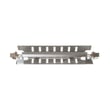
| Frost buildup, weak cooling, long run time | Defrost system | Refrigerator defrost heater WR51X10055 or refrigerator defrost bi-metal thermostat WR50X10065 |
| Poor cooling and unusual fan noise | Evaporator airflow | Refrigerator evaporator fan motor WR60X10307 |
A refrigerator that runs longer than normal uses more energy and can struggle to keep food at safe temperatures. Catching a door-seal issue, a defrost problem, or a sensor issue early helps prevent bigger cooling failures.
Last updated: February 2026