Owner’s manual
 Error Codes


What is the average lifespan of a Kenmore Elite refrigerator?
Most Kenmore Elite refrigerators, including model 79575199401, typically last 10 to 15 years with normal household use. Regular cleaning, good door sealing, and stable temperatures help you reach the high end of that range and reduce expensive sealed-system failures.
Typical lifespan and what affects it
A refrigerator’s life is mostly determined by how hard the cooling system has to work and how well airflow and sealing are maintained.
- 10 to 15 years is the typical lifespan for a modern refrigerator
- Dirty condenser coils can shorten life by overheating the compressor
- Worn door gaskets force longer run times and can cause temperature swings
- Poor air circulation inside the cabinet can lead to warm spots and icing
- Power interruptions/surges can stress electronic controls and start components
Maintenance that helps you get the full lifespan
We recommend following the care and cleaning guidance in the 79575199401 owner's manual.
- Vacuum and brush condenser coils regularly
- Keep door gaskets clean and check for gaps or tearing
- Avoid overpacking; leave space for proper air circulation
- Replace the water filter on schedule (if equipped)
- Keep the refrigerator level so doors close and seal consistently
Quick “repair vs replace” guide
Use this as a practical decision tool when the refrigerator is aging.
| Situation | What it usually means | Typical next step |
|---|---|---|
| Not cooling, compressor very hot/loud | High stress on sealed system | Professional diagnosis recommended |
| Frost buildup, warm fridge | Defrost/airflow issue | Check fan, vents, defrost system |
| Water leaks or dispenser issues | Water line/valve/tubing problem | Inspect tubing, fittings, inlet valve |
Why it matters
A Kenmore Elite bottom-mount refrigerator is designed for years of dependable operation, but preventive maintenance reduces run time, protects the compressor, and helps you avoid the most costly repairs.
Last updated: January 2026
What size is Kenmore refrigerator model 79575199401?
Kenmore Elite refrigerator model 79575199401 is a bottom-mount style refrigerator; most units in this Kenmore 795 bottom-mount family are approximately 33 inches wide, 31 to 34 inches deep (varies with handles), and about 68 inches tall. For the exact dimensions for your configuration, confirm the measurements listed in the 79575199401 owner's manual.
Typical dimensions you can expect
Because depth can change depending on whether you measure to the cabinet, to the door, or to the handle, we recommend checking all three.
- Width: commonly around 33 inches
- Height: commonly around 67 to 69 inches
- Depth: commonly around 31 to 34 inches (deeper when measuring to the handle)
- Door swing clearance: plan extra space so doors and drawers open fully
- Airflow clearance: leave space behind and above for proper ventilation
How to measure your refrigerator correctly
Use a tape measure and record each measurement in inches.
- Measure width at the widest point (usually the cabinet).
- Measure height from floor to the top of the hinge cover.
- Measure depth three ways: cabinet only, to the door, and to the handle.
- Measure clearance needed to pull out freezer drawers and open doors.
Quick reference table
| Measurement | What to measure | Typical range |
|---|---|---|
| Width | Side to side at cabinet | ~33 in. |
| Height | Floor to top hinge cover | ~67 to 69 in. |
| Depth | Front to back (varies by method) | ~31 to 34 in. |
Why it matters
Accurate dimensions help us match the right replacement parts (like shelves, door hardware, and gaskets), confirm fit through doorways, and prevent airflow problems that can affect cooling performance.
Last updated: January 2026
What are the common problems with Kenmore Elite refrigerators?
For Kenmore Elite model 79575199401, the most common problems we see are not cooling well, frost buildup or moisture issues, ice maker or water dispenser trouble, and unusual noises. Many fixes start with correct temperature settings, keeping air vents clear, and cleaning the condenser coils as outlined in the 79575199401 owner's manual.
Most common symptoms and what usually causes them
- Refrigerator or freezer not cold enough: blocked air vents, incorrect control settings, dirty condenser coils, or a failed fan
- Frost buildup or warm spots: door not sealing, door left ajar, airflow restrictions
- Doors not closing or hard to open: unit not level, bins or shelves out of position, sticky/dirty gaskets
- Ice maker slow or small cubes: freezer not cold enough, door held open, water supply restriction
- Buzzing/clicking or loud running: condenser fan area issues, compressor start components, or vibration from leveling
Quick checks we recommend first (fast, no parts)
- Set temperatures to 37°F (refrigerator) and 0°F (freezer); wait 24 hours for temperatures to stabilize.
- Make sure no food packages block the cool air vents.
- Clean the condenser coils (dirty coils reduce heat transfer and make the compressor work harder).
- Confirm doors close fully; push bins and pans fully into place.
- Clean door gaskets and the surfaces they touch; a light coat of wax after cleaning can reduce sticking.
| Problem you notice | Best first step | What it prevents |
|---|---|---|
| Not cooling well | Clean condenser coils; verify settings | Compressor overwork, warm food |
| Frost or moisture | Check door seal and door closure | Ice buildup, temperature swings |
| Ice maker slow | Verify freezer temp; keep door closed | Small/slow ice production |
Parts that commonly relate to these problems
If basic checks do not solve the issue, these parts are often involved on bottom-mount refrigerators like this Kenmore Elite:
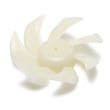
- Evaporator fan airflow issues: inspect the fan area; a damaged blade can reduce airflow (see refrigerator evaporator fan blade 5901JA1021A).
- Defrost system failures: heavy frost on the evaporator can point to a heater or defrost control issue (see lg refrigerator defrost heater 5300JK1005D).
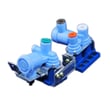
- Water dispenser or ice maker water supply problems: a weak fill can be caused by a failing valve (see refrigerator water inlet valve 5221JB2006K).
Why it matters
Most “big” refrigerator complaints (warm temps, frost, noise, slow ice) start as airflow, temperature setting, or maintenance issues. Catching them early helps protect food, reduces energy use, and prevents the sealed system from running harder than necessary.
Last updated: January 2026