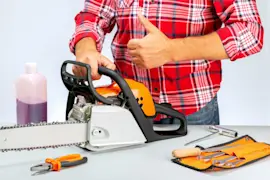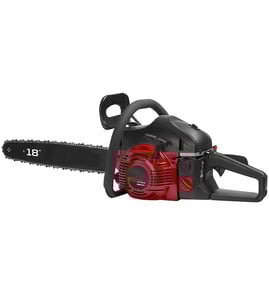

Are McCulloch chainsaws good quality?
Mcculloch chainsaws are built for solid homeowner and light to moderate cutting work; when they’re maintained correctly (sharp chain, clean air filter, fresh fuel mix), they deliver dependable cutting performance and good handling for the price.
What “good quality” means for a Mcculloch gas chainsaw
Quality shows up most in starting reliability, cutting speed, vibration control, and how well the saw holds adjustment over time.
- Starts consistently with PROper choke and priming technique
- Holds chain tension and bar alignment during normal use
- Cuts efficiently when the chain is sharp and depth gauges are set correctly
- Manages vibration well with intact anti-vibration mounts
- Runs cleanly when the air filter and spark arrestor are kept clear
What affects performance the most (and what to check first)
Most “bad saw” complaints come from setup or maintenance issues, not the brand.
| Symptom | Most common cause | Quick check |
|---|---|---|
| Hard starting | Old fuel or wrong mix | Drain and refill with fresh, correct 2-cycle mix |
| Bogging under load | Dull chain or clogged air filter | Sharpen chain; clean/replace filter |
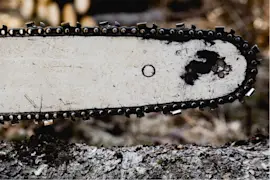
| Chain won’t oil | Empty tank or clogged oiler path | Fill oil; clean bar oil holes |
| Chain loosens often | Incorrect tensioning or worn bar | Re-tension cold; inspect bar rails |
Why it matters
A gas chainsaw’s “quality” depends heavily on routine wear items and correct adjustments. Keeping the chain sharp, the bar lubricated, and the fuel system clean PROtects the engine and makes cutting safer and smoother.
Finding the right parts for your saw
This model page lists parts for your Mcculloch PRO gas chainsaw. If your tag shows a longer identifier than just PRO (common on Mcculloch equipment), use our model number finder tips in how to find your appliance model number (and what it means for parts) so you match the exact parts diagram.
Last updated: February 2026
Should I use 40 1 or 50 1 fuel for a chainsaw?
For your Mcculloch PRO gas chainsaw, use the fuel-to-oil ratio specified for the engine you are running. When the spec is unknown, we use a safe, standard approach: run 50:1 with a high-quality air-cooled 2-cycle oil and avoid leaning the carburetor.
40:1 vs 50:1 (what it changes)
- 50:1: cleaner running, less smoke, less carbon buildup in the muffler and exhaust port
- 40:1: more oil for lubrication margin, more smoke, more deposits, higher chance of spark plug fouling
- Wrong oil is a bigger PROblem than ratio: use oil labeled for air-cooled 2-cycle engines
- Bad mix symptoms: hard starting, bogging, overheating, loss of power, plug fouling
Quick mix chart
| Mix ratio | Oil per 1 gallon gas | Oil per 1 liter gas | Typical use |
|---|---|---|---|
| 50:1 | 2.6 fl oz | 20 ml | Most modern 2-cycle equipment and oils |
| 40:1 | 3.2 fl oz | 25 ml | Older designs, heavy cutting, extra lubrication preference |
Our practical setup for PRO-SERIES saws
- Mix with fresh gasoline (most saws run well on 87+ octane); use the freshest fuel you can.
- Mix only what you will use in 30 days.
- Keep the air filter clean and the chain sharp; a dull chain overheats the engine and makes any mix ratio less forgiving.
- If the saw runs hot, surges at high speed, or loses power under load, correct the tune and airflow issues before changing ratios.
Why it matters
The oil in the mix lubricates the crank bearings, piston, and cylinder. Too little oil can score the cylinder and seize the engine; too much oil can foul the plug and restrict the exhaust, reducing power.
To make sure you are matching the correct spec and parts list to your exact Mcculloch identification, use how to find your appliance model number (and what it means for parts).
Last updated: February 2026
What happened to McCulloch chainsaws?
Mcculloch chainsaws did not disappear; the Mcculloch name continued after ownership and licensing changes, and today it’s primarily used for consumer-focused outdoor power equipment rather than the older PRO-GRADE saws like the PRO MAC 3805 11-600038-04. For parts, the key is matching the exact model and serial information.
What changed (and what it means for parts)
When a brand changes hands over time, the biggest impact is parts compatibility. Two saws that both say “Mcculloch” can use completely different ignition, fuel, and bar-and-chain components.
Common changes you’ll see:
- Model numbering formats changed across different eras
- Parts sourcing shifted to different suppliers
- Some assemblies were redesigned (carburetor, starter, clutch)
- Older OEM parts may be replaced by updated equivalents
- Documentation and diagrams may be organized differently by model family
How to identify the correct Mcculloch model for ordering
For the best match on a PRO MAC-style saw, we use the model tag information, not the brand name on the cover.
Check these locations:
- Starter housing area
- Rear handle or fuel tank housing
- Crankcase area near the bar mount
- A stamped or printed ID plate with model and serial
If your tag shows something different than “PRO MAC 3805 11-600038-04,” use the exact characters from the tag when searching.
Quick guide: “older PRO MAC” vs “newer consumer” Mcculloch
| What you have | Typical clue | Parts lookup tip |
|---|---|---|
| Older PRO MAC-era saw | Model/series like “PRO MAC” and older-style ID tags | Match the full model and serial range before ordering |
| Newer consumer Mcculloch | Modern branding and newer model formats | Use the exact model ID; parts are not interchangeable with PRO MAC |
Why it matters
Chainsaws are sensitive to small spec differences (fuel line diameter, carb mounting pattern, bar mount pattern, chain pitch/gauge). Using the wrong part can cause hard starting, poor cutting, chain derailment, or premature clutch and sprocket wear.
For help using our search tools and model lookup features, use how to find your appliance model number (and what it means for parts).
Last updated: February 2026
What year was the McCulloch PRO made?
The model listing we have here identifies your chainsaw as a Mcculloch PRO gas chainsaw, but “PRO” by itself is not a single year-specific model. Mcculloch used “PRO” branding across multiple chainsaws and PROduction years, so the exact year depends on the full model and serial information on your saw.
How to pinpoint the exact year for a Mcculloch PRO chainsaw
Use the identification tag on the saw to narrow it down to a specific PROduction run.
- Find the model and serial tag (commonly on the crankcase, starter housing, or near the handle)
- Write down the full model designation (for example, “PRO Mac 3805” plus any suffixes)
- Record the serial number exactly as shown
- Note any engine or carburetor markings (often helpful when cross-referencing)
- Compare your details to a model-number reference like how to find your appliance model number (and what it means for parts)
What “PRO” usually means on Mcculloch model pages
On parts listings, “PRO” is often a shortened identifier used to group a family of PROfessional-grade saws. The year is typically tied to:
| What you have | What it tells you | What it does not tell you |
|---|---|---|
| “PRO” branding | PROduct line / grade | Exact year |
| Full model (ex: PRO Mac 3805) | Specific saw family | Exact year without serial |
| Serial number | PROduction range | Nothing by itself unless decoded |
Why it matters
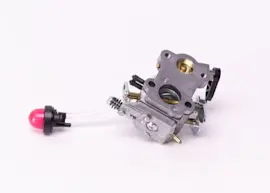
The correct year (or PROduction range) helps you match the right ignition parts, fuel system components (carburetor, fuel lines, primer bulb), and cutting system items (bar, chain, sprocket). That prevents ordering parts that look similar but do not fit.
Last updated: February 2026