Owner’s manual



How to reset a Samsung VRT Plus washing machine?
To reset your Samsung WF455ARGSGR washer (VRT Plus), we recommend doing a power reset first: turn the washer off, unplug it for 1 to 5 minutes, then plug it back in and press Power. This clears many temporary control glitches without changing your cycle settings.
Quick reset options (what to try first)
- Power reset (most common): Power off, unplug 1 to 5 minutes, plug back in, press Power.
- Cancel a stuck cycle: Press Power to turn the washer off; wait 10 seconds; turn it back on and reselect a cycle.
- Door lock reset attempt: Open and close the door firmly, then press Start/Pause (the washer will not tumble or spin unless the door is closed).
- After install or moving: Run Calibration Mode so the washer can relearn load sensing.
Calibration Mode (recommended after installation or moving)
Samsung includes a Calibration Mode to improve weight detection and reduce vibration.
Steps:
- Empty the drum and close the door.
- Turn the washer on.
- Press and hold Temp and Delay Start together for at least 3 seconds.
- Press Start/Pause to begin; the drum will rotate for about 3 minutes.
For the exact button locations and display behavior, use the WF455ARGSGR user manual.
If “reset” is really an error code or vibration problem
Many “needs a reset” complaints are caused by an unbalanced load, leveling issues, or a door lock problem.
Common checks:
- Confirm the washer is level on all four corners.
- Make sure the load is balanced (avoid one heavy item by itself).
- Verify shipping bolts were removed (if recently installed).
- Listen for the door lock click when starting.
Symptom-to-fix guide
| What you notice | What it usually means | What to do next |
|---|---|---|
| Won’t start, door seems stuck | Door not fully latched or lock issue | Reseat door; try Start/Pause; inspect door lock |
| Loud banging in spin | Unbalanced load or suspension issue | Rebalance load; check leveling; inspect shocks |
| Stops mid-cycle | Drain or fill issue, or control glitch | Power reset; check hoses; run Rinse+Spin |
Why it matters
A proper reset (and calibration after moving) helps the control board read the load correctly, reduces vibration, and prevents repeat interruptions that can look like a “bad washer.”
Last updated: January 2026
What is the most common problem with the Samsung washing machine?
The most common issue we see with Samsung front-load washers like model WF455ARGSGR is poor spinning or stopping mid-cycle because the load is unbalanced or the washer cannot drain fast enough. That combination leaves clothes wet and can also cause shaking and noise. See the WF455ARGSGR user manual for cycle and loading guidance.
Most common symptoms customers notice
- Clothes come out soaking wet after the cycle
- Washer shakes, bangs, or walks during spin
- Cycle pauses or ends early
- Water does not drain or drains slowly
- Door stays locked longer than normal
Quick checks that fix many “won’t spin” complaints
- Redistribute the load; wash bulky items (blankets, comforters) by themselves.
- Use HE detergent and measure carefully; too much suds can interfere with draining and spinning.
- Run a tub-clean cycle periodically (Samsung calls this PureCycle) to reduce residue buildup.
- Confirm both water faucets are fully open and hoses are tight; loose connections can cause leaks and fill issues.
- Use Samsung Smart Care (if equipped) to read and act on error codes from the display.
When it is likely a part problem
If balancing and drain checks do not help, these parts commonly relate to spin, vibration, and drain complaints:
| Symptom | Common cause | Example part for WF455ARGSGR |
|---|---|---|
| Loud banging, excessive vibration | Worn suspension/dampening | Samsung washer shock absorber DC66-00470A |
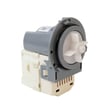
| Won’t drain, wet clothes | Clogged or failed pump | Washer drain pump DC31-00054D |
| Door won’t lock or unlock correctly | Failed door lock | Washer door lock DC64-00519B |
Why it matters
A washer that cannot drain or balance correctly often cannot reach full spin speed. Fixing the root cause prevents repeat wet-load issues, reduces vibration stress on the tub and frame, and helps cycles finish normally.
Last updated: January 2026
What is the lifespan of a Samsung front load washer?
A Samsung front-load washer like model WF455ARGSGR typically lasts 10 to 15 years with normal household use and basic maintenance. Reaching the high end of that range depends most on preventing odor and residue buildup, avoiding chronic overloads, and keeping vibration under control.
Typical lifespan and what affects it
Most front-load washers fall into a similar lifespan range, but these factors move the needle the most:
- Load size and balance: frequent overloading or unbalanced loads increase stress on the tub, bearings, and suspension.
- Moisture control: leaving the door closed after washing traps humidity and speeds up mildew and seal wear.
- Detergent habits: too much detergent can cause residue buildup that leads to odor and poor rinsing.
- Water quality: hard water can accelerate scale and valve issues.
- Vibration and leveling: persistent shaking shortens the life of shocks, springs, and tub components.
Maintenance that helps you hit 15 years
The WF455ARGSGR manual highlights a tub-cleaning cycle designed to remove detergent residue and dirt buildup. Use these habits to extend life:
- Run the washer’s tub-clean cycle regularly (see the WF455ARGSGR owner's manual).
- Wipe the door glass and door seal area after the last load of the day.
- Leave the door slightly open between loads to dry the drum.
- Use HE detergent and measure carefully (less is usually better).
- Level the washer and keep loads balanced to reduce shaking.
Quick reference: lifespan expectations
| Usage pattern | Typical lifespan | What usually wears first |
|---|---|---|
| Light (few loads/week) | 12 to 15 years | Door boot, drain pump, inlet valve |
| Average (most households) | 10 to 15 years | Suspension parts, pump, door lock |
| Heavy (daily, large loads) | 8 to 12 years | Suspension, tub components, motor system |
Why it matters
A front-load washer’s biggest life-shorteners are residue buildup and vibration. Keeping the tub clean and the machine stable reduces strain on high-cost assemblies like the tub and spin basket, and it helps prevent odor complaints that often lead to early replacement.
Last updated: January 2026
How do I rebalance my Samsung washer?
For a Samsung WF455ARGSGR washer, rebalancing usually means (1) redistributing the load, (2) leveling the washer on all four corners, and (3) running Calibration Mode with the drum empty so the washer can detect load weight accurately. See the WF455ARGSGR owner's manual for the exact button sequence.
Step-by-step: rebalance and calibrate
- Pause the cycle and open the door.
- Redistribute items so the load is even (avoid one heavy item by itself).
- Remove some items if the drum is tightly packed.
- Level the washer:
- Place a carpenter’s level on the top of the washer.
- Adjust the leveling legs until the washer is level front-to-back and side-to-side.
- Tighten the locking nuts on the legs after leveling.
- Run a test cycle (Rinse+Spin is a good check after leveling).
- Run Calibration Mode (drum must be empty): power on, press and hold the two specified buttons for about 3 seconds, then press Start/Pause; the drum will rotate for about 3 minutes.
Quick checks that prevent repeat out-of-balance problems
- Wash similar-weight items together (towels with towels, jeans with jeans).
- Avoid washing one bulky item alone; add a few similar items.
- Use the right cycle and spin speed for bulky loads.
- Confirm the washer is not touching a wall, dryer, or cabinet.
- Verify shipping bolts are removed (important after any move or reinstall).
What the washer is telling you (common balance-related code)
| What you see | What it usually means | What to do |
|---|---|---|
| dc | Load is too unbalanced to spin | Redistribute the load, then press Start/Pause |
Why it matters
A front-load washer that is not level or is consistently overloaded can shake, walk, and strain suspension components. If rebalancing and leveling do not stop heavy vibration, worn suspension parts such as shock absorbers can be a root cause.
Last updated: January 2026