 Installation guide
 Owner’s manual
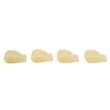


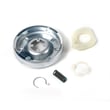
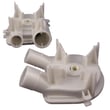
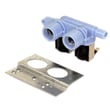
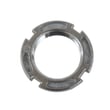
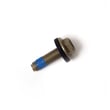
How to tell if a washer impeller is bad?
On the Whirlpool LSR6332KQ0 washer, a “bad impeller” usually shows up as poor wash action or poor draining. If the wash plate or pump impeller spins freely with little resistance, is cracked, or is stripped, it will not move water or clothes correctly; inspect it and the drive components.
What to check first (quick diagnosis)
- Unplug the washer before inspecting anything under the cabinet.
- Confirm the tub fills to the selected level; low fill can look like weak agitation.
- Listen for the motor running during agitate and drain; a running motor with no movement points to a coupling, pump, or drive issue.
- Check for standing water after the drain portion; that points to a drain system problem.
- Review the operating and troubleshooting steps in the LSR6332KQ0 owner's manual.
Impeller vs agitator: what you actually have
Many Whirlpool top-load washers like the LSR6332KQ0 use an agitator (not a low-profile wash plate/impeller). If your washer has an agitator, “impeller symptoms” often trace to agitator parts instead.
| If you see… | Your washer likely uses… | Common failure point |
|---|---|---|
| Tall center post with fins | Agitator | Worn dogs or loose bolt |
| Low-profile wash plate | Impeller/wash plate | Stripped splines or cracked plate |
Signs the wash action “impeller” is failing
- Clothes barely move during agitation
- Grinding or clicking from the center of the tub
- Agitator or wash plate turns one way only, or slips
- Visible cracks, rounded splines, or wobble at the hub
Parts that commonly cause the same symptoms
If agitation is weak on this model, these are frequent culprits:
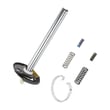
- Agitator dog 80040 (worn dogs cause slipping)
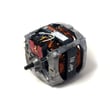
- Washer motor coupling 285753A (motor runs but basket/agitator does not)
- Clutch or gear case wear (spin and agitation issues)
Why it matters
A slipping wash component can leave detergent undissolved, reduce cleaning performance, and increase strain on the drive system. Catching it early can prevent bigger repairs.
Last updated: January 2026
Can a clogged drain cause the F9E1 error?
Yes. A clogged drain path can trigger a drain-related error because the washer cannot move water out fast enough. On a Whirlpool top-load washer like model LSR6332KQ0, the most common restrictions are a kinked/clogged drain hose, a clogged household standpipe/sink, or a drain pump blockage; confirm the correct drain-hose setup in the installation guide.
What to check first (fast, no parts)
- Unplug the washer before inspecting hoses or the pump area.
- Make sure the drain hose is not kinked, twisted, or crushed behind the washer.
- Confirm the drain hose is installed correctly and secured; do not force excess hose down into the standpipe.
- Verify the drain outlet height is not too high; the drain hose end should be no more than about 72 inches above the floor.
- Check the household drain (standpipe or laundry tub) for a clog; it must handle high flow during drain.
Quick diagnosis guide
| What you see | Most likely cause | What to do |
|---|---|---|
| Water drains slowly or backs up into the tub/sink | Clogged standpipe/sink | Clear the household drain; re-test drain/spin |
| Washer hums but little or no water leaves | Pump jam or restriction | Inspect pump and hoses; remove debris |
| Drains sometimes, then stops | Kinked hose or intermittent clog | Re-route hose; check for lint/coins |
When a part is commonly involved
If the hose and household drain are clear but the washer still will not drain, the drain pump is a common failure point on this design. Replacing the washer drain pump WP3363394 is often the next step when the pump is noisy, seized, or leaking.
Why it matters
A restricted drain can prevent proper spin, leave clothes soaking wet, and cause overflow at the standpipe. Correct hose routing and a clear drain path protect the motor, coupling, and clutch from extra strain.
Last updated: January 2026
What is the most common problem with whirlpool washers?
The most common Whirlpool washer problems are failure to drain or spin, leaking, and poor agitation. On the Whirlpool LSR6332KQ0, these symptoms usually trace back to a few high-wear items (lid switch, drain pump, motor coupling) plus simple issues like an unbalanced load or a kinked drain hose; see the LSR6332KQ0 owner's manual for model-specific checks.
Most common symptoms and what they usually mean
- Won’t drain / won’t spin: drain restriction, failed drain pump, or a drive issue.
- Won’t agitate (but fills): worn agitator dogs or a drive coupling problem.
- Leaks: loose fill hoses, a failing inlet valve, or a tub seal/gasket issue.
- Loud noise or burning smell: clutch, motor coupling, or pump obstruction.
- Stops mid-cycle: lid switch not closing reliably.
Quick checks we recommend first (no parts)
- Confirm the washer is level and the load is evenly distributed.
- Check the drain hose for kinks and verify the standpipe is not clogged.
- Make sure both hot and cold supply valves are fully open.
- Inspect fill hoses for drips at the faucet and washer connections.
- If the washer won’t spin, close the lid firmly and listen for a distinct lid-click.
Common parts that fix these problems on LSR6332KQ0
| Symptom | Likely part | What it affects |
|---|---|---|
| Won’t drain / water left in tub | Washer drain pump WP3363394 | Pumps water out during drain/spin |
| Won’t agitate or spin | Washer motor coupling 285753A | Transfers motor power to the drive system |
| Weak or no agitation | Agitator dog 80040 | Helps the agitator “ratchet” and move clothes |
Why it matters
Drain, spin, and agitation problems can look similar, but the fix is different. Starting with load balance, hoses, and lid closure prevents unnecessary part replacement and helps you pinpoint whether the issue is water flow (inlet/drain) or the drive system.
Last updated: January 2026
How do I reset the lid lock on my whirlpool washer?
On the Whirlpool LSR6332KQ0, a “lid lock reset” is usually just clearing a stuck lid switch condition. We recommend unplugging the washer for 5 minutes, then closing the lid firmly and restarting the cycle; if it still will not run, the lid switch circuit likely needs inspection.
Quick reset steps (most common)
- Unplug the washer for 5 minutes.
- Plug it back in.
- Open the lid, then close it firmly (make sure it fully seats).
- Set a cycle and pull the cycle control knob to start.
- If the washer stops when you lift the lid, the lid switch is at least responding.
What to check if it still will not start
- Power reset worked but it still will not run: confirm the lid is fully closed and the strike area is not bent.
- No click or response when closing the lid: the lid switch or actuator may be worn.
- Intermittent operation: check for a loose cabinet fit or vibration that prevents consistent lid switch engagement.
- Stops mid-cycle: push in the cycle control knob to stop, then close the lid and pull the knob to restart (this is the normal restart method described in the LSR6332KQ0 owner’s manual).
Parts that commonly solve “won’t run with lid closed” symptoms
If the checks above point to a failed lid switch, replacement is the typical fix.
| Symptom | Most likely area | What it affects |
|---|---|---|
| Won’t start, lid closed | Lid switch circuit | Motor run permission |
| Starts then stops when bumped | Lid switch engagement | Cycle continuity |
| Runs only when pressing lid | Lid alignment/strike | Switch actuation |
If you’re already inside the console/cabinet for diagnosis, also inspect the drive system for unrelated no-agitate/no-spin complaints; a failed washer motor coupling 285753A can mimic “won’t run” reports when the motor runs but the basket does not move.
Why it matters
This model is designed to stop agitation and spin when the lid is open. A reliable lid switch signal is a core safety interlock; if it is not made consistently, the washer may not start, may pause, or may not restart after opening the lid.
Last updated: January 2026





