Owner’s manual
 Error Codes


How to tell if a Kenmore refrigerator compressor is bad?
On Kenmore Elite refrigerator model 79572043110, a bad compressor usually shows up as poor or no cooling even though the unit has power, along with unusual clicking/humming patterns and a compressor shell that gets very hot while trying to start. Use the 79572043110 owner's manual troubleshooting section to narrow it down before replacing sealed-system parts.
- Refrigerator and freezer both warm, but interior lights and controls work
- Compressor repeatedly clicks on and off (start attempt, then stops)
- Compressor runs for long periods with little temperature improvement
- Little to no vibration or sound from the compressor when it should be running
- Condenser fan runs but cooling does not recover after several hours
- Confirm airflow: Make sure vents inside the fresh food section are not blocked by food packages.
- Check condenser cleanliness: Dust-clogged coils can mimic compressor failure; clean the condenser area and allow 24 hours for temps to stabilize.
- Listen for the pattern: A steady run with no cooling often points to a sealed-system issue; rapid clicking often points to a start device or overload.
- Verify door sealing: Warm air leaks can cause nonstop running and poor cooling; inspect the gasket for gaps or tears.
- Look for frost clues: Heavy frost on the back freezer panel can indicate a defrost problem rather than a compressor.
| Test/observation | What it indicates | Why it matters |
|---|---|---|
| Amp draw at startup and while running | Hard-starting or locked rotor | Confirms the compressor is struggling electrically |
| Winding resistance and continuity | Open/shorted windings | Confirms internal electrical failure |
| System pressures and temperature split | Sealed-system performance | Separates compressor failure from a refrigerant restriction/leak |
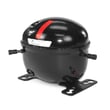
Compressor and sealed-system repairs require specialized tools and refrigerant handling. If diagnosis points to the compressor, the model uses a dedicated compressor assembly such as the refrigerator compressor TCA38091801. Your manual also outlines service support options and troubleshooting steps.
Replacing a compressor is one of the highest-cost refrigerator repairs. Ruling out airflow issues, dirty condenser coils, door seal leaks, and defrost problems first prevents unnecessary parts replacement and gets cooling restored faster.
Last updated: February 2026
What are the common problems with Kenmore Elite refrigerators?
On Kenmore Elite refrigerator model 79572043110, the most common issues we see are cooling problems (often tied to airflow or the sealed system), ice maker and water dispenser troubles, and control or power-related glitches. Your 79572043110 owner's manual troubleshooting section helps narrow the cause fast.
- Not cooling or warm temperatures: dirty condenser area, failed evaporator fan, defrost problem, or compressor/sealed-system trouble
- Ice maker not making ice: water supply issue, frozen fill path, or failed ice maker
- Water dispenser slow or not dispensing: clogged filter, kinked tubing, or inlet valve problem
- Frost buildup in freezer: defrost sensor/heater issue or door not sealing
- Lights not working or door alarm issues: door switch or control problem
- Confirm temps are set correctly (typical targets: 37°F fresh food, 0°F freezer).
- Make sure doors close fully; check for torn or warped gaskets.
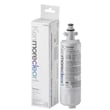
- Replace the water filter if flow is weak or taste is off; use the correct genuine Kenmore refrigerator water filter 9690 AGF80300801.
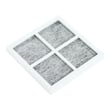
- If odors are a problem, install/replace the refrigerator air filter ADQ73214408.
- After a power interruption, allow 24 hours for temperatures to stabilize.
| Symptom | Likely area | Example part for 79572043110 |
|---|---|---|
| Warm fridge/freezer | sealed system or airflow | Refrigerator compressor (TCA38091801), refrigerator condenser coil (ACG73645004) |
| Frost buildup | defrost system | Refrigerator defrost sensor assembly 6615JB2005R |
| No ice | ice maker system | Refrigerator ice maker assembly AEQ73110205 |
| No lights/alarm acts up | door sensing | Refrigerator door switch 6600JB1010A |
A refrigerator that is even 5 to 10 degrees too warm can spoil food quickly, and ice or water issues often trace back to simple maintenance items (filters, airflow, door sealing) before major components like the compressor.
This model supports Kenmore Connect phone-based diagnostics when instructed by support. The steps and button sequence are in the 79572043110 owner's manual.
Last updated: February 2026
What size is Kenmore refrigerator model 79572043110?
Kenmore Elite refrigerator model 79572043110 is a bottom-freezer design in the 795.7205* family. For fit planning, most Kenmore bottom-freezer refrigerators in this class are about 33 inches wide, 30 to 33 inches deep, and 67 to 70 inches tall; confirm the exact cut-sheet dimensions in the 79572043110 owner's manual.
Use a tape measure and record in inches:
- Width: cabinet edge to cabinet edge (do not include door handles)
- Height: floor to top of hinge cover (or highest point)
- Depth:
- cabinet only (no doors)
- to front of doors
- to front of handles (if you need clearance past a counter)
- Door swing clearance: space needed for doors and drawers to open fully
- Ventilation clearance: space behind and above for airflow
These ranges help when you are planning delivery, cabinetry, or a replacement.
| Measurement | Typical range for this style | What to use for ordering/fit |
|---|---|---|
| Width | ~32.75 to 33.5 in. | Cabinet width (no handles) |
| Height | ~67 to 70 in. | Highest point (often hinge cover) |
| Depth | ~30 to 33 in. | Depth to doors or handles, as needed |
| Capacity | ~22 to 24 cu. ft. | Listed capacity, not exterior size |
A refrigerator that is even 1 inch too wide or too tall can prevent proper installation, restrict door swing, or reduce airflow. Correct measurements also help when replacing parts like a door bin or gasket that must match the door style.
If you are troubleshooting door closing or storage fit, these model-matched parts are common:
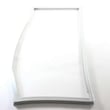
- Refrigerator door gasket, right ADX72930461 (air leaks, sweating, poor sealing)
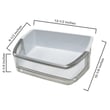
- Kenmore refrigerator door bin AAP73252302 (bin fit and door loading)
- Lg Kenmore refrigerator door bin AAP73252202 (alternate bin location/fit)
Last updated: February 2026
What's the average lifespan of a Kenmore refrigerator?
Most Kenmore refrigerators average 10 to 15 years of service life; your Kenmore Elite 79572043110 bottom-mount can reach the high end of that range when it is installed correctly and maintained (especially airflow, door sealing, and filter changes). For model-specific care and maintenance intervals, use the 79572043110 use and care guide.
A refrigerator’s lifespan depends more on operating conditions than brand name alone.
- Condenser cleanliness: Dust buildup makes the compressor run hotter and longer.
- Door seal condition: Leaks force longer run times and can cause frost and moisture issues.
- Room temperature and ventilation: Tight clearances and hot garages shorten life.
- Ice maker and dispenser use: Heavy use increases wear on valves, motors, and tubing.
- Power quality: Frequent outages or surges add stress to electronics and the compressor.
These are the highest-impact habits for a bottom-mount Kenmore Elite like model 79572043110:
- Vacuum and brush the condenser area regularly.
- Keep doors closing squarely; clean and inspect gaskets.
- Replace the water filter on schedule; use the correct filter such as genuine Kenmore refrigerator water filter 9690 AGF80300801 when your model calls for it.
- Replace the air filter when odors linger; refrigerator air filter ADQ73214408 helps keep airflow and freshness consistent.
- Confirm temperatures stay near 37°F fresh food and 0°F freezer.
- Avoid overpacking; blocked vents reduce cooling efficiency.
| Refrigerator type | Typical lifespan | Notes |
|---|---|---|
| Top freezer | 14 to 18 years | Simplest design; fewer dispenser parts |
| Side-by-side | 12 to 16 years | More door hardware and airflow paths |
| French door/bottom freezer | 10 to 15 years | More features; more seals, fans, and controls |
A refrigerator that is running longer to maintain temperature uses more electricity and accelerates wear on key components like the compressor, evaporator fan, and defrost system. Basic upkeep helps prevent temperature swings, leaks, and premature part failures.
Last updated: February 2026
Why is my Kenmore Elite refrigerator leaking water out of the bottom?
Water leaking from the bottom of your Kenmore Elite refrigerator model 79572043110 is usually caused by a clogged defrost drain (meltwater overflows into the cabinet), a leak in the dispenser water line, or ice buildup that redirects water into the fresh food section and down to the floor. See the 79572043110 owner's manual for model-specific access and troubleshooting steps.
- Unplug the refrigerator and pull it out so you can see where the water is coming from.
- Check whether the water is clear (often defrost drain or water line) or tinted/dirty (often drain pan or debris).
- Look for water inside under the crisper drawers (commonly a defrost drain issue).
- Check the water filter area and housing for drips; a loose or mis-seated filter can leak.
- Inspect the water line behind the unit for a slow drip at the supply connection.
When the drain clogs with ice or debris, defrost water cannot flow to the drain pan and can spill into the bottom of the refrigerator.
- Thaw any ice in the drain trough (warm air, not sharp tools)
- Flush the drain with hot water (turkey baster works well)
- Clear the drain tube if it is restricted
A cracked line or loose fitting can drip and run down to the base.
- Inspect the line at the hinge area and behind the unit
- Check for kinks, rub-through, or loose couplers
- Replace damaged tubing with refrigerator water tubing MJU62070602
Warm air leaks in, creates frost, then meltwater overwhelms the drain.
- Look for gaps, tears, or a warped gasket
- Clean the gasket and mating surface
- If damaged, replace the gasket (right side option: refrigerator door gasket, right ADX72930461)
| What you notice | Most likely cause | Best next step |
|---|---|---|
| Water under crisper drawers | Defrost drain clogged | Thaw and flush drain |
| Water only near filter/dispenser side | Filter or tubing leak | Reseat filter; inspect tubing |
| Heavy frost, then puddles | Door seal leak | Inspect and correct gasket seal |
| Puddle appears after ice maker use | Water line/ice maker fill leak | Check tubing and connections |
Leaks can damage flooring, cause ice buildup, and reduce cooling performance. Fixing the drain or water line early also helps protect components like the evaporator fan and compressor.
Last updated: February 2026
Why is my refrigerator not getting cold at the bottom?
If your Kenmore Elite 79572043110 is warm at the bottom, the most common cause is restricted airflow: blocked air vents or an air circulation issue can keep cold air from reaching the fresh food section evenly. Start by clearing vents, confirming settings, and allowing time after changes.
- Clear air vents in the refrigerator and freezer; rearrange food so air can circulate.
- Confirm the controls are ON and not set to OFF.
- Check for demo mode (lights work but cooling is disabled); turn demo mode off.
- Limit door openings; frequent openings quickly warm the lower shelves.
- Wait 24 hours after installation, relocation, or major temperature adjustments.
For control locations and the airflow diagram, use the 79572043110 owner’s manual.
If vents are open but the bottom stays warm, focus on components that move cold air and remove heat.
| Symptom you notice | Likely area to inspect | What it points to |
|---|---|---|
| Top is cooler than bottom | Air circulation path | Damper stuck, fan airflow restricted, or frost buildup blocking passages |
| Freezer is cold but fridge bottom is warm | Fresh food airflow | Damper or fan issue; check for ice blocking vents |
| Both sections are warming | Heat removal / sealed system | Dirty condenser area, condenser fan issue, compressor or refrigerant problem |
A common airflow-related part on this model is the refrigerator air damper ADJ73252235, which regulates cold air entering the refrigerator compartment.
When cold air cannot circulate, the refrigerator can look “partly working” while food on lower shelves warms into the unsafe zone. Restoring airflow and correct settings protects food and reduces compressor run time.
Last updated: February 2026