Installation guide
 Owner’s manual
 Error Codes



Do you have to empty a refrigerator drain pan?
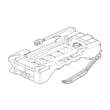
No. On the Frigidaire LGHB2867TD0 bottom-mount refrigerator, the drain pan is designed to collect defrost water and let it evaporate on its own, so you normally do not empty it. If you notice standing water, odors, or leaks, the drain system needs cleaning or repair.
When you would check or clean the drain pan
A drain pan issue usually shows up as water on the floor, musty smells, or recurring puddles.
- Water pooling under the refrigerator or near the front grille
- Sour or moldy odor that returns soon after cleaning
- Visible slime or debris in the pan area
- Water that never seems to evaporate
- Evidence of a clogged defrost drain (ice or water inside the freezer)
Safe way to inspect it
Before you reach near moving parts or electrical components, shut the unit down correctly.
- Press and hold the refrigerator On/Off button to stop cooling (lights may still stay on).
- Unplug the power cord before cleaning.
- Pull the refrigerator straight out to avoid damaging flooring.
- Inspect the pan and the drain area for cracks, heavy buildup, or overflow.
For model-specific access points and cleaning cautions, follow the LGHB2867TD0 owner's manual.
What to do if water is not evaporating
Most “full drain pan” complaints are caused by a drain restriction or airflow/heat issues near the pan.
| Symptom | Most common cause | What we recommend |
|---|---|---|
| Water on floor | Pan shifted, cracked, or overflowing | Re-seat pan; clean; replace if damaged |
| Bad odor | Dirty pan or drain biofilm | Clean pan and flush drain |
| Ice buildup then leaking | Clogged defrost drain | Clear drain and check for recurring freeze-ups |
If you also have water dispenser or ice maker issues, a supply problem can contribute to leaks; use how to diagnose a faulty refrigerator water inlet valve as a step-by-step guide.
Why it matters
A drain pan that stays wet or dirty can create odors and mold growth, and an overflowing pan can damage flooring. Keeping the drain path clear helps your defrost system work normally and prevents repeat puddles.
Last updated: January 2026
Why is my bottom ice maker not making ice?
On the Frigidaire LGHB2867TD0 bottom-freezer ice maker, the most common reasons for no ice are the ice maker being turned OFF (wire signal arm up), the water valve being closed, a kinked supply line, or a water filter that is not seated or is clogged. Start by confirming the wire signal arm is down (ON) and the water supply is fully open; then flush air from the water system per the LGHB2867TD0 owner's manual.
Quick checks we recommend first
- Pull the freezer drawer out and make sure the wire signal arm is lowered (down = ON).
- Confirm the refrigerator is connected to the water line and the shutoff valve is fully open.
- Inspect the water supply line behind the refrigerator for kinks, pinches, or freezing.
- Reseat the water filter; a filter that is not fully seated can stop water flow.
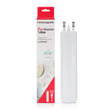
- If the filter is older or water flow is slow, replace the refrigerator water filter ULTRAWF.
- Clear any frozen food or ice that could be holding the signal arm up.
What “normal” ice production looks like
Once installed correctly, the ice maker can begin producing ice within about 24 hours. Typical output is about 2 to 2.5 pounds of ice per 24 hours, depending on door openings and usage.
| Symptom | Most likely cause | What to do |
|---|---|---|
| No ice at all | Ice maker OFF (arm up) | Lower the wire signal arm |
| No ice at all | Water valve closed or line kinked | Open valve; straighten line |
| Small or hollow cubes | Restricted water flow | Replace filter; check inlet valve |
| Slow ice production | Freezer too warm or heavy use | Lower freezer temp; reduce door openings |
If you recently changed the filter or installed the refrigerator
Air trapped in the water tubing can prevent proper filling at first. We recommend flushing the system and discarding the first full bin of ice after ice production starts (and more on counter-depth versions) so taste and color normalize.
Why it matters
The ice maker needs steady water flow and a cold enough freezer temperature to cycle. A partially blocked filter, a kinked line, or a signal arm stuck in the OFF position can stop the fill cycle completely, even when the refrigerator otherwise seems to cool normally.
Last updated: January 2026
What is the most common problem with Frigidaire refrigerators?
For Frigidaire refrigerators like model LGHB2867TD0, the most common problem we see is cooling performance issues, often tied to airflow restrictions, door sealing problems, or a fan/sensor issue. The next most common category is ice maker and water dispenser trouble caused by water supply or filter problems; start with the basics in the LGHB2867TD0 owner's manual.
Most common issues (and what to check first)
- Warm refrigerator or freezer: confirm vents are not blocked by food and doors close fully.
- Door not closing or poor seal: check leveling and gasket condition; a tilted cabinet can prevent proper sealing.
- Ice maker not making ice: confirm the ice maker is on, the water valve is open, and the supply line is not kinked.
- Slow water dispensing or odd taste/odor: flush the system by dispensing and discarding multiple glasses of water.
- Noisy operation: fan-related noises are common when airflow is restricted or a fan is failing.
Quick troubleshooting table
| Symptom | Most likely cause | Best first step |
|---|---|---|
| Fridge warm, freezer OK | Airflow issue between compartments | Clear vents; avoid overpacking |
| Freezer warm, no ice | Water supply or ice maker off | Verify water line/valve; turn ice maker on |
| Doors pop open or won’t close | Refrigerator not level or cabinet interference | Level the unit; ensure clearance |
| Water tastes stale | Water not used recently | Flush 10 to 12 glasses |
Model-specific tips for LGHB2867TD0
Your installation guidance matters for day-to-day performance. For LGHB2867TD0, proper clearances and leveling help prevent temperature swings and door-seal leaks:
- Keep 3/8 inch clearance at the sides and top
- Keep 1 inch clearance at the rear
- Set the cabinet to tilt about 1/4 inch from front to back so doors close and seal
- Use the front roller adjustment screws (3/8-inch socket) to level and align doors
Parts that commonly solve the “most common” complaints
If the issue points to filtration or water supply, these are frequent fixes for this model:
- Refrigerator water filter ULTRAWF (clogs can reduce flow and affect taste)
- Refrigerator water inlet valve assembly 242253002 (helps when the ice maker or dispenser is not getting water)
Why it matters
Cooling and ice maker problems often start small (a door not sealing, a kinked water line, a clogged filter) but can lead to food spoilage, frost buildup, and repeated ice maker failures. Catching the root cause early saves time and prevents repeat symptoms.
Last updated: January 2026