Owner’s manual
 View engine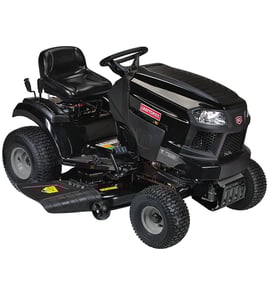



Does the 917272240 have a Kawasaki engine?
No. Craftsman lawn tractor model 917272240 uses a Kohler engine; the parts breakdown in the owner's manual lists Kohler model CV20S-65570 (CV20 type 65570), not a Kawasaki engine.
How we identify the engine on model 917272240
The most reliable way is to match the engine model/type shown in the tractor’s engine parts listing.
- Look for the engine section that lists the engine as “Kohler model number CV20S-65570”
- Confirm the “CV20 type number 65570” callouts in the Kohler engine breakdown pages
- Compare that to the ID tag on your engine (usually on the blower housing or valve cover area)
- Use the engine model/type when ordering engine-specific parts (gaskets, breather parts, ignition parts)
What to check on your tractor (quick checklist)
- Engine ID label shows Kohler branding
- Model reads CV20 (or CV20S) and type reads 65570
- Throttle/choke controls and muffler layout match the Kohler CV20 breakdown
- Your tractor model tag reads 917272240
Kohler vs. Kawasaki (why the name matters)
| Item | Kohler CV20 (this model) | Kawasaki (different models) |
|---|---|---|
| Parts compatibility | Kohler-specific | Kawasaki-specific |
| Common tune-up parts | Kohler air intake, ignition, gaskets | Different part families |
| Best way to confirm | Engine model/type tag | Engine model/type tag |
Why it matters
Ordering by “Kawasaki” vs. “Kohler CV20 type 65570” can lead to the wrong ignition parts, gaskets, or fuel system components. Matching the engine model/type first helps ensure the parts you choose fit your Craftsman 917272240.
Last updated: February 2026
How to look up Craftsman model number?
On a Craftsman riding lawn tractor like model 917272240, the model number is printed on the product identification label; on many tractors it’s located under the seat area or on the frame. Once you have it, match it exactly (all digits) when searching parts and diagrams in the owner's manual.
Where to find the model number on a Craftsman lawn tractor
Check these common label locations first:
- Under the seat (lift the seat and look on the fender pan or seat support area)
- On the frame rail near the engine compartment
- Near the rear hitch plate or rear frame crossmember
- Under the hood area on the chassis (less common)
- On the mower deck shell (sometimes a separate deck model tag)
What to write down (so parts match correctly)
We recommend recording the full ID information from the label.
| What to record | Example for this tractor | Why it matters |
|---|---|---|
| Tractor model number | 917272240 | Ensures the correct parts list and diagrams |
| Engine model/type | Kohler CV20, Type 65570 | Helps match engine-specific parts |
| Serial number | (varies) | Useful for production changes and revisions |
Why it matters
A single digit difference can point to a different chassis, deck, belt routing, or electrical setup. Using the exact model number helps you choose the right maintenance items and repair parts, such as a ground drive belt or PTO switch, the first time.
Quick tip for parts lookup
When you search, enter the model number exactly as shown on the label (no extra spaces). If you’re troubleshooting starting or clicking issues while identifying parts, our riding lawn mower engine clicks but doesnt turn over video can help you narrow down whether the issue is battery, solenoid, or wiring related.
Last updated: February 2026
What kind of oil do you use in a Craftsman lawn tractor?
For the Craftsman lawn tractor model 917272240, we use a high-quality detergent 4-cycle engine oil that meets API service classification SF through SJ, and we choose the SAE viscosity based on the outdoor temperature range. The factory ships the engine filled with summer-weight oil; for cold weather, switch to a lighter viscosity shown in the owner's manual.
Recommended oil type and viscosity
Use oil that matches these requirements:
- 4-cycle (4-stroke) engine oil (detergent type)
- API service rating SF-SJ
- SAE viscosity matched to your expected operating temperatures
- Keep the oil level at the FULL mark on the dipstick; do not overfill
If you mow in changing seasons, viscosity matters most. A lighter oil helps cold starts; a heavier oil protects better in higher heat.
How to check and add oil (quick steps)
We follow the manual’s dipstick method to get an accurate reading:
- Park the tractor on level ground
- Remove the oil fill cap/dipstick and wipe it clean
- Reinsert the dipstick and rest the cap on the tube (do not thread it in)
- Pull it back out and read the level
- Add oil slowly until it reaches the FULL mark
Oil change interval (what to plan for)
For this Craftsman tractor, the standard maintenance schedule is:
| Maintenance item | Typical interval |
|---|---|
| Check engine oil level | Before starting; then about every 8 hours of use |
| Change engine oil | Every 50 hours or at least once per year |
| Replace engine oil filter (if equipped) | Every season (or every other oil change with heavy use) |
Why it matters
Using the correct API-rated oil and the right viscosity helps prevent hard starting, overheating, and accelerated engine wear. Keeping the oil at the proper level is one of the simplest ways to extend engine life on a front-engine riding mower.
Last updated: February 2026
What are the parts of a tractor engine?
On the Craftsman lawn tractor model 917272240, the engine is made up of major systems that work together: fuel delivery, air intake, ignition, lubrication, exhaust, and internal rotating parts. The exact engine breakdown and callouts for your tractor are shown in the 917272240 owner's manual.
Main engine systems and typical parts
Most riding lawn tractor engines include these core groups of parts:
- Cylinder head and valvetrain: cylinder head, head gasket, valves, push rods, lifters, breather parts
- Short block (internal engine): crankcase, pistons with rings, connecting rods, crankshaft, seals, plugs
- Fuel system: carburetor (often sold as an assembly), carburetor gaskets, fuel line, clamps, fuel tank and cap
- Starting system: starter motor, starter drive/pinion parts, solenoid and wiring connections
- Lubrication: oil pan, oil pump, oil pickup tube, oil screen, drain tube/plug
- Exhaust: muffler, exhaust pipes, exhaust gasket, mounting studs/fasteners
What the 917272240 manual shows
In the engine section for model 917272240, the manual organizes engine parts into subassemblies such as:
- Cylinder head, valve and breather components
- Starting system components
- Oil pan and lubrication components
- Crankshaft components
- Fuel system components
Quick reference table
| Engine area | Examples you’ll see in diagrams | What it does |
|---|---|---|
| Crankshaft/rotating | Crankshaft, connecting rod, piston with rings | Turns combustion into usable rotation |
| Lubrication | Oil pump, oil pan, oil screen | Moves and stores oil to prevent wear |
| Fuel system | Fuel line, carburetor gaskets, clamps | Delivers fuel and air mixture |
| Exhaust | Muffler, exhaust gasket | Routes exhaust and reduces noise |
Why it matters
When you know which system a part belongs to, troubleshooting gets faster. For example, a no-start usually points to the fuel system or starting system, while oil leaks point to lubrication parts, seals, or gaskets.
Last updated: February 2026
Is it worth replacing a lawn mower engine?
Yes, replacing the engine on your Craftsman lawn tractor model 917272240 is worth it when the deck, frame, steering, and drive system are still solid and the total swap cost stays well below the price of a comparable replacement tractor. It is not worth it when multiple major systems are worn out.
Quick decision checklist
- Deck is structurally sound (not rusted through) and cuts evenly after basic leveling.
- Tractor drives strongly without slipping or losing ground speed under load.
- Steering and front axle are tight (no severe wobble or wandering).
- You can match the replacement engine’s crankshaft size, mounting pattern, and pulley setup.
- You are also willing to reset maintenance items that protect the new engine.
What to inspect first (fast, high-value checks)
We use the maintenance and troubleshooting guidance in the owner's manual to focus on the items that most often decide whether an engine swap pays off.
| Check area | Good sign | Walk-away sign |
|---|---|---|
| Deck and vibration | Minimal vibration, no major cracks | Persistent heavy vibration, major deck damage |
| Drive system | Smooth engagement, consistent pull | Slipping, weak drive, frequent belt issues |
| Cooling and filtration | Clean air screen/fins, serviced air filter | Chronic overheating, packed cooling fins |
| Fuel/ignition upkeep | Fresh fuel, routine plug and filter service | Repeated fuel contamination, hard-start cycle |
Why it matters
An engine swap only pays off if the rest of the tractor can reliably support it. Overheating from clogged cooling fins or a neglected air filter can shorten the life of the replacement engine.
Parts that commonly come up with engine-swap decisions
- If the tractor slips or won’t pull well, the lawn tractor ground drive belt, 1/2 x 82-in 532140294 is a common wear item to evaluate.
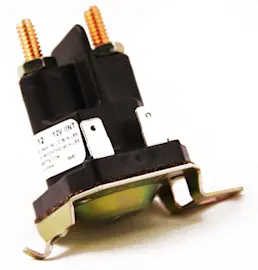
- If starting is inconsistent (clicking, intermittent crank), the solenoid 532146154 is often part of the fix.
- If the mower deck won’t engage smoothly, inspect the PTO switch and belt routing.
Last updated: February 2026