

Are Whirlpool washer parts interchangeable?
Some Whirlpool washer parts are interchangeable, but only when the replacement is an exact match for your washer’s design and revision. For Whirlpool model WTW4850HW3, we recommend choosing parts listed for that model to ensure proper fit, correct operation, and reliable wash and spin performance.
What “interchangeable” really means
Parts can look identical but still differ in mounting points, electrical connectors, or software compatibility. On modern washers, even small differences can cause issues like no spin, lid not locking, or error codes.
Common examples where exact matching matters:
- Electronic parts: control boards, motor controls, shift actuators
- Safety parts: lid locks and lid strikes
- Drive system parts: belts, pulleys, and drive blocks
- Water handling parts: inlet valves, drain pumps, drain hoses
Best practice for WTW4850HW3: match by model, then by part ID
Use the model number first, then confirm the part ID. For example, these WTW4850HW3 parts are model-matched options:
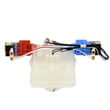
- Washer lid lock W11307244
- Actuator, shift W11481722
- Drive belt W11239857
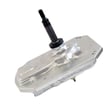
- Whirlpool washer drive pulley W10721967
- Washer water inlet valve assembly W11038689
Quick compatibility checklist (before you buy)
- Match the model number: WTW4850HW3
- Match the part ID (not just the description)
- Compare connector style and mounting holes (especially on electrical parts)
- Replace related wear items together when appropriate (belt and pulley)
- If symptoms involve draining or spinning, confirm the failure first (pump vs. lid lock vs. actuator)
Common “mix-ups” and what to do instead
| Symptom | Often mistaken part | More likely area to verify |
|---|---|---|
| Won’t spin | Belt | Lid lock or shift actuator |
| Won’t drain | Control board | Drain pump or drain hose restriction |
| Fills slowly | Timer/control | Inlet valve screens or inlet valve |
Why it matters
Using the correct Whirlpool-matched part helps prevent repeat failures, reduces installation headaches, and keeps cycle timing, sensing, and spin behavior working the way WTW4850HW3 was designed to run.
Last updated: February 2026
What does F1 and E3 mean on a Whirlpool washer?
On a Whirlpool washer, F1 E3 typically points to a drain or water-level sensing problem that prevents the washer from completing the cycle. On the Whirlpool WTW4850HW3, we start by checking for a drain restriction and then test the drain pump and inlet valve operation.
What to check first (fast, no-parts steps)
- Unplug the washer for 1 minute, then restore power and try a Drain/Spin cycle.
- Make sure the drain hose is not kinked, crushed, or shoved too far down the standpipe.
- Confirm the standpipe is not clogged and the washer is not siphoning (gurgling, slow drain).
- Check the load size; an overloaded tub can trigger abnormal water-level behavior.
- If the tub is full of water, bail out water first so you can safely inspect the pump area.
Parts that commonly fix F1 E3 symptoms on WTW4850HW3
If the washer will not drain, drains slowly, or stops mid-cycle with water left in the tub, these parts are the most common suspects:
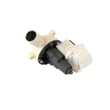
- Washer drain pump W10919003 (no/slow drain, humming pump, intermittent draining)
- Washer water inlet valve assembly W11038689 (overfilling, underfilling, long fill, water-level errors)
- Control unit assembly, machine and motor W11607637 (repeated error after drain and fill checks)
Quick symptom-to-part guide
| What you see | Most likely cause | What we do next |
|---|---|---|
| Water left in tub, won’t spin | Drain restriction or failed pump | Check hose/standpipe; inspect pump; replace pump if seized |
| Hums but barely drains | Pump impeller jam or weak pump | Clear debris; replace pump if damaged |
| Long fill or no fill | Inlet valve or supply issue | Check screens/hoses; replace inlet valve if not opening |
| Error returns after basics | Control or sensing issue | Verify wiring; consider control replacement |
Why it matters
F1 E3 errors usually stop the washer to prevent overflow, motor strain, or a flooded laundry area. Fixing the drain path and water fill control restores normal wash, drain, and spin performance.
For code lookups and related Whirlpool washer code patterns, we use Whirlpool belt drive top load washer error codes as a reference.
Last updated: February 2026
What is the most common problem with Whirlpool washers?
The most common Whirlpool washer problems are not draining/spinning, excessive shaking, and not starting. On the Whirlpool WTW4850HW3 (top-load), these symptoms most often trace back to load balance, a draining restriction, or a failed drive or lid-lock related part.
Most common symptoms and what usually causes them
- Won’t drain: kinked drain hose, clogged pump inlet, or a failing washer drain pump W10919003
- Won’t spin: lid not locking, shift system issue, or belt/drive wear
- Loud noise: worn belt, loose pulley, or a worn drive block
- Shakes or bangs: out-of-level washer, overloaded tub, or weak suspension (damper) rods
- Won’t start: lid lock not engaging, control not responding, or power supply issue
Quick checks we recommend first (WTW4850HW3)
- Redistribute the load (bulky items and small loads can throw balance off).
- Confirm the lid fully closes and locks; if it will not lock, inspect the strike and lid lock.
- Check draining basics: standpipe height, hose not kinked, and no slow drain at the home plumbing.
- Listen during drain: a humming pump with little water movement points to a restriction or weak pump.
- Look under the washer for belt dust, a loose pulley, or signs of rubbing.
Common part-to-symptom match (helpful for diagnosis)
| Symptom | What it often points to | Example part for WTW4850HW3 |
|---|---|---|
| Won’t drain or drains slowly | Pump issue or blockage | Washer drain pump (W10919003) |
| Won’t spin, lid error behavior | Lid lock system | Washer lid lock W11307244 |
| Agitates/spins inconsistently | Shift mechanism problem | Actuator, shift (W11481722) |
| Squeal, burning rubber smell | Belt slipping/worn | Drive belt (W11239857) |
Why it matters
Drain and spin problems can leave clothes soaking wet and can strain the motor and control over time. Fixing the root cause early (especially lid-lock, pump, belt, or actuator issues) prevents repeat failures and reduces noise and vibration.
Related troubleshooting help
For fault codes and symptom patterns, use our Whirlpool belt drive top load washer error codes guide.
Last updated: February 2026