Installation guide
 Owner’s manual



Which KitchenAid attachments are not dishwasher safe?
KitchenAid KDTE204EPA4 is a dishwasher, so “attachments” usually means dishwasher-safe items you load into it, not stand mixer accessories. For anything you plan to wash in this dishwasher, only put items in the racks if they are labeled “dishwasher safe” or the manufacturer says they can be machine washed; otherwise, hand-wash.
What is safe to put in the KDTE204EPA4
We follow the KDTE204EPA4 guidance: don’t wash plastics unless they’re marked “dishwasher safe” (or equivalent), and follow the item manufacturer’s instructions. See the KDTE204EPA4 owner’s manual for loading and safety details.
Common items that are often not dishwasher safe (check the label first):
- Aluminum parts (can discolor or pit)
- Cast iron (will rust)
- Carbon-steel knives (can corrode)
- Nonstick pans with worn coating
- Wood (cutting boards, utensils) that can warp or crack
- Some insulated mugs and travel cups (can lose vacuum seal)
If you meant KitchenAid stand mixer attachments
Many KitchenAid stand mixer accessories are dishwasher safe, but any attachment with aluminum parts (often the hub or body) should be hand-washed because aluminum can oxidize or discolor in the dishwasher. Fully stainless-steel pieces typically tolerate dishwasher cleaning better.
Quick check table
| Material or finish | Usually dishwasher safe? | Best practice |
|---|---|---|
| Stainless steel | Yes | Top rack when possible |
| Aluminum (bare or anodized) | No | Hand-wash, dry immediately |
| Wood | No | Hand-wash, air dry |
| “Dishwasher safe” plastic | Yes | Top rack, avoid high heat options |
Why it matters
Using the wrong items can damage the item (pitting, rust, warping) and can also affect dishwasher performance by shedding debris that can clog the filter area.
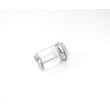
If you’re troubleshooting poor cleaning after washing non-dishwasher-safe items, cleaning the filter system is a good first step; the filter cup a W10872845 is one of the filter-related parts used on this model.
Last updated: January 2026
What is the average lifespan of a KitchenAid dishwasher?
A KitchenAid dishwasher typically lasts 10 to 14 years. For the KitchenAid KDTE204EPA4, lifespan depends most on water quality, how often you run it, and routine care like cleaning filters and using rinse aid as recommended in the KDTE204EPA4 owner’s manual.
Typical lifespan and what affects it
Most dishwashers wear out from a mix of heat, detergent, hard-water scale, and normal motor and pump use.
- Hard water speeds up mineral buildup in the sump, spray system, and heater
- Heavy use (multiple loads daily) shortens pump and rack life
- Poor loading can block spray arms and reduce cleaning, leading to repeat cycles
- Skipping rinse aid often causes poor drying and more spotting buildup
- Infrequent cleaning lets debris clog filters and strain the wash system
What “normal” looks like for KDTE204EPA4
Your KDTE204EPA4 is designed for efficiency, so longer cycles are normal.
| Item | What to expect | Why it matters |
|---|---|---|
| Average cycle time | About 2 to 3 hours per load | Longer wash time reduces energy use while maintaining cleaning |
| With options/sensor calibration | Can exceed 3.5 hours | Added heating, drying, or sensor learning increases runtime |
| Drying performance | Best with rinse aid | Helps water sheet off dishes and reduces hard-water deposits |
Maintenance that helps you reach the full lifespan
These steps reduce wear on the pump, heater, and seals.
- Clean the filter area regularly; replace damaged filter parts such as filter cup a W10872845 when needed
- Use rinse aid consistently and keep the dispenser filled
- Run hot water at the sink before starting so the fill water is hotter
- Scrape off heavy food soils to prevent clogs and redeposit
- Check the door seal area for debris; replace a leaking seal such as dishwasher door seal, lower WPW10497235
Why it matters
A dishwasher that is maintained well usually reaches the upper end of its lifespan and keeps wash times, drying, and noise levels consistent. Neglected filters, seals, and racks often cause the “it still runs but doesn’t clean or dries poorly” problems that lead to early replacement.
Last updated: January 2026
Is it worth fixing a KitchenAid dishwasher?
Yes, it’s usually worth fixing a KitchenAid dishwasher like model KDTE204EPA4 when the repair is a common wear item (leak, drain, rack hardware) or the total repair cost stays well below the price of a comparable replacement. Replacement makes more sense when multiple major failures stack up or the unit is near end-of-life.
Quick decision checklist
- If the dishwasher is under 8 years old, repairs are typically the better value.
- If it’s 10+ years old and needs a major assembly, replacement is often the smarter spend.
- If the repair estimate is under 50% of replacement cost, fixing is usually worth it.
- If you’ve had 2 or more repairs in the last 12 months, consider replacing.
- If the issue is a leak, no drain, or door not latching, it’s commonly a straightforward fix.
Common KDTE204EPA4 repairs that are often “worth it”
Many problems on this model are tied to serviceable parts rather than the whole dishwasher.
| Symptom | Often involved part | Typical DIY difficulty |
|---|---|---|
| Door won’t close or starts then stops | Dishwasher door latch WPW10653840 | Medium |
| Not draining | Dishwasher drain pump W10876537 or drain hose | Medium |
| Not drying well | Element assembly W10703867 or rinse aid use | Medium |
| Leaking at the bottom of the door | Dishwasher door seal, lower WPW10497235 | Easy |
Why it matters
A dishwasher replacement cost includes more than the appliance; installation, disposal, and potential cabinet or plumbing adjustments add up. A targeted repair (latch, drain pump, inlet valve, seal) restores performance without the full replacement expense.
What we recommend before you decide
Use the troubleshooting guidance and service info in the KDTE204EPA4 owner’s manual to narrow the failure first, then price the likely part(s) and labor.
Also, if you’re seeing a blinking pattern or error code, match it to the right fix using KitchenAid microclean he dishwasher error codes.
Last updated: January 2026
What is the most common problem with a KitchenAid dishwasher?
The most common issue we see with KitchenAid dishwashers like model KDTE204EPA4 is poor wash results (dishes still dirty) caused by restricted water flow from a dirty filter area, blocked spray arms, or a drain problem that leaves debris behind.
What to check first (fast, no parts)
- Confirm the water supply valve is fully open (especially after installation or plumbing work).
- Check the tub bottom for standing water or heavy food debris after a cycle.
- Make sure the overfill protection float moves freely up and down; press down to release it.
- Reduce suds: use only dishwasher detergent and avoid overfilling; excess suds can disrupt washing.
- Use rinse aid and keep the rinse aid cap installed after filling to improve drying and reduce spotting.
Common symptoms and the likely cause
| Symptom | Most likely cause | What we recommend |
|---|---|---|
| Dishes still dirty | Filter area or spray arms restricted | Clean filter area; rinse spray arms; run a hot cycle |
| Water left in tub | Drain restriction or weak drain pump | Check drain hose routing; inspect for clogs |
| Won’t fill or fills slowly | Water supply issue or inlet valve problem | Verify supply valve; consider inlet valve testing |
| Leaks at the bottom/front | Door seal or hose issue | Inspect seals and hose connections |
Parts that commonly fix these problems on KDTE204EPA4
If cleaning and basic checks do not solve it, these model-matched parts are frequent fixes:
- Filter cup a W10872845 (helps when debris buildup affects circulation and cleaning)
- Dishwasher water inlet valve W11175771 (helps when the unit won’t fill or fills slowly)
- Dishwasher drain pump W10876537 (helps when the dishwasher won’t drain)
- Dishwasher door seal, lower WPW10497235 (helps with drips or leaks at the bottom of the door)
Why it matters
Dishwashers depend on steady water flow, correct fill level, and proper draining. When any of those are restricted, the wash motor cannot circulate water effectively, and food soil gets redeposited on dishes.
Helpful troubleshooting resources
- KDTE204EPA4 user guide (Problem Solver section and operating tips)
- KitchenAid microclean he dishwasher error codes (when lights flash or an error code appears)
Last updated: January 2026