Owner’s manual
 Error Codes


How to hard reset a Kenmore Elite washer?
To hard reset a Kenmore washer like model 11027812692, unplug it for 1 minute to clear the control, then restore power and restart the cycle. On this style of washer, stopping and restarting is typically done with the timer knob rather than electronic button combinations; see the 11027812692 owner's manual.
Quick reset steps (works for most Kenmore top-load washers)
- Press Pause/Stop if your washer has it; otherwise push the cycle selector (timer) knob in to stop.
- Unplug the washer from the outlet.
- Wait 60 seconds.
- Plug the washer back in.
- Select a cycle and pull the timer knob out to restart.
If it still will not start after a reset
These checks solve the most common “dead washer” or “won’t run” complaints after power is restored:
- Confirm the outlet has power (try a lamp or small appliance).
- Make sure the lid is fully closed; a failed lid switch can prevent agitation or spin.
- If it fills but will not agitate or spin, inspect the drive system (coupler, clutch, gear case).
- If it will not drain, check for a clog or a failed pump.
| Symptom after reset | Most likely area to check | Example part for this model |
|---|---|---|
| Won’t spin, won’t agitate | Lid safety circuit | Washer lid switch WP3949238 |
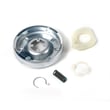
| Motor runs but no agitation/spin | Motor-to-transmission connection | Coupling 285753A |
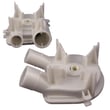
| Won’t drain or drains slowly | Drain path and pump | Washer drain pump WP3363394 |
Why it matters
A hard reset clears a “stuck” timer or control state and gets you back to a known starting point. If the washer still will not run, the symptom pattern usually points to a specific system (lid switch, drain pump, or drive coupling), which speeds up troubleshooting and repair.
Last updated: February 2026
How to identify a Kenmore washer model?
Your Kenmore washer model number is printed on the model and serial number plate; for Kenmore model 11027812692, that plate is the key identifier we use to match the correct washer parts and diagrams. Once you have the full model number, you can confidently select compatible items like a lid switch, drain pump, or agitator parts.
Where to find the model number plate
Check these common locations on Kenmore washers:
- Under the lid near the tub opening (most top-load washers)
- Around the door opening (most front-load washers)
- On the back panel near the power cord entry
- Along the cabinet frame near the control console
- On a metal plate or durable sticker labeled “Model” and “Serial”
For this washer, the manual calls it the “Model and Serial Number Plate”; use the layout shown in the 11027812692 owner's manual to recognize it.
What the model number should look like
Kenmore model numbers are typically 10 to 12 digits (often starting with 110 on many Kenmore-built washers). Record the model number exactly as shown, including any leading zeros.
| What you see | What it means | What to do |
|---|---|---|
| Model number (example: 11027812692) | Identifies the exact washer design | Use it to choose parts and troubleshooting info |
| Serial number | Production code and date info | Keep it for service records |
Why it matters when ordering parts
Small model differences can change fit and wiring. Using the exact model number helps avoid wrong-part returns, especially for common repairs like:
- No drain or slow drain (often the washer drain pump WP3363394)
- Won’t spin or won’t start (often the washer lid switch WP3949238)
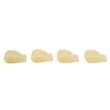
- Agitator not moving correctly (often the agitator dog 80040)
Quick tips to avoid mix-ups
- Write the model number down before you start disassembly
- Match every digit; do not rely on “looks the same”
- Use the model number when searching diagrams, parts, and error-code help
Why it matters
The model number is the fastest way to get the right Kenmore washer parts the first time; it ties your washer to the correct component list, wiring, and mechanical design.
Last updated: February 2026
Is it worth repairing a Kenmore washing machine?
Yes, it’s usually worth repairing a Kenmore washer when the fix restores reliable washing and spinning for far less than the cost of replacing the machine. For Kenmore model 11027812692, common wear parts are serviceable, and the 11027812692 owner's manual supports long-term care and troubleshooting.
A practical way to decide
We use a simple rule: repair when the machine is structurally sound (no severe tub or cabinet damage) and the repair targets a known failure point.
Consider repair first when you see:
- Won’t drain or leaves water in the tub (often a pump or drain restriction)
- Won’t spin or agitates poorly (often a lid switch, coupling, clutch, or agitator wear)
- Excessive vibration from leveling or suspension issues
- Intermittent operation tied to lid closing or switch actuation
Common repairs that often make sense on this model
These are frequent, targeted fixes on direct-drive Kenmore top-load designs like 11027812692:
| Symptom | Likely area | Example part for this model |
|---|---|---|
| No spin/no drain, or stops mid-cycle | Lid safety circuit | Washer lid switch WP3949238 |
| Motor runs but won’t agitate/spin | Drive coupling | Coupling 285753A |
| Won’t drain or drains slowly | Drain pump or blockage | Washer drain pump WP3363394 |
| Agitator “slips” or top half doesn’t move right | Agitator dogs/cam | Agitator dog 80040 |
Why it matters (cost, downtime, and performance)
A focused repair can restore full wash action and spin performance without the learning curve, installation changes, or disposal hassles of a new washer. This model’s manual also emphasizes correct installation and leveling to reduce vibration and wear, which protects your repair investment.
Before you spend money on parts
We recommend these quick checks first:
- Confirm the washer is level and the front leg nuts are tight (reduces vibration and walk)
- Verify the lid closes firmly and the lid switch clicks consistently
- Check for drain hose kinks and a clear standpipe
- Run a test fill and drain to confirm water flow and pump-out speed
- Review operating and troubleshooting guidance in the 11027812692 owner's manual
Last updated: February 2026
What is the average lifespan of a Kenmore washer?
A Kenmore washer typically lasts 10 to 15 years with normal household use. For your Kenmore model 11027812692, routine care (correct loading, proper detergent use, and periodic cleaning) helps you reach the high end of that range; heavy use and chronic overloading shorten it.
What affects lifespan the most
- Load size and balance: frequent overloading strains the drive system and suspension.
- Water quality: hard water can increase buildup and wear on valves and seals.
- Drain performance: slow draining makes the pump work harder and can leave residue.
- Agitation and spin stress: worn drive parts can cause slipping, noise, or poor wash action.
- Basic maintenance: cleaning and inspection prevents small issues from becoming major repairs.
Common wear items (and what they usually cause)
| Symptom | Likely area | Example part for this model |
|---|---|---|
| Won’t spin or stops when lid opens | Lid safety circuit | Washer lid switch WP3949238 |
| Won’t drain or drains slowly | Drain system | Washer drain pump WP3363394 |
| Agitator moves poorly or “ratchets” | Agitator drive | Agitator dog 80040 |
| Loud grinding or oil leak underneath | Transmission/drive | Gear case 3360629 |
Maintenance steps that extend life
- Keep loads evenly distributed; wash bulky items with similar items.
- Use the right water level and cycle for the fabric type.
- Periodically check hoses and connections for seepage and replace if worn.
- If you notice slow draining, inspect the drain hose for kinks and clear obstructions.
- Follow the cleaning and care guidance in the 11027812692 owner's manual.
Why it matters
Once a washer reaches the 10 to 15 year range, small problems (slow drain, weak agitation, intermittent spinning) often point to a single worn part. Replacing a targeted part like a lid switch, drain pump, or agitator dog can restore performance and delay a full washer replacement.
Last updated: February 2026
What is the most expensive part on a washer?
On the Kenmore 11027812692 washer, the most expensive repairs usually involve major drive and tub components, especially the gearcase (transmission) and the tub or basket system. These parts combine high material cost with labor-intensive disassembly, which is why they typically top the repair bill.
Most expensive parts (what we see most often)
These are the components that commonly drive the highest total repair cost (part plus labor):
- Gearcase / transmission: controls agitation and spin; often the priciest single mechanical assembly
- Outer tub: the stationary tub that holds water; replacement is a major teardown
- Basket / drive basket: the spin basket and related drive hardware; can be costly if damaged
- Drive motor: less common than gearcase, but still a high-cost assembly
- Bearing and seal repairs: parts can add up, and labor is significant
Model-specific examples for Kenmore 11027812692
Here are high-cost parts available for this model that often fall into the “most expensive” category.
| Component type | Example part for this model | Why it’s expensive |
|---|---|---|
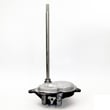
| Gearcase / transmission | Gear case 3360629 | Large assembly; deep internal drivetrain repair |
| Outer tub | Outer tub 3361596 | Requires major disassembly and resealing |
| Basket | Basket W10389328 | Large molded part; often replaced with related hardware |
| Drive motor | Washer drive motor WP661600 | High-value electrical/mechanical assembly |
Why it matters
If your washer is leaking, won’t spin, or makes loud grinding noises, the “most expensive part” is often not just the part itself. It is the labor time to access it (tub removal, agitator removal, gearcase removal) and the extra seals, clamps, or hardware needed to reassemble correctly.
Quick triage: symptoms that point to big-ticket repairs
- Won’t spin or agitates weakly: gearcase, clutch, drive block, or motor/coupling
- Loud roar or grinding during spin: basket drive issues, bearing/seal problems
- Water under washer: tub gasket, pump, hoses, or outer tub damage
- Burning smell or intermittent running: motor, coupling, or wiring
For diagrams, disassembly order, and safety steps, follow the 11027812692 owner's manual.
Last updated: February 2026