 Owner’s manual
 Error Codes




How to remove bottom grille on GE refrigerator?
On the GE GDL20KCSABS bottom-mount refrigerator, we remove the bottom grille (base grille) by grasping it at the bottom and pulling it straight out. It snaps into prongs and holes in the cabinet, so a firm, even pull releases it.
Steps to remove the bottom grille
- Unplug the refrigerator or switch off power at the breaker if you will be working near wiring.
- Open the fresh-food doors for better access.
- Place both hands along the bottom edge of the grille.
- Pull the grille straight out (do not pull up or twist).
- If one side releases first, keep pulling evenly until the other side pops free.
- Set the grille aside on a non-scratching surface.
How it reattaches (so you do not break the tabs)
The base grille is designed to snap in.
| Action | What to do | What you should feel |
|---|---|---|
| Align | Line up the grille prongs with the cabinet holes | Grille sits flush before pushing |
| Snap in | Push forward evenly with both hands | A clear “snap” into place |
| Verify | Tug gently at the bottom edge | It stays secure, no wobble |
Common issues and quick fixes
- Grille feels stuck: Pull straight out with a steady, firm motion; rocking side-to-side can bind the prongs.
- Grille will not snap back in: Check that the prongs are lined up with the cabinet holes and that nothing is trapped behind the grille.
- You are removing it for a doorway fit: The manual notes the grille can be removed if needed after removing the freezer drawer and door.
Why it matters
Removing the bottom grille the right way prevents broken mounting prongs and makes it easier to access the lower front area for cleaning and leveling adjustments. For the exact procedure and related steps (drawer removal, door swing, leveling), follow the GDL20KCSABS owner's manual.
Last updated: February 2026
What are the disadvantages of a bottom freezer refrigerator?
Bottom-freezer refrigerators like the GE GDL20KCSABS keep fresh food at eye level, but the tradeoffs are higher upfront cost, more bending to reach frozen items, and freezer drawers that can be harder to organize. They can also be more sensitive to leveling and door alignment for smooth closing.
Common disadvantages to expect
- More bending and lifting: heavy frozen foods sit low in the cabinet.
- Drawer organization can be tricky: deep bins can hide items underneath.
- Freezer access can feel slower: you often pull out a drawer instead of opening a simple door.
- Leveling matters more: if the refrigerator is not level, doors and drawers may not self-close smoothly.
- More parts in the freezer section: slides, rails, and drawer hardware add complexity compared to a basic top-freezer.
What we recommend for the GE GDL20KCSABS
Use the setup and adjustment steps in the GDL20KCSABS owner's manual to confirm the refrigerator is level and the doors and drawer are aligned. Proper leveling helps the door gasket seal correctly and helps prevent the freezer drawer from popping open after you close the fresh-food door.
Quick check list
- Confirm the cabinet is level side-to-side and slightly tilted back (typical for many refrigerators).
- Make sure the freezer drawer closes fully and stays closed.
- Avoid overloading the freezer drawer with very heavy items at the front.
- Keep packages from interfering with the drawer rails and seals.
Bottom-freezer vs. top-freezer: practical comparison
| Feature | Bottom freezer | Top freezer |
|---|---|---|
| Fresh-food access | Easier (eye level) | More bending |
| Freezer access | More bending | Easier |
| Organization | Deep drawers, can stack | Shelves, easier to see |
| Typical cost | Higher | Lower |
Why it matters
A bottom-freezer design is convenient for everyday refrigerated items, but if you use the freezer frequently or store heavy bulk foods, the bending and drawer-style access can be a real daily annoyance. Good leveling and alignment also help prevent sealing and closing issues over time.
Last updated: February 2026
What is the most common problem with GE refrigerators?
The most common GE refrigerator complaint is poor cooling (fresh food section warm, freezer not holding temperature, or both). On the GE GDL20KCSABS, the most frequent causes are restricted airflow, dirty condenser area, or a failed cooling component such as a fan motor or temperature sensor.
Most common causes of poor cooling
- Dirty condenser area: Dust buildup makes the compressor run longer and temperatures drift.
- Airflow blocked by food: Packages can block vents and prevent cold air circulation.
- Door not sealing or left ajar: Warm air leaks in and forces long run times.
- Evaporator fan issue: If the fan is weak or not running, the refrigerator section often warms up.
- Temperature sensing/control issue: A bad sensor or control board can misread temps and under-cool.
Quick checks we recommend first (no tools)
- Set controls to normal settings and give the unit 24 hours to stabilize.
- Confirm nothing is holding a door open; check for bins or packages interfering.
- Make sure vents inside the refrigerator and freezer are not blocked.
- Clean the grille and condenser area as outlined in the owner's manual.
- Listen for fan operation: you should typically hear airflow when the compressor is running.
Parts that commonly fix cooling complaints on this model
If basic airflow and cleaning do not help, these parts are common next steps for GE GDL20KCSABS troubleshooting.
| Symptom | Common suspect | Example part on this model page |
|---|---|---|
| Temps swing, unit runs too long | Temperature sensing problem | GE profile refrigerator temperature sensor WR55X10025 |
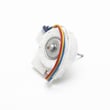
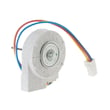
| Freezer cold but fresh food warm | Evaporator fan not moving air | Refrigerator evaporator fan motor WR60X10196 |
| Warm cabinet, compressor runs, poor heat removal | Condenser fan not running | Refrigerator condenser fan motor WR84X10055 |
| Intermittent cooling or no start | Start/run component issue | Refrigerator capacitor WR55X24064 |
Why it matters
Poor cooling is more than an inconvenience; it increases compressor run time, can lead to food spoilage, and often points to an airflow or fan problem that is cheaper to correct early than after extended overheating.
Last updated: February 2026





