Owner’s manual
 View engine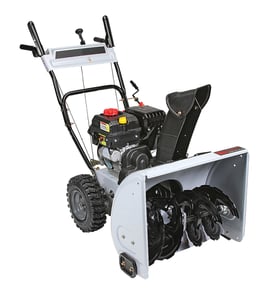




How do I tell what year my snowblower is?
To tell the year of your Craftsman snow thrower model 536884780, start with the model and serial number decal on the rear of the snow thrower housing; that tag is the most reliable way to identify when your unit was built and sold. Use the identification section in the 536884780 owner's manual to confirm the exact decal location and what to record.
The manual specifies that the model and serial numbers are on a decal attached to the rear of the snow thrower housing. Once you have that information, you can narrow down the unit’s age.
- Look for the model number 536884780 on the rear housing decal
- Write down the serial number exactly as shown
- Check any date of purchase notes you recorded (the manual recommends recording it)
- If the engine has its own ID tag, record the engine model/type/code (common on small engines)
- Keep the numbers with your paperwork for parts lookup and service
Many snowblowers use a small engine with a manufacturer date code. A common format is a multi-digit code where the first digits indicate the year and the next digits indicate the month and day. For example, a code like 99011556 is typically read as:
| Code section | What it usually means | Example from 99011556 |
|---|---|---|
| First 2 digits | Year | 99 = 1999 |
| Next 2 digits | Month | 01 = January |
| Next 2 digits | Day | 15 = 15th |
Knowing the year helps us match the correct Craftsman snowblower parts (belts, chute components, and tune-up items) and prevents ordering the wrong revision.
If you are troubleshooting poor snow throwing or auger engagement while you are identifying the unit, the auger drive system is a common wear area; the auger belt 37X120MA is one of the key drive components on this model.
Last updated: January 2026
What is the typical lifespan of a gas snowblower?
A gas snowblower typically lasts 10 to 15 years with normal residential use and routine maintenance. For the Craftsman 536884780 snow thrower, consistent oil changes, correct fuel storage, and seasonal lubrication commonly push service life toward the upper end of that range.
Most gas snowblowers fall into these real-world ranges:
- 10 to 15 years: typical lifespan with regular maintenance
- 15 to 20 years: achievable with careful storage, tune-ups, and timely belt and wear-part replacement
- Under 10 years: common with heavy use, poor storage, or skipped maintenance
| Usage and care level | What to expect | Common reason units fail early |
|---|---|---|
| Light use, stored dry | 15+ years | Rubber parts age, belts glaze/crack |
| Average use, basic upkeep | 10 to 15 years | Wear parts ignored until failure |
| Heavy use, wet storage | Under 10 years | Rust, fuel system varnish, bearing wear |
We see the biggest lifespan gains from these basics:
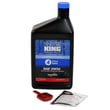
- Change engine oil on schedule; this model specifies SAE 5W-30 and 21 oz. capacity
- Use fresh unleaded fuel and follow off-season fuel storage steps
- Lubricate key points (auger shaft, axles, hex shaft) before and after the season
- Keep belts properly adjusted and replace worn belts before they slip or burn
- Inspect fasteners and moving parts for wear, damage, and rust; touch up chipped paint
For model-specific maintenance intervals and lubrication points, use the 536884780 owner’s manual.
A snowblower usually does not “wear out” all at once; performance drops gradually from neglected oil, stale fuel, and worn drive components. Staying ahead of those items keeps your Craftsman snow thrower starting easier, throwing farther, and avoiding mid-storm breakdowns.
These wear items are normal to replace over time and do not mean the machine is at end-of-life:
- Auger/drive belts (example: auger belt 37X120MA)
- Spark plug (gap is typically set to .030 in. on this model)
- Shear pins and friction or drive components (depending on configuration)
Last updated: January 2026
Is it cheaper to repair or replace a snowblower?
Repairing a Craftsman snow thrower like model 536884780 is usually cheaper when the problem is a normal wear item (belt, spark plug, shear pin) or a basic adjustment; replacement makes more sense when the repair estimate approaches about half the cost of a comparable new machine or the unit has repeated major failures.
- Repair when the fix is simple, parts are available, and the machine is otherwise solid.
- Replace when the repair is expensive, the snowblower has multiple worn systems, or reliability is poor.
- Compare total cost: parts + labor + any additional “while we’re in there” items.
- Worn or slipping auger belt (common wear item): consider the auger belt 37X120MA
- Routine tune-up items (oil change, spark plug, fuel system cleaning)
- Cable adjustments and seasonal maintenance listed in the 536884780 owner's manual
The manual for this Craftsman snow thrower calls out a regular maintenance schedule (oil checks, lubrication, belt checks/adjustments) and also notes that expendable items such as spark plugs, drive belts, and shear pins wear out during normal use. Staying on that schedule keeps repair costs low and prevents bigger failures.
| Situation | Usually cheaper choice | Why |
|---|---|---|
| Belt slipping, auger not engaging, basic wear | Repair | Low parts cost, common service |
| Starts poorly after storage, old fuel, needs tune-up | Repair | Maintenance restores performance |
| Major drivetrain or engine damage, multiple issues | Replace | High labor and parts add up |
| Repair estimate is near 50% of a new unit | Replace | Better value and reliability |
- Confirm the symptom: auger drive vs. traction drive vs. chute issue
- Inspect belts for glazing, cracking, or slack
- Check oil level and condition (low oil can cause expensive damage)
- Look for repeated failures (same belt breaking, chronic starting issues)
- Price out parts first, then add labor time if you are not doing DIY
Most “it won’t throw snow” complaints on gas snowblowers trace back to maintenance or wear parts. Fixing those early is far cheaper than running the machine until a major component fails.
Last updated: January 2026
What is the most common problem with snow blowers?
The most common problem with gas snowblowers like the Craftsman 536884780 is hard starting or no-start, usually tied to fuel issues (stale gas, water in fuel) or ignition maintenance (spark plug). The next most common issues are clogged discharge chutes and auger/drive problems such as a loose or damaged belt.
- Difficult starting: drain old fuel, refill with fresh fuel; check spark plug condition and gap.
- Engine runs erratically or stalls: move the choke to OFF after starting; flush contaminated fuel if water or dirt is present.
- Unit fails to discharge snow: shut down and clear a clogged chute; check for a foreign object lodged in the auger.
- Auger not turning: inspect the auger drive system for a loose or damaged belt.
- Excessive vibration: stop immediately and inspect for loose parts or impeller damage.
| Symptom | Most likely cause | Best first action |
|---|---|---|
| Won’t start or starts then dies | Stale/contaminated fuel, spark plug issue | Refresh fuel; inspect/replace spark plug |
| Runs rough | Choke left on, fuel contamination | Move choke to OFF; flush/refill fuel |
| Snow won’t discharge | Chute clogged, object in auger | Shut off; clear chute and auger housing |
| Auger won’t spin | Belt loose/damaged, cable out of adjustment | Inspect belt and cable adjustment |
- For best throwing performance, run the engine at full throttle while clearing snow.
- If you hit a foreign object or the unit vibrates abnormally: stop the engine, disconnect the spark plug wire, inspect, and repair before restarting.
- To reduce recoil starter freeze-up after use: with the engine running, pull the starter rope hard several times; then wipe snow/moisture from controls.
For maintenance specs and troubleshooting steps specific to your Craftsman 536884780, use the 536884780 owner's manual.
If the engine runs but the auger will not engage, a worn belt is a frequent fix on many snow throwers.
Starting and discharge problems are usually maintenance-related and can be corrected quickly. Catching vibration, belt wear, or chute obstructions early helps prevent damage to the auger/impeller system and keeps your snowblower reliable during heavy snow.
Last updated: January 2026