Owner’s manual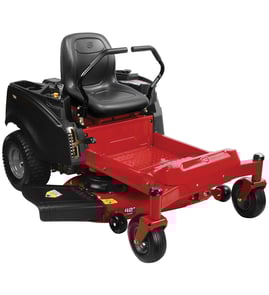



How to fix a small engine backfire?
On a Swisher ZT2452A rear-engine riding mower, small-engine backfire is usually caused by fuel mixture, carburetor adjustment, or overheating. We fix it by lowering engine speed gradually, using the correct fuel, tuning the carburetor to run cleanly, and keeping airflow and cooling fins clear (see the owner's manual).
- Move the mower to a flat, well-lit area and keep bystanders away.
- Disengage the PTO, set the parking brake, and shut off the engine.
- Remove the key and disconnect the spark plug wire before any hands-on checks.
- Let the engine cool before cleaning around the engine or muffler.
- Lower RPM slowly: Avoid snapping the throttle from high to low; decelerate gradually.
- Use the right fuel: Use fresh gasoline that matches your engine fuel recommendations; avoid old fuel and high-alcohol blends when possible.
- Tune the carburetor: Adjust idle mixture and idle speed for smooth running (a lean condition often pops on decel).
- Reduce heat: Clear grass and debris from the engine area and cooling air paths; heat can contribute to afterfire.
- Check basic ignition items: Inspect the spark plug condition and gap, and make sure the plug wire fits tightly.
| When it backfires | Most common cause | What to do first |
|---|---|---|
| On deceleration | Lean mixture, throttle snap-down | Lower RPM slowly; adjust carb idle mixture |
| Under load (mowing) | Fuel restriction, overheating | Fresh fuel; clean cooling air paths |
| At startup | Choke misuse, stale fuel | Use choke only as needed; replace old fuel |
Backfiring is more than noise; it often signals a lean fuel condition or excess heat, which can reduce power and make starting harder. Keeping the engine area clean and following the correct starting and operating steps helps prevent repeat issues.
For model-specific operating steps and maintenance intervals, use the owner's manual. If you need to look up replacement parts by model number, we recommend searching on Sears PartsDirect.
Last updated: February 2026
Can you tip a riding lawn mower on its back?
Yes, you can tip a Swisher ZT2452A riding lawn mower, but we do not recommend tipping it onto its back. For blade service and deck cleaning, we recommend safely raising the front of the mower and securing it so the machine stays stable and fluids stay where they belong (oil and fuel).
The ZT2452A manual calls out blade maintenance steps that start with safely raising the front of the mower, not standing the mower upright.
- Shut the engine off, remove the ignition key, and set the parking brake
- Disconnect the spark plug wire before you put hands near the blade
- Raise the front of the mower (ramps or a jack and jack stands rated for outdoor equipment)
- Block the blade from turning before loosening the blade nut
- Wear heavy, thick gloves when handling the blade
For the model-specific procedure and warnings, follow the ZT2452A owner's manual.
Tipping can cause fuel to leak and can let oil move into places it should not be. If you are in a situation where you must tip it briefly, do these basics first.
- Let the engine cool completely
- Turn the fuel shutoff valve off (if equipped) or clamp the fuel line
- Keep the fuel tank level as much as possible; do not overfill the tank
- Tip for the shortest time possible and return it to level before starting
- After returning it to level, wait a few minutes before starting so fluids can settle
| Method | Best for | Main downside |
|---|---|---|
| Raise the front and secure it | Blade removal, sharpening, deck cleaning | Requires ramps or a jack and stands |
| Tip the mower | Emergency access when lifting is not possible | Higher chance of leaks and instability |
A rear-engine riding mower has fuel, oil, and a heavy deck; tipping changes the center of gravity and can create a slip or tip-over hazard. The manual’s blade maintenance guidance focuses on shutting down, disconnecting the spark plug wire, and safely raising the front to keep the job controlled.
If you need replacement blades or other maintenance parts for the Swisher ZT2452A, start with the parts list for this model, or search by model number on Sears PartsDirect.
Last updated: February 2026
Why is my riding lawn mower running but not moving?
If your Swisher ZT2452A rear-engine riding mower starts and runs but will not move, the most common causes are the parking brake still engaged, the drive controls not fully out of neutral, or a drive system problem (belt, idler, or linkage) that is not transferring power to the wheels. Use the owner's manual to confirm the correct drive-control positions and parking brake operation.
- Fully release the parking brake; this model uses a linkage-type mechanical parking brake.
- Sit fully in the seat; the operator presence system can prevent normal drive operation if you are not seated correctly.
- Verify the control handles are moved out of neutral and smoothly advanced (small movements at first).
- Set engine RPM up; many riders will not drive well at low throttle.
- Look for obvious debris binding the drive area (sticks, heavy grass buildup).
If the controls and brake are correct, focus on the drive path from engine to transmission.
- Worn or broken drive belt: engine runs, but the belt slips or does not turn the transmission.
- Idler pulley or tensioner problem: weak tension lets the belt slip under load.
- Drive linkage out of adjustment: control handles move, but the transmission input does not.
- Brake linkage sticking: brake releases at the pedal/lever but stays partially applied at the axle/transaxle.
| What you notice | What it usually means | What to do next |
|---|---|---|
| Engine revs, no change when moving handles | Belt not driving transmission | Inspect belt routing, wear, and tension |
| Mower tries to move then stops | Belt slipping or brake dragging | Check belt tension and brake linkage return |
| Moves in one direction better than the other | Linkage adjustment issue | Inspect control linkage for binding/looseness |
| Works only at high RPM | Marginal belt/tensioner | Check belt condition and idler action |
A mower that runs but will not move is usually losing power transfer in the drive system. Continuing to force the controls can overheat belts, damage pulleys, and create unsafe handling, especially on slopes.
We use the model diagrams to match the correct drive belt, idler pulleys, brake linkage parts, and transmission-related hardware for ZT2452A. If you need to search beyond the model diagrams, use Sears PartsDirect with your full model number.
Last updated: February 2026
What size engine is on a Swisher ZT2452A?
The Swisher ZT2452A rear-engine riding mower uses a gasoline engine, but the exact engine size (HP and cc) depends on the specific engine model installed on your unit. We recommend confirming the engine model number on the engine label, then matching that to the specifications listed in the owner's manual.
Use these quick checks to get the correct HP and displacement for your exact mower:
- Look for the engine ID label on the engine shroud or valve cover area
- Record the engine model number and type (often shown as Model / Type / Code)
- Compare that engine ID to the engine specifications section in the manual
- If the label is dirty, wipe it clean and use a flashlight to read stamped characters
- Keep your mower serial number handy when you look up parts and specs
Engine size is not just a spec; it determines which maintenance and drive components fit and how the mower performs.
| What you are doing | Why engine size matters | What to match |
|---|---|---|
| Ordering tune-up parts | Parts vary by engine family | Engine model number and type |
| Checking belt routing and pulleys | Some setups vary by configuration | Deck and drive layout in the manual |
| Diagnosing power loss | Helps narrow fuel, air, and ignition causes | Engine specs and service intervals |
If you are troubleshooting performance, these ZT2452A systems often get blamed on the engine even when the engine is fine:
- Hydrostatic transmissions (LH/RH hydrostats): affect ground speed and pulling
- Transmission and deck belt routing: incorrect routing can reduce blade speed
- Parking brake adjustment: a dragging brake can feel like low power
- Deck leveling: an unlevel deck can cause uneven cut and extra load
Using the correct engine size for your Swisher ZT2452A keeps parts selection accurate (filters, plugs, belts) and prevents mismatches that can cause hard starting, poor cut quality, or reduced drive performance.
For parts lookup by model and diagrams, start with the ZT2452A parts list, or search by model on Sears PartsDirect.
Last updated: February 2026
Why won't my Swisher pull behind mower start?
If your Swisher ZT2452A won’t start, the most common causes are an unsatisfied safety interlock (parking brake, control handles, PTO switch, seat switch), stale fuel, or basic tune-up items (spark plug, air filter). Confirm the correct starting setup first using the owner's manual.
These mowers are designed not to crank or run unless the safety conditions are correct.
- Sit fully in the seat (operator presence system made)
- Engage the parking brake
- Move the control handles to their outward positions
- Disengage the PTO (blade engagement) switch (pressed down)
- If it cranks then dies when you shift in the seat, recheck the seat switch and PTO position
Once interlocks are correct, work through the basics in this order:
- Fuel: drain old gas and refill with fresh gasoline
- Fuel shutoff (if equipped): verify it is open
- Spark plug: confirm the wire is fully seated; replace a fouled plug
- Air filter: clean or replace if dirty
- Battery and cables: clean and tighten terminals; charge the battery if cranking is slow
| Symptom | Likely cause | First step |
|---|---|---|
| No crank | Interlock not satisfied or weak battery | Brake on, handles out, PTO off; then check battery terminals |
| Clicks only | Low battery or bad connection | Charge battery; clean/tighten cables |
| Cranks, no start | Fuel, spark, or air issue | Fresh fuel; check spark plug and air filter |
The operator presence and interlock systems prevent unintended blade engagement or mower movement. Setting brake, controls, and PTO correctly is the fastest way to restore normal starting and avoid repeated no-starts.
Match parts to your exact mower and engine model numbers (mower decal is on the inboard side of the frame side plate; engine model is on top of the blower fan housing). After checking the parts list for ZT2452A, you can also search by model number on Sears PartsDirect.
Last updated: February 2026