Owner’s manual
 Error Codes


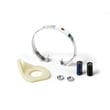

Does my Kenmore top load washer have a filter?
Yes, the Kenmore 11022722100 top load washer uses a self-cleaning drain system rather than a routine, user-serviceable lint filter. Most “filter” issues on this style washer are really drain pump clogs, a restricted drain hose, or debris under the tub.
Where lint and debris typically go
On this direct-drive style Kenmore washer, lint is carried out with the wash water during drain and spin. Small items (coins, pins, socks) can still cause a drain restriction.
Common places to check:
- The standpipe or laundry tub where the drain hose empties
- The end of the drain hose for a sock or lint plug
- The pump inlet area (if the washer hums but will not drain)
- The tub-to-pump hose (if equipped) for debris buildup
- The basket area for items trapped under the agitator
Quick checks before you take anything apart
- Unplug the washer.
- Confirm the drain hose is not kinked or crushed.
- Make sure the drain hose is not shoved too far down the standpipe (it can siphon or slow draining).
- Run a SPIN setting and listen:
- Hums, no drain: likely a pump obstruction
- Drains slowly: likely a partial clog or restricted hose
Parts that relate to “filter-like” drain problems
If the washer will not drain or drains poorly, these model-matched parts are the most common fixes:
| Symptom | Most likely area | Model-matched part to consider |
|---|---|---|
| Hums but won’t drain | Pump jammed or failed | Washer drain pump WP3363394 |
| Won’t spin and acts “lid open” | Lid switch not closing | Washer lid switch WP3949238 |
| Leaks during drain | Hose split or loose | Drain hose WPW10358149 |
Why it matters
A restricted drain can leave clothes soaking wet, trigger out-of-balance shaking during spin, and overwork the drive system. Clearing the drain path early helps prevent bigger repairs.
For model-specific operating and care guidance, follow the 11022722100 owner's manual.
Last updated: February 2026
How to identify a Kenmore washer model?
Your Kenmore washer model number is printed on the model and serial number plate; for Kenmore model 11022722100, use that exact number when ordering parts or requesting service. On most Kenmore top-load washers, the plate is typically under the lid or on the cabinet opening.
Where to look on Kenmore washers
Check these common locations first:
- Under the lid, around the tub opening (top-load models)
- On the cabinet frame where the lid closes
- On the back panel near the power cord
- Inside the control console area (some designs)
- In the paperwork that came with the washer (recorded at purchase)
For model-specific guidance on the plate location and how to record it, use the 11022722100 owner's manual.
What the model number looks like (and what to write down)
We recommend recording both identifiers exactly as shown on the plate.
| Item to record | Why it matters | Example format |
|---|---|---|
| Model number | Matches the correct parts diagrams and compatible parts | 110.XXXXXXXX or 110XXXXXXXX |
| Serial number | Helps identify production range for service and support | Letters and numbers |
Tips to avoid ordering the wrong part
These quick checks prevent most fitment issues:
- Copy the model number character-for-character (no spaces unless shown)
- Use the full model number, not just the “110” prefix
- If the label is worn, take a clear photo and zoom in
- Match the appliance type (washer) and brand (Kenmore) to the label
- Keep the model and serial numbers with your receipt for future reference
Why it matters
Kenmore model numbers can look similar across different washer designs, but internal components (like the lid switch, drain pump, coupling, or gear case) can vary by model. Using the exact model number ensures you get the right replacement parts the first time.
Last updated: February 2026
How to reset a Kenmore model 11022722100 washer?
To reset your Kenmore washer model 11022722100, we recommend stopping the cycle with the timer knob, then restarting it. If the controls seem “stuck,” a short power reset (unplugging briefly) often clears the control state and lets you start a fresh cycle; see the 11022722100 owner's manual.
Quick reset options (most common)
- Stop and restart the cycle (timer reset): Push the Cycle Selector (Timer) knob in to stop; pull it out to restart.
- Cancel and choose a new cycle: Push the knob in, turn it to a new setting, then pull it out.
- Power reset: Unplug the washer (or switch off the breaker) for about 1 minute, then restore power and select a cycle.
- Lid check: Make sure the lid closes fully; a lid switch issue can mimic a “won’t start” problem.
Step-by-step: timer knob reset (recommended)
- Turn the Cycle Selector (Timer) knob to the desired cycle.
- Pull the knob out to start.
- If you need to reset mid-cycle, push the knob in to stop.
- Turn the knob to the new position you want.
- Pull the knob out to restart.
If it still will not run after a reset
These checks target the most common no-start symptoms on this style of Kenmore top-load washer:
- Confirm the outlet has power (test with a lamp).
- Verify the lid is closing and latching normally.
- Listen for a click at lid close; no click often points to the lid switch.
- If it fills but will not drain, check for a drain restriction or a weak pump.
| Symptom after reset | Most likely area | Part to consider |
|---|---|---|
| Won’t start or stops when lid opens/closes | Lid switch circuit | Washer lid switch WP3949238 |
| Hums but will not drain/spin | Drain system | Washer drain pump WP3363394 |
Why it matters
A proper reset helps you avoid unnecessary part replacement by clearing a paused timer state or a temporary control interruption. If the washer repeatedly needs resets to complete cycles, that pattern often points to a lid switch or drain-related problem rather than the timer itself.
Last updated: February 2026
Is it worth repairing a Kenmore washing machine?
Yes; repairing a Kenmore washer is usually worth it when the fix restores reliable washing and spinning for far less than replacing the machine. For Kenmore model 11022722100, many common failures involve serviceable parts like the lid switch, drain pump, or drive coupling, which are often cost-effective repairs.
Quick way to decide (repair vs. replace)
- Repair when the washer fills, agitates, and spins normally after a straightforward part replacement.
- Repair when the issue is a common wear item (switch, pump, coupling, clutch).
- Replace when the tub is leaking badly, the cabinet is severely rusted, or multiple major systems are failing at once.
- Repair when you want to keep a proven direct-drive style washer and avoid learning a new machine.
- Replace when repair cost approaches the price of a comparable new washer (including delivery and haul-away).
Common repairs that are typically “worth it” on this model
These are frequent, targeted fixes on Kenmore top-load washers like 11022722100:
| Symptom | Likely part to check | What you’ll notice |
|---|---|---|
| Won’t spin or won’t drain | Washer drain pump WP3363394 | Water stays in tub, humming, slow drain |
| Won’t start or stops when lid opens | Washer lid switch WP3949238 | No spin with lid open, intermittent operation |
| Agitates poorly or “slips” | Coupling 285753A | Motor runs but weak/no agitation or spin |
| Loud during spin, slow to reach speed | Clutch 285785 | Burning smell, slow spin-up, clothes wetter |
What to check before buying parts
- Confirm the cycle and settings; the manual explains how spin speed and timer settings affect operation. Use the 11022722100 owner's manual for the correct control steps.
- Look for simple causes: kinked drain hose, overloaded basket, unbalanced load.
- Listen for clues: humming (pump jam), clicking (agitator dogs), motor running with no movement (coupling).
- Inspect for leaks around the tub, pump, and hoses before investing in major parts.
Why it matters
A focused repair on a proven Kenmore washer often restores performance for years, especially when the failure is a single wear component. Using the correct troubleshooting steps and part match for model 11022722100 helps avoid repeat breakdowns and unnecessary returns.
Last updated: February 2026
What is the average lifespan of a Kenmore washer?
A Kenmore washer typically lasts 10 to 15 years with normal household use. For Kenmore model 11022722100, staying within proper load size, using the right cycle and spin settings, and keeping up with basic care helps you reach the upper end of that range (and reduces wear on the drive system and tub).
What affects washer lifespan the most
- Overloading (stresses the gearcase, clutch, and suspension)
- Unbalanced loads (increases vibration and basket wear)
- Water quality (sediment can shorten inlet valve life)
- Drain performance (slow draining strains the pump)
- Routine care (cleaning, leveling, and checking hoses)
Quick maintenance checklist (high impact)
- Keep loads evenly distributed; wash bulky items with a few towels to balance.
- Use the correct water level and cycle for the fabric type.
- Check fill and drain hoses for soft spots, kinks, or seepage.
- If the washer will not spin with the lid closed, test the lid switch; see washer lid switch WP3949238.
- If the washer will not drain or drains slowly, inspect the pump and hose path; see washer drain pump WP3363394.
Common wear items and what they usually cause
| Symptom | Commonly involved part | What you notice |
|---|---|---|
| Agitator moves poorly | Agitator dogs | Clothes do not roll over well |
| No agitation or spin | Motor coupling | Motor runs but tub does not move |
| Slow or no drain | Drain pump or drain hose | Water left in tub at end of cycle |
| No spin with lid shut | Lid switch | Washer stops before spin |
Why it matters
Washer life is mostly about mechanical load and vibration. When the basket stays balanced and the washer drains and spins correctly, the gearcase, clutch, and tub components run cooler and wear more slowly. For model-specific operating and care guidance, follow the 11022722100 owner's manual.
Last updated: February 2026
What is the capacity of Kenmore model 11022722100?
Kenmore washer model 11022722100 is a classic top-load, agitator-style washer; its tub capacity is typically in the 3.2 to 3.5 cu. ft. range for this Kenmore 110 platform. For the exact rated capacity for your specific unit, use the specifications section in the 11022722100 owner's manual.
How to confirm the exact capacity on your washer
We recommend using the manual first, then verifying against the model/serial tag on the cabinet.
- Check the specifications pages in the 11022722100 owner's manual
- Match the model number 11022722100 exactly (not just “Kenmore 110”) on the model/serial plate
- If you are comparing to a newer washer, note that older “standard” top-loaders often list smaller cu. ft. numbers than modern high-capacity designs
- Use load guidance: the manual’s “largest loads” language and cycle guidance helps you avoid overfilling even if you do not know the exact cu. ft.
Typical capacity guidance (what it means in real loads)
Even without the exact cu. ft. number in front of you, these ranges help you size loads correctly.
| Capacity range (cu. ft.) | Typical load size | Common examples |
|---|---|---|
| 3.0 to 3.3 | Medium | Mixed everyday laundry |
| 3.4 to 3.6 | Medium-large | Towels, jeans, heavier cottons |
| 3.7 to 4.0+ | Large | Bulky items (varies by design) |
Why it matters
Capacity affects cleaning and spin performance. Overfilling can reduce agitation, increase out-of-balance shaking, and strain drive components like the coupling 285753A and clutch.
Last updated: February 2026