Owner’s manual


Are LG gas dryers any good?
LG gas dryers are generally a good choice for most households, and the LG DLGX3471W is built around the same core strengths people expect from LG: strong drying performance, efficient cycles, and a solid feature set. Like any brand, results depend heavily on correct venting, load size, and routine lint maintenance.
When customers are happy with gas dryers, it is typically because the dryer:
- Heats quickly and recovers heat well between tumbles
- Dries evenly when loads are not overpacked
- Runs relatively quietly with a stable drum and support system
- Offers useful automatic (sensor) cycles that reduce overdrying
- Stays efficient when airflow is kept clear
For model-specific operating tips and cycle guidance, use the DLGX3471W user manual.
Even good dryers can frustrate owners when setup or maintenance is off. Common complaints across many LG gas models include:
- Sensor cycles stopping early if airflow is restricted or the sensor bars are coated
- Longer dry times when the vent run is long, crushed, or partially blocked
- Extra lint buildup if the lint screen is damaged or not sealing well
- Noise if drum support components wear (rollers, idler pulley)
If you are troubleshooting performance, the dryer takes a long time to dry guide is a strong starting point.
- Clean the lint screen every load and wash it occasionally to remove residue
- Confirm strong airflow at the outside vent hood
- Avoid overloading; bulky loads need more space to tumble
- Use timed dry for problem loads to compare against sensor dry
- If clothes are damp at the end, clean the moisture sensor bars inside the drum
If drying performance or lint handling is the issue, these model-compatible parts are commonly involved:
| Symptom | Often-related part (DLGX3471W compatible) |
|---|---|
| Lint screen won’t seat, lint bypassing | Lint filter - dryer part by LG ADQ56656401 |
| Sensor dry ends too soon or is inconsistent | Dryer moisture sensor 6500EL3001A |
| Poor airflow inside dryer, lint buildup in ducting | Dryer lint duct 5209EL1002C |
A “good” gas dryer can still dry poorly if airflow is restricted. Proper venting and a clean lint path protect drying performance, reduce cycle time, and help prevent overheating-related shutdowns.
Last updated: January 2026
How to do a diagnostic test on LG dryer?
On the LG DLGX3471W dryer, we use the built-in installation/diagnostic check mode to confirm the control panel, sensors, and basic operation. With the dryer OFF, press Power, then quickly press Temp and Signal together until INS appears; press Start/Pause to begin.
- Empty the drum and close the door fully.
- Make sure the dryer is plugged in and has power.
- Start with the dryer turned OFF (not running a cycle).
- If the display is unresponsive, power-cycle the dryer (unplug for 1 minute, then plug back in).
For model-specific button locations and display behavior, we reference the DLGX3471W user manual.
- Press Power to wake the control.
- Quickly press Temp + Signal at the same time.
- When INS shows on the display, press Start/Pause.
- Let the test run and watch for any error codes or abnormal behavior.
| What you see | What it usually means | What to do next |
|---|---|---|
| INS starts and runs | Basic functions responding | Continue monitoring for codes or stopping |
| Error code appears | A fault was detected | Use an LG code reference and troubleshoot |
| Test will not start | Button sequence not accepted or control issue | Retry sequence; then check power and door closure |
We match the code to the correct LG troubleshooting path, then check the most likely causes first (airflow, door switch, moisture sensing, heat circuit).
- Use LG dryer error codes to identify the code and the recommended checks.
- If the dryer will not start at all, inspect the door latch area and consider testing the dryer door switch EBF61496102.
- If drying performance is poor, clean the lint path and inspect the lint filter - dryer part by LG ADQ56656401 for damage or heavy buildup.
Running the diagnostic/installation check helps us confirm whether the issue is a simple setup/airflow problem or a component problem (like a switch or sensor) before replacing parts.
Last updated: January 2026
How to reset an LG sensor dry dryer?
To reset the Sensor Dry system on your LG DLGX3471W dryer, we recommend doing a simple power reset first (turn the dryer off, unplug for 1 minute, then restart). If Sensor Dry still acts up, clean the moisture sensor bars and confirm airflow is not restricted; see the DLGX3471W user manual.
- Turn the dryer off.
- Unplug the power cord (or switch the breaker off) for 60 seconds.
- Plug back in (or turn breaker on).
- Select a Sensor Dry cycle and press Start/Pause.
- If the panel is unresponsive, press and hold Start/Pause for about 5 seconds, then try again.
Sensor drying depends on good airflow and clean sensor surfaces. Check these common causes:
- Clean the lint screen every load; replace it if damaged: lint filter - dryer part by LG ADQ56656401.
- Wash fabric softener residue off the moisture sensor bars (inside the drum near the lint filter housing) using rubbing alcohol on a cloth.
- Confirm the vent duct is not crushed, kinked, or packed with lint.
- Avoid overloading; bulky loads can “fool” the sensor.
- Try a Timed Dry cycle once; if timed drying works but Sensor Dry does not, the sensor circuit may need attention.
A reset clears temporary control glitches; it does not fix a failed sensor or overheating safety trip.
| Symptom | Most likely cause | Best next step |
|---|---|---|
| Sensor cycle stops too soon | Dirty sensor bars, restricted venting | Clean sensor bars; check venting |
| Clothes still damp | Airflow restriction, lint buildup | Inspect lint screen and ducting |
| No heat on gas model | Heating system fault | Use heating troubleshooting steps |
Sensor Dry uses moisture feedback to prevent overdrying and save energy. When lint buildup or residue blocks sensing, the dryer may shut off early, run too long, or show inconsistent results.
For heating-related symptoms, we also recommend reviewing dryer takes a long time to dry and checking for any displayed codes in LG dryer error codes.
Last updated: January 2026
What is the most common problem with LG dryers?
For the LG DLGX3471W dryer, the most common issues we see are clothes not drying well (poor heat or poor airflow) and noisy operation (thumping, squealing, or rumbling). Airflow restrictions from lint buildup are the top cause; worn moving parts are the next most common.
- Clean the lint screen before every load; a partially blocked screen can slow airflow.
- Confirm strong airflow at the outside vent hood while the dryer runs.
- Avoid overloading; packed loads tumble poorly and dry slowly.
- Use the right cycle (timed dry vs. sensor dry) for the fabric and load size.
- If drying times suddenly increased, inspect the lint ducting inside the cabinet.
If you need model-specific safety steps and access panels, follow the DLGX3471W manual.
When troubleshooting leads to a specific component, these are frequent suspects on LG dryers like the DLGX3471W:
| Symptom | Most likely area | Example compatible part for this model |
|---|---|---|
| Long dry times, hot cabinet | Airflow restriction | Lint filter - dryer part by LG ADQ56656401 |
| Thumping or rumbling | Drum support system | Dryer drum support roller 4581EL2002L |
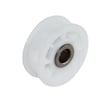
| Squealing | Belt tension system | LG dryer idler pulley 4561EL3002A |
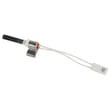
| Runs but heat is inconsistent | Gas ignition/heat control | LG dryer burner igniter 5318EL3001A |
Poor airflow can cause longer dry times, higher energy use, and overheating that stresses thermostats and other heat-related components. Noises usually mean a wear part is failing; addressing it early can prevent belt damage and bigger repairs.
- Use dryer takes a long time to dry for airflow-focused troubleshooting.
- If you see a code on the display, check LG dryer error codes to narrow the cause.
Last updated: January 2026