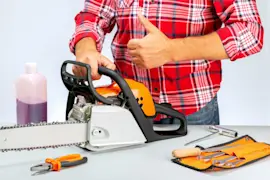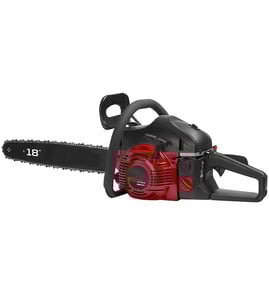


How big of a tree will a 20 inch chainsaw cut?
A 20-inch bar on your Remington RM5520 chainsaw is ideal for cutting and felling medium trees; in one pass it cuts just under 20 inches deep, and with a careful two-sided cut it can handle trunks around 30 inches in diameter when conditions are right.
What “20-inch” really means
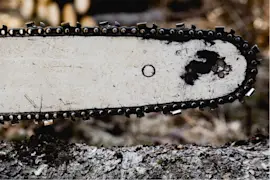
A 20-inch chainsaw is rated by guide bar length, not the maximum tree diameter.
- Single-pass cut capacity: just under 20 inches (bar length minus the powerhead area)
- Two-sided cut capacity: typically up to about 30 inches if you can safely cut from both sides
- Best everyday range: roughly 10 to 20 inches diameter for efficient work
- Hardwood vs. softwood: hardwood (oak, hickory) cuts slower and loads the engine more
- Bar pinch risk: larger diameters increase the chance of pinching the bar in the kerf
Quick sizing guide
| Tree diameter | What to expect with a 20-inch bar | Typical approach |
|---|---|---|
| 6 to 12 in. | Fast, efficient cutting | Single-pass cuts |
| 12 to 20 in. | Very capable | Single-pass felling cuts |
| 20 to 30 in. | Possible but slower | Two-sided cutting, careful planning |
| Over 30 in. | Not recommended | Larger saw or professional help |
Tips that make bigger cuts go better
- Keep the chain sharp and properly tensioned; a dull chain makes the saw feel “too small.”
- Use proper felling technique and wedges to reduce bar pinch.
- Let the saw do the work; forcing the cut overheats the clutch and chain.
- If the saw runs rough or bogs under load, address fuel and carburetion issues first.
- Replace worn cutting components when performance drops; a stretched or damaged chain will not cut straight.
Why it matters
Matching bar length and cutting technique to tree diameter helps you cut faster, reduces kickback risk, and prevents premature wear on the clutch drum, sprocket, and chain.
For replacement cutting components for RM5520, match the exact pitch and gauge; the model’s listed chain, 20-in 753-06267 is the safest starting point.
Last updated: February 2026
What kind of gas does a Remington chainsaw take?
The Remington RM5520 gas chainsaw uses fresh unleaded gasoline mixed with 2-cycle (2-stroke) engine oil; it does not run on straight gas. Use the exact gas-to-oil ratio printed on your 2-cycle oil bottle or specified for your RM5520 engine family.
Fuel type and fueling basics
Use a clean, properly mixed fuel supply to protect the carburetor and make starting easier.
- Use fresh, regular unleaded gasoline (stale fuel causes hard starting)
- Use air-cooled 2-cycle engine oil made for small engines
- Mix fuel in an approved gas can; do not mix in the saw’s fuel tank
- Shake the can before refueling to re-blend the oil
- Fill the separate bar-and-chain oil tank with chain oil (not mixed fuel)
Common 2-cycle mix ratios (use the one specified for your oil)
Many modern 2-cycle tools use one of these ratios; the correct choice is the one your oil label calls for.
| Mix ratio | 1 gallon gas needs | 1 quart gas needs |
|---|---|---|
| 50:1 | 2.6 fl oz oil | 0.64 fl oz oil |
| 40:1 | 3.2 fl oz oil | 0.8 fl oz oil |
If it runs poorly after refueling
Fuel mix problems often look like surging, stalling, or a no-start condition.
- Drain the tank and refill with freshly mixed fuel
- Verify the choke linkage moves freely (see choke rod 753-06474)
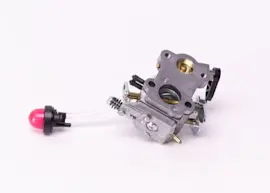
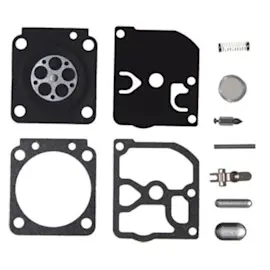
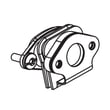
- If it still runs rough, service the fuel system; a clogged or failing carburetor is common (see chainsaw carburetor 753-06728)
- Inspect fuel lines for cracks and the fuel filter for restriction
Why it matters
A 2-cycle engine gets its lubrication from the oil mixed into the gasoline. Straight gas or the wrong ratio causes rapid wear, poor performance, and premature engine failure.
Last updated: February 2026
How do I find the model number on my RM5520?
Your Remington chainsaw’s model number is printed on the saw’s identification label. On the Remington RM5520, check the housing near the rear handle and fuel tank area first; that’s where model and serial labels are most commonly placed.
Where to look on the saw
Check these spots in order (wipe off oil and sawdust first):
- Rear handle area (left or right side of the housing)
- Near the fuel tank cap or oil tank cap
- Starter (recoil) housing side
- Bottom of the powerhead (underside of the engine housing)
- Under the top cover (if your saw has a removable shroud)
What the label looks like
Most gas chainsaw ID labels include a few key fields. Use the model field to match parts.
| Label field | What it means | What to do with it |
|---|---|---|
| Model | The exact model identifier (example: RM5520) | Use it to select diagrams and parts |
| Serial | Unique number for your specific unit | Helpful for confirming production version |
| Engine info | Displacement or emissions family | Useful for service, not usually for ordering |
Why it matters
Remington chainsaws can have similar-looking versions that use different hardware, carburetor, or handle components. Using the exact model number helps ensure the parts you choose fit correctly and match the right diagrams.
If the label is missing or unreadable
Use these practical checks to narrow it down:
- Compare your chain size and bar length to the parts list (RM5520 commonly uses a 20-inch chain)
- Match visible assemblies to diagrams, such as the chainsaw carburetor 753-06487
- If you still cannot match it confidently, contact Sears PartsDirect support with photos of the saw and any remaining label text
Last updated: March 2026