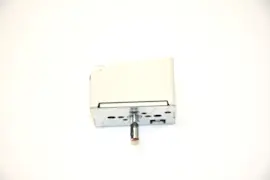
Owner’s manual
 Error Codes
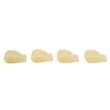


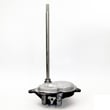
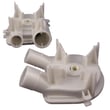
How to identify a Kenmore washer model?
To identify your Kenmore washer model, find the model and serial number plate on the washer cabinet and record the full model number exactly as shown (for this unit, it is 11022974101). We use that number to match the correct parts, diagrams, and troubleshooting info.
Where to look on Kenmore washers
Most Kenmore washers place the model and serial number plate in one of these common spots:
- On the back of the control panel
- Under the lid along the top rim of the cabinet (top-load models)
- On the side of the main cabinet near the bottom
- Behind the door or on the door jamb (front-load models)
For model 11022974101, the owner's manual refers to a “Model and Serial Number Plate” on the washer.
What to write down (and why)
Copy the information exactly as it appears on the plate:
- Full model number (example: 11022974101)
- Serial number
- Date of purchase (helpful for service history)
Why it matters
The model number narrows down the exact Kenmore design and production run; that prevents ordering a look-alike part that does not fit, such as a lid switch, drain pump, or agitator component.
Quick check: model number vs. serial number
| Item | What it tells us | Used for |
|---|---|---|
| Model number | The washer’s design and parts list | Correct replacement parts and diagrams |
| Serial number | The unit’s production identity | Service records and manufacturing details |
If the label is hard to read
- Wipe the plate gently with a damp cloth and mild soap
- Use a flashlight at an angle to make faint printing easier to see
- Take a close-up photo and zoom in
Last updated: February 2026
Is it worth repairing a Kenmore washing machine?
Yes, repairing a Kenmore washer is worth it when the fix restores reliable washing and spinning for less than the cost of replacing the machine. For Kenmore model 11022974101, many common failures involve serviceable parts (agitator, drain pump, lid switch, drive system) and can be cost-effective to repair using the 11022974101 owner's manual.
Quick way to decide (repair vs. replace)
Use these practical checkpoints before you spend money:
- Repair if the washer fills, drains, and the tub is solid, but it will not agitate or spin (often a coupling, clutch, or agitator issue).
- Repair if the problem is a single, known part such as a lid switch or drain pump.
- Replace if the tub is badly damaged, the cabinet is severely rusted, or multiple major systems have failed at once.
- Repair if the washer has been dependable and the issue is new, not recurring.
- Replace if repair cost is close to the price of a comparable new washer and you also need hoses, valves, or other add-ons.
Common repairs that are often worth it on this model
These are frequent, high-success repairs on direct-drive Kenmore top-load designs like 11022974101:
| Symptom | Likely area | Example part you may need |
|---|---|---|
| Won’t spin or agitate | Drive connection | Washer motor coupling 285753A |
| Won’t drain or drains slowly | Drain system | Washer drain pump WP3363394 |
| Agitates poorly, top of agitator “slips” | Agitator dogs | Agitator dog 80040 |
Why it matters
A targeted repair keeps a proven Kenmore washer running for years and avoids the learning curve and installation changes that come with a new machine. The manual for this washer also emphasizes proper loading and dispenser use, which helps prevent repeat problems and premature wear.
What we recommend before ordering parts
- Confirm the symptom (no drain, no spin, noisy spin, leaking, weak agitation).
- Unplug the washer and do a quick visual check for loose hoses, broken plastic, or oil leaks under the gearcase.
- Review the troubleshooting and operating guidance in the 11022974101 owner's manual.
- If the washer will not spin, check the lid switch function and the drive coupling first because they are common failure points.
Last updated: February 2026
What is the average lifespan of a Kenmore washer?
Most Kenmore washers last 10 to 15 years with normal household use and basic maintenance. For Kenmore model 11022974101, following the care, safety, and operating guidance in the owner's manual helps you get the most life out of the drive system, tub, and controls.
What affects washer lifespan most
- Load size and frequency (daily heavy loads shorten life)
- Overloading or consistently unbalanced loads
- Water quality (hard water and sediment increase wear)
- Detergent habits (too much detergent can cause buildup)
- Drain and spin health (slow draining strains the drive system)
Signs it is nearing end of life
Common “replace vs. repair” indicators on a top-load Kenmore like 11022974101 include:
- Loud grinding or oil-like residue under the washer (often gearcase related)
- Agitation problems (clothes not moving well, poor cleaning)
- Frequent no-spin or no-drain symptoms
- Repeated leaks from the tub area
- Multiple repairs needed within a short time
Quick symptom-to-part map (common on this design)
| Symptom | What it often points to | Example part for this model |
|---|---|---|
| Agitator moves poorly | Worn agitator dogs | Agitator dog 80040 |
| Won’t spin or agitates weakly | Drive coupling wear | Washer motor coupling 285753A |
| Won’t drain or drains slowly | Drain pump issue or blockage | Washer drain pump WP3363394 |
| Loud during spin, poor shifting | Clutch or gearcase wear | Clutch washer WP8299642 / gear case 3360629 |
How to extend the life of your Kenmore 11022974101
- Keep loads balanced; mix items and avoid washing single heavy pieces alone
- Use the correct amount of HE detergent (even in many top-load situations, less is better)
- Check pockets and use a garment bag for small items to reduce pump clogs
- Periodically run a hot cleaning cycle (or hot wash with no laundry) to reduce residue
- Address slow draining early; a struggling pump can cascade into bigger failures
Why it matters
A washer that is draining, agitating, and spinning correctly puts less stress on the motor, coupling, clutch, and gearcase. That reduces vibration, noise, and leak risk, which are the most common reasons older washers get replaced.
Last updated: February 2026