Installation guide
 Owner’s manual
 Error Codes



How wide is a 25.6 cubic foot refrigerator?
Most 25.6 cubic foot refrigerators are about 36 inches wide (often roughly 35 3/4 to 36 1/8 inches, depending on the brand and whether you measure with handles). For your Frigidaire FFHS2311LBLA side-by-side, confirm the exact cabinet and door-clearance dimensions in the FFHS2311LBLA installation guide.
Typical width you should plan for
A 25.6 cu. ft. capacity is commonly built on a standard 36-inch cabinet footprint, but the “real” space you need depends on what you measure.
- Cabinet width is usually closest to 36 inches
- Overall width with handles can be wider than the cabinet
- Door swing clearance can require extra side space beyond the width
- Leveling and tilt affect how doors close and seal
- Airflow clearances matter for cooling performance
Installation clearances that affect fit
For the FFHS2311LBLA, the installation guidance calls for small but important clearances for air circulation and hookups.
| What you are planning for | Typical planning value | What to use for FFHS2311LBLA |
|---|---|---|
| Refrigerator width (capacity class) | ~36 in. | Use the FFHS2311LBLA installation guide for exact width and “with handle” measurement |
| Side and top clearance | 3/8 in. | 3/8 in. recommended |
| Rear clearance | 1 in. | 1 in. recommended |
How we recommend measuring your opening
Measure before delivery so the refrigerator can be moved in and the doors can open fully.
- Measure the opening width at the front and back of the cutout
- Measure height to the lowest cabinet or trim point
- Measure depth to the front edge of counters (note handle depth separately)
- Confirm you can fully open both doors for drawers and freezer baskets
- Plan a path through doorways; if needed, follow the door-removal steps in the FFHS2311LBLA owner's manual
Why it matters
A refrigerator that is “36 inches wide” can still bind on cabinets if handles, door swing, or required clearances are ignored. Proper spacing also supports airflow, leveling, and a tight door seal, which helps prevent warm spots and frost.
Last updated: February 2026
What does CF mean on a Frigidaire refrigerator?
On a Frigidaire FFHS2311LBLA side-by-side refrigerator, CF indicates the electronic control system is detecting a performance or communication problem. In most cases, CF points to an issue with the user interface, wiring connections, or the main control board, and it can show up with temperature display problems.
What to do first (safe, quick checks)
- Power reset: Unplug the refrigerator (or switch off the breaker) for 5 minutes, then restore power.
- Confirm cooling settings: Make sure Fresh Food and Freezer controls are set to normal temperatures (not “0” or Off); see the FFHS2311LBLA owner's manual.
- Check for obvious door issues: Doors must seal fully and be level; poor sealing can cause abnormal operation and control warnings.
- Listen for normal operation: Some cycling and fan noise is normal; compare to the “normal operating sights and sounds” section in the manual.
- If the display is flashing or CF returns quickly: Plan on a deeper diagnosis of the control system.
Common causes of a CF code
CF is usually tied to the refrigerator’s electronic controls. These are the most common root causes:
| Likely cause | What you may notice | Typical fix |
|---|---|---|
| Loose or damaged wiring connection | CF comes and goes, display acts erratic | Reseat connectors, repair harness |
| User interface (control panel) issue | Buttons do not respond, CF persists | Replace UI if applicable |
| Main electronic control board problem | CF persists after reset, cooling may be unstable | Replace control board |
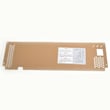
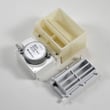
A common replacement part involved in control-related problems is the refrigerator electronic control A01078804.
Why it matters
When the control system cannot reliably read sensors or communicate between boards, the refrigerator may not maintain steady temperatures. That can lead to warm food in the fresh food section, soft ice, longer run times, or repeated warning codes.
When to stop and get service
- CF stays on after a reset and temperatures are rising
- The display is flashing and the unit is not responding to settings
- You see signs of overheating, burning odor, or repeated breaker trips
For model-specific control locations and access steps, follow the FFHS2311LBLA owner's manual and use the FFHS2311LBLA installation guide for leveling and door seal checks.
Last updated: February 2026
What is the most common problem with a Frigidaire refrigerator?
The most common issue we see on the Frigidaire FFHS2311LBLA side-by-side refrigerator is a cooling problem, often showing up as warm fresh food temperatures, frost or ice buildup, or inconsistent temperatures. These symptoms usually trace back to airflow, dirty condenser coils, or a defrost-related problem; the FFHS2311LBLA owner's manual outlines normal operation and common problem checks.
Most common symptoms customers report
- Freezer is cold but fresh food section is warm
- Frost or ice buildup on the freezer back wall
- Refrigerator runs a lot (compressor cycles frequently)
- Water or moisture collecting inside the refrigerator
- Ice maker or dispenser performance problems
Quick checks that solve many “cooling” complaints
- Confirm doors seal tightly: A poor door seal makes the unit run longer and struggle to hold temperature.
- Clean the condenser coils: A dirty condenser is a common cause of poor cooling and frequent cycling.
- Check for blocked airflow: Do not pack items against vents; cold air must circulate.
- Look for frost buildup: Heavy frost points to a defrost system issue (heater, thermostat, control).
- Verify controls are set correctly: After changes, allow 24 hours for temperatures to stabilize.
Parts commonly involved (when a repair is needed)
If the refrigerator is not moving cold air properly or is icing up, these parts are frequently involved on this model:
| Symptom | Common cause | Example part for FFHS2311LBLA |
|---|---|---|
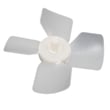
| Fresh food warm, freezer OK | Weak/no evaporator airflow | Refrigerator evaporator motor 242077705 |
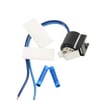
| Frost buildup, warming over time | Defrost system not clearing ice | Refrigerator defrost bi-metal thermostat 5303918214 |
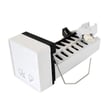
| Ice maker not producing ice | Ice maker module failure or water supply issue | Refrigerator ice maker 241798231 |
Why it matters
Cooling and airflow problems do more than warm food; they also force longer run times, increase frost and moisture, and can make the ice maker and water dispenser act up. Fixing the root cause (airflow, condenser cleaning, or defrost) restores stable temperatures and normal cycling.
For model-specific operating checks and “Solutions to common problems,” use the FFHS2311LBLA installation guide alongside the manual’s troubleshooting section.
Last updated: February 2026
How tall is a Frigidaire fridge in inches?
Most Frigidaire refrigerators measure about 65 to 71 inches tall depending on the style; for the exact overall height of your Frigidaire FFHS2311LBLA side-by-side (cabinet vs. hinge top), use the dimensions listed in the FFHS2311LBLA owner's manual and confirm with a quick tape measurement at home.
Typical height ranges (quick planning guide)
Use these ranges to estimate fit before you pull the refrigerator out to measure.
- Side-by-side: 65 to 71 in.
- French door: 68 to 71 in.
- Top-freezer: 60 to 67 in.
- Bottom-freezer: 67 to 70 in.
| Refrigerator style | Typical height (in.) | What changes the number most |
|---|---|---|
| Side-by-side | 65 to 71 | Hinge cover height, leveling legs |
| French door | 68 to 71 | Hinge height, counter-depth vs. standard |
| Top-freezer | 60 to 67 | Cabinet design, hinge height |
How we recommend measuring height (so you get the right number)
Measure in inches from the floor to the highest point.
- Measure floor to top of hinge/hinge cover (usually the tallest point)
- Measure floor to top of cabinet (often slightly shorter)
- Measure with the refrigerator leveled (leveling legs affect height)
- If you are checking a tight opening, measure the opening in multiple spots (floors and cabinets can be out of level)
Installation clearance basics
Clearance requirements vary by model and kitchen layout; follow the clearances listed in the FFHS2311LBLA installation guide so the refrigerator has proper airflow and the doors can open fully.
- Leave space for door swing so drawers and baskets can slide out
- Leave space behind for the water line and power cord
- Plan a path for moving the unit; doors can be removed if needed (per the guide)
Why it matters
A refrigerator that is too tall for the opening can’t be leveled correctly; that leads to poor door sealing, temperature swings, and ice maker or dispenser issues.
Last updated: February 2026