Installation guide
 Owner’s manual
 Error Codes


How many cubic feet is my Kenmore Elite refrigerator?
For Kenmore Elite refrigerator model 25344519607, the total capacity is about 30.6 cubic feet. Use the capacity spec in the 25344519607 owner's manual to confirm the exact listed volume for your specific configuration.
We recommend checking the model’s spec section because capacity can vary slightly by configuration and how the manufacturer measures usable space.
- Look for “Capacity” or “Total capacity” in the specifications section
- Check for separate “Refrigerator” and “Freezer” compartment volumes
- Compare the model number on the rating label to 25344519607
- If you see a suffix or revision on the label, match it in the manual
Capacity is the internal volume of the refrigerator and freezer compartments combined. It is a sizing spec, not a measure of how much food fits after shelves, bins, and the ice maker are installed.
| Spec term | What it usually represents | Where you’ll see it |
|---|---|---|
| Total capacity | Refrigerator + freezer volume | Specs section in the manual |
| Refrigerator capacity | Fresh food compartment only | Specs section |
| Freezer capacity | Freezer compartment only | Specs section |
Knowing the cubic feet helps when you are comparing replacement refrigerators, planning kitchen fit, or estimating storage space. It also helps when ordering accessories that depend on interior layout, such as a water filter.
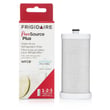
If you are also maintaining the water and ice system, the genuine Kenmore refrigerator water filter WFCB is the model-matched filter cartridge listed for this refrigerator family.
Last updated: January 2026
What are the common problems with Kenmore Elite refrigerators?
Common problems on the Kenmore Elite 25344519607 side-by-side refrigerator include warm temperatures (often airflow or control issues), frost buildup from defrost or door-seal problems, dispenser and ice maker troubles, and unusual noises from fans or moving ice parts. Use the 25344519607 owner's manual for model-specific operating and care steps.
- Not cooling or weak cooling: dirty condenser coils, blocked vents, failed evaporator fan blade, or a temperature sensor/control issue
- Frost buildup or ice on the back wall: defrost system trouble (thermostat/heater), door left ajar, or a leaking door gasket
- Water leaking or puddles: clogged defrost drain, cracked drain trough, or a loose water line connection
- Ice maker not making ice: low water pressure, frozen fill tube, or ice maker component failure
- Dispenser issues (no water, no ice, slow dispense): clogged filter, air in the line, frozen reservoir/line, or dispenser door not sealing
- Noises (buzzing, clicking, rattling): fan blade hitting ice, ice chute door not closing, or normal ice maker cycling sounds
- Confirm controls are set to cool; turning controls to “off” stops cooling but does not disconnect power (unplug to fully remove power).
- Clean condenser coils and make sure vents inside are not blocked by food packages.
- Check doors close tightly; look for gaps, torn gasket areas, or a door that sits low.
- If the dispenser is slow, replace the filter and flush the system for about 3 minutes after installation.
- Never chip ice with sharp tools in the bin or chute; it can damage the dispenser mechanism.
| Symptom | Part that often relates | Example part for this model |
|---|---|---|
| Slow water, bad taste/odor, dispenser issues | Water filter | Genuine Kenmore refrigerator water filter WFCB |
| Frost buildup, warm freezer | Defrost thermostat | Refrigerator defrost bi-metal thermostat 5303918214 |
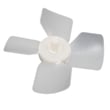
| Warm temps, noisy airflow | Evaporator fan blade | Refrigerator evaporator fan blade 5308000010 |
| Temps swing, intermittent cooling | Temperature sensor | Refrigerator temperature sensor 240597220 |
| Ice clumping, warm air at dispenser | Ice chute door/seal | Refrigerator dispenser ice chute door seal 241688701 |
Catching airflow, defrost, and water-filtration issues early helps protect food temperatures, reduces frost and leaks, and prevents extra strain on the sealed refrigeration system.
Last updated: January 2026
What is the average lifespan of a Kenmore Elite refrigerator?
Most Kenmore Elite refrigerators, including model 25344519607, typically last 10 to 15 years. With consistent maintenance (good airflow, clean seals, stable temperatures), it’s common to reach the upper end of that range before major sealed-system or control issues become costlier than repair.
- Condenser airflow and cleanliness (dust buildup makes the compressor work harder)
- Door gasket condition (warm air leaks increase run time and frost)
- Stable power and proper grounding (avoid nuisance shutoffs; use a grounded outlet)
- Ice and water system upkeep (filters, leaks, dispenser components)
- How full and how often doors are opened (more openings equals more load)
Use the care and safety guidance in the 25344519607 owner's manual and focus on these habits:
- Keep vents inside the fresh food and freezer sections unblocked
- Clean door gaskets and confirm doors close firmly
- Replace the water filter on schedule; a restricted filter can reduce water flow and strain the system
- Keep the unit level so doors self-close and seals stay tight
- Avoid using sharp tools to break ice in the bin or chute (it can damage dispenser parts)
| Symptom | Often involved system | Typical decision point |
|---|---|---|
| Not cooling in either section | Sealed refrigeration system | Repair can be high-cost; compare to unit age |
| Warmer temps, fan noise | Airflow/evaporator fan area | Often worth repairing |
| Ice dispensing issues | Dispenser door, auger, chute | Often worth repairing |
| Slow water dispensing | Filter or water supply | Usually simple maintenance |
A refrigerator’s lifespan is mostly about compressor run time and moisture control. When seals leak, coils are dirty, or filters clog, the refrigerator runs longer, builds more frost, and wears key components faster.
Last updated: January 2026