Installation guide
 Owner’s manual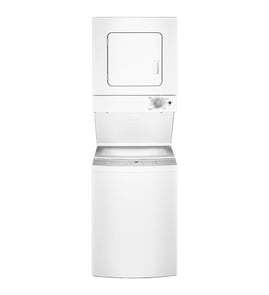


Can I look up Frigidaire parts by model number?
Yes. For your Frigidaire front-loading laundry center model GLEH1642DS1, looking up parts by the full model number is the most accurate way to match diagrams and order the correct replacement parts for the washer and dryer sections.
How to look up parts by model number
- Use the complete model number exactly as shown on the appliance data plate.
- On GLEH1642DS1, the model and serial plate is located inside the dryer door.
- Match the part by description and ID, then confirm it fits your exact model.
- If multiple versions appear, choose the one that matches your model’s series and configuration.
Common parts people search for on this model
These are examples of parts listed for GLEH1642DS1 that customers often need:
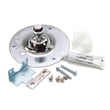
- Dryer drum belt 137292700
- Dryer idler assembly 5304507499
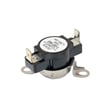
- Dryer thermal limiter 134120900
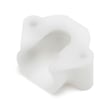
- Electrolux washer door strike 131763302
- Level shock 5304485917
Quick checklist to avoid ordering the wrong part
- Confirm the model number: GLEH1642DS1 (not a similar-looking number).
- Compare the part name and part ID, not just the photo.
- Check whether the issue is in the washer section or dryer section.
- Review any notes in the parts list (for example, “replaces” or “substitute”).
- Use the diagrams to verify where the part installs.
What you will typically see in a model-based parts lookup
| What you are doing | Why it helps |
|---|---|
| Searching by model number | Filters to parts designed to fit your exact laundry center |
| Using diagrams | Confirms location and related hardware |
| Matching part ID and description | Reduces mix-ups between similar parts |
Why it matters
Laundry centers share many similar-looking components across model families. Using the full model number keeps you aligned with the correct Frigidaire design, which helps prevent fit issues, repeat repairs, and return delays. For additional model-specific operation and identification details, use the GLEH1642DS1 owner's manual.
Last updated: February 2026
How to take off the front panel of a Frigidaire washer?
On the Frigidaire GLEH1642DS1 front-loading laundry center, you remove the washer’s front service panel by taking out the panel screws, then lifting the panel up and off the cabinet tabs. This gives access to items like the rear leveling leg adjustment.
Before you start
- Unplug the laundry center (or switch off power at the breaker).
- Turn off water supply valves if you will be moving the unit.
- Have a nut driver or screwdriver ready (panel screws are typically hex-head or Phillips).
- Protect the floor; the unit is heavy and can scratch flooring.
- Use two people if you need to tip or reposition the laundry center.
Steps to remove the washer front service panel
- Make sure the unit is stable and not rocking.
- Locate the washer front service panel at the lower front of the washer section.
- Remove the screws securing the service panel.
- Lift the panel upward until the tabs disengage from the cabinet.
- Pull the panel away and set it aside.
What you can do once the panel is off
Removing the service panel is mainly for access, not cosmetic disassembly. Common tasks include:
- Adjusting the rear leveling leg (access is through the front service panel)
- Checking for leaks at the drain hose connection area
- Inspecting for vibration causes (loose hardware, leg lock nuts)
Quick reference: washer vs. dryer front panels
| Panel you’re removing | Where it is | Typical purpose |
|---|---|---|
| Washer front service panel | Lower front of washer section | Leveling access, inspection |
| Dryer front access panel | Lower front of dryer section | Service access to dryer components |
Why it matters
If the laundry center is not level, it can vibrate excessively and walk during spin. The installation instructions note that rear leg adjustment is accessible through the washer’s front service panel, so removing it is a key step for stabilizing the unit.
For diagrams and the exact panel location for your unit, use the installation guide.
Last updated: February 2026
Why is my Frigidaire dryer not drying clothes?
For the Frigidaire GLEH1642DS1 stacked laundry center, the most common reason clothes stay damp is restricted airflow (lint screen, exhaust duct, or outside vent hood). A dryer that tumbles but dries slowly can also have a heat-limiting safety device tripping from overheating.
Quick checks that fix most “not drying” complaints
- Clean the lint screen before or after every load (a blocked screen can cause overheating and long dry times).
- Confirm the dryer exhausts outdoors; indoor venting can cause lint buildup and poor drying.
- Replace any plastic or foil flex duct with rigid or flexible metal duct.
- Check the vent hose behind the unit for kinks, crushing, or sagging.
- Inspect the outside vent hood for a stuck flap, lint clog, or bird screen blockage.
- Avoid overloading; heavy loads restrict tumbling and airflow.
Airflow and venting requirements to verify
Your installation should follow the venting limits in the installation guide. Keep bends and length under the allowed maximums because restricted airflow increases drying time and can make the cabinet feel hot.
| What you see | Likely cause | What to do |
|---|---|---|
| Long dry times, little lint on screen | Vent restriction downstream | Clear duct and outside hood; switch to metal duct |
| Dryer feels very hot or smells hot | Airflow restricted or cycling issue | Clean venting; stop use if overheating continues |
| Drum turns but heat seems weak | Power/heat supply issue or safety device tripped | Check house fuses/breaker; verify correct supply |
Parts that commonly relate to poor drying or overheating
If airflow is good and drying is still poor, these model-related dryer safety parts are common suspects:
- Dryer thermal limiter 134120900 (can open if the dryer overheats)
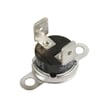
- Kelvinator dryer high-limit thermostat 3204267 (helps prevent overheating)
Why it matters
The manual and installation instructions warn that lint buildup and restricted exhaust airflow can cause excessive drying times and create a fire hazard. Keeping the lint screen and exhaust duct clear protects drying performance and helps prevent overheating.
Last updated: February 2026
What parts do I need for a washer and dryer?
For a Frigidaire GLEH1642DS1 front-loading laundry center, the “parts you need” depends on whether you are installing the unit (hoses, venting, power, gas hookup) or repairing it (belts, thermostats, door latch parts). Use the installation guide to match the correct hookups and clearances for your setup.
Installation parts and supplies you typically need
These are the common items most homes need to connect a stacked laundry center safely and correctly:
- Washer water inlet hoses (hot and cold) and the correct faucet adapters if needed
- Washer drain hose setup for a laundry tub or standpipe (secure it and keep an air gap)
- Dryer exhaust duct to the outside plus duct tape to seal joints
- Vent clamps (as needed for your duct style)
- Dryer power cord (matched to your outlet type)
- If you have a gas dryer: approved gas connector and thread sealer rated for gas connections
Repair parts you might need (common wear items)
If the unit runs but has noise, poor tumbling, or door issues, these model-matched parts are common fixes:
- Squealing or no tumble: dryer drum belt 137292700, dryer idler assembly 5304507499
- Rumbling or scraping: dryer drum bearing 131825900, dryer drum glide 137513300
- Overheating or no heat symptoms: kelvinator dryer high-limit thermostat 3204267, dryer thermal limiter 134120900
- Washer door not latching: door catch 131763256, electrolux washer door strike 131763302
Quick match guide
| What you are doing | What you usually need | Where to confirm |
|---|---|---|
| New install or moving the unit | Hoses, drain setup, vent ducting, power, gas connector (if gas) | Installation guide |
| Dryer not tumbling | Belt, idler | Parts list for GLEH1642DS1 |
| Dryer noisy | Drum bearing, glides, felt | Parts list for GLEH1642DS1 |
| Dryer overheats | High-limit thermostat, thermal limiter (after fixing airflow) | Parts list for GLEH1642DS1 |
Why it matters
Correct venting, drain-hose routing, and proper electrical grounding help prevent siphoning, poor drying, and unsafe operation. For gas models, leak testing with a soapy water solution (not an open flame) is a critical final step after connections are made.
Last updated: February 2026