Owner’s manual
 Error Codes


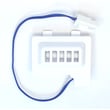
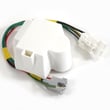
How many cubic feet is my Kenmore refrigerator by model number?
For Kenmore Elite bottom-mount refrigerator model 79572069211, the most accurate way to get cubic feet (total capacity) is to look up the specifications in the 79572069211 owner's manual or on the refrigerator’s rating label inside the fresh food section. That gives the exact capacity for your specific configuration.
Fast ways to find the exact cubic feet
Use these options in order; they are the quickest and most reliable for this model.
- Check the rating label inside the refrigerator compartment (often on a side wall near the crisper area); it commonly lists total capacity and sometimes separate fridge and freezer capacities.
- Look in the specifications section of the 79572069211 owner's manual.
- If you are comparing parts or storage accessories, confirm the full model number matches exactly (79572069211) before using any capacity you find.
- If the label is missing or unreadable, use the model number to match the correct documentation and parts diagrams for your unit.
What the model number tells you (and what it does not)
Kenmore model numbers can hint at the platform and series, but they do not reliably encode the exact cubic feet in a way that is consistent across all versions.
| Source | What you get | Accuracy for cubic feet |
|---|---|---|
| Rating label inside the fridge | Exact capacity for your unit | Highest |
| Owner’s manual specs | Exact capacity for the model | High |
| Online model lookups and listings | Often close, sometimes varies by revision | Medium |
Why it matters
Cubic feet affects how you organize food, but it also impacts which shelves, bins, and drawers fit correctly. When ordering storage parts for model 79572069211, matching the model number and the part ID prevents fit issues.
If you are replacing common fit-related items, we list model-matched options such as the Kenmore refrigerator door bin AAP73252302.
Last updated: February 2026
What is the average lifespan of a Kenmore Elite refrigerator?
A Kenmore Elite refrigerator like model 79572069211 typically lasts 12 to 15 years. Keeping airflow clear around the condenser area, cleaning coils, and fixing cooling or ice maker issues early helps you reach (and often exceed) that normal service life; see the owner's manual for model-specific care guidance.
What affects lifespan the most
Several common factors determine whether your refrigerator lands closer to 12 years or closer to 15 years.
- Condenser coil cleanliness (dust and pet hair raise compressor workload)
- Ventilation (blocked grille or tight cabinet cutouts trap heat)
- Door seal habits (frequent warm-air leaks increase run time)
- Water and ice system upkeep (filter changes reduce restrictions and leaks)
- Fast response to symptoms (warm temps, loud fan noise, frost buildup)
Maintenance schedule we recommend
Use this simple cadence to protect the compressor, evaporator, and airflow system.
| Task | Typical frequency | What it helps prevent |
|---|---|---|
| Vacuum/brush condenser area | Every 6 to 12 months | Overheating, long run times |
| Replace water filter | About every 6 months | Slow dispensing, off taste, valve strain |
| Check door closing and gaskets | Monthly | Frost, temperature swings |
| Confirm temps (37°F fresh food, 0°F freezer) | Monthly | Food spoilage, ice melt |
Parts that commonly support long life
If performance drops, replacing the right part early often prevents bigger failures.
- Refrigerator condenser coil ACG73645004 if coils are damaged or cannot be cleaned effectively
- Refrigerator water filter 9690 AGF80300801 to keep water flow steady and reduce restriction
- Refrigerator door switch 6600JB1010A if the light stays on or the fan behavior changes with the door
- Refrigerator defrost sensor assembly 6615JB2005R if you see recurring frost buildup or defrost problems
Why it matters
A refrigerator that runs hot, runs constantly, or has restricted airflow puts extra stress on the compressor and sealed system. Basic cleaning and timely part replacement help stabilize temperatures, reduce energy use, and extend the usable life of your Kenmore Elite bottom-mount refrigerator.
Last updated: February 2026
Where to find model number on Kenmore Elite refrigerator?
On a Kenmore Elite bottom-mount refrigerator like model 79572069211, the model number is printed on the appliance’s rating label, typically inside the fresh food (upper) compartment on a side wall near the crisper drawers. Check your owner's manual for the exact label location and a diagram.
Common model number label locations
Look in these spots first (in order):
- Inside the refrigerator section on the left or right side wall, near the crisper drawers
- On the ceiling of the fresh food compartment (near the light housing)
- On the door frame (hinge side) when you open the refrigerator door
- Behind the lower crisper drawer area (on the liner wall)
- Behind the toe grille or kickplate at the bottom front
What the label looks like (and what to copy)
The rating label usually includes several identifiers. For parts lookup, we recommend copying:
- Model number (for example, 79572069211)
- Serial number (helps confirm production run)
- Electrical ratings (volts/amps) if you are troubleshooting a control or compressor issue
Why it matters for parts and repairs
Kenmore Elite refrigerators often have multiple versions that look similar. Using the exact model number helps us match the correct diagrams and parts, such as a water filter, door switch, or ice maker assembly, so the replacement fits and connects correctly.
Quick checklist
| If you see… | Do this |
|---|---|
| Several numbers that start with 795 | Use the full model number string, not a partial |
| A worn or smudged label | Take a clear photo and zoom in to confirm characters |
| A label behind a drawer | Remove the drawer fully and use a flashlight |
Last updated: February 2026
What are the common problems with Kenmore Elite refrigerators?
Common problems we see on the Kenmore Elite 79572069211 bottom-mount refrigerator include cooling issues (warm fridge or freezer), ice maker and dispenser failures, water leaks, and control or sensor problems. Many symptoms trace back to the sealed system (compressor, evaporator, condenser), airflow components, or the electronic control board; see the owner's manual for model-specific checks.
Most common symptoms (and what they usually point to)
- Not cooling or weak cooling: compressor or sealed-system issue, dirty condenser area, airflow restriction
- Ice maker not making ice: ice maker assembly problem, water supply issue, frozen fill path
- Ice dispenser not dispensing: auger motor or chute door problem, ice clumping
- Water leaking: clogged/iced drain path, drain tube issue
- Lights or door alarm acting up: door switch not closing consistently
- Frost buildup: defrost sensor or defrost system problem
Quick checks we recommend before replacing parts
- Confirm temperatures: set freezer near 0°F and fresh food near 37°F.
- Make sure doors seal fully and bins are not holding the door open.
- Clean dust from the condenser area and verify the grille area is not blocked.
- If the ice maker is slow, replace the water filter and purge air from the water line.
- If you see water under the crisper or in the freezer, inspect the drain path for ice.
Parts that commonly solve these problems on model 79572069211
| Symptom | Likely part area | Example part on this model |
|---|---|---|
| Warm temps | Sealed system | Refrigerator compressor TCA38091801 |
| Warm temps, poor heat rejection | Condenser | Refrigerator condenser coil ACG73645004 |
| Frost buildup | Defrost sensing | Refrigerator defrost sensor assembly 6615JB2005R |
| No ice | Ice maker | Refrigerator ice maker assembly AEQ73110205 |
| Water taste/flow issues | Filtration | Genuine Kenmore refrigerator water filter 9690 AGF80300801 |
| Lights/alarm issues | Door sensing | Refrigerator door switch 6600JB1010A |
Why it matters
A refrigerator can show the same symptom for different reasons. For example, “not cooling” can be a compressor problem, an airflow problem, or a sensor/control issue. Matching the symptom to the right system helps you avoid replacing the wrong part.
Last updated: February 2026
Why is my Kenmore Elite refrigerator leaking from the bottom?
A bottom leak on your Kenmore Elite refrigerator model 79572069211 is usually caused by a defrost drain that is clogged and overflowing into the base, or a water supply or dispenser line that is seeping and running down to the bottom pan. Use the owner's manual to locate access panels and confirm the correct cleaning steps.
Quick checks that solve most bottom leaks
- Look for a sheet of ice or standing water on the freezer floor (common with a clogged defrost drain).
- Check the drain tube at the back for kinks, blockage, or a loose connection.
- Inspect the water filter area and housing for drips after dispensing water.
- Check the water supply line connection behind the refrigerator for slow seepage.
- Verify the doors close fully; warm air intrusion can increase defrost water and overflow.
Most common causes and what to do
| What you see | Most likely cause | What we recommend |
|---|---|---|
| Water under crisper drawers or pooling inside | Defrost drain partially clogged | Clear the drain path with hot water and remove debris; then confirm water flows to the drain pan |
| Water on the floor near the front | Dispenser tubing or filter area leaking | Reseat the filter and inspect connections; replace the filter if the seal is damaged |
| Water appears after ice maker fills | Ice maker fill tube or supply connection leaking | Check for cracks, loose fittings, or ice buildup that redirects water |
| Leak seems worse in humid weather | Excess condensation and heavy defrosting | Confirm door gaskets seal and reduce door-open time |
Parts that are often involved
These are common leak-related parts we see on this model when the issue is tied to the water system:
- Genuine Kenmore refrigerator water filter 9690 AGF80300801 (replace if it will not seal or is cracked)
- Refrigerator drain tube 5251JA3003D (replace if brittle, split, or not draining properly)
Why it matters
Water collecting in the bottom can lead to ice buildup, odors, and repeated leaking. Fixing the root cause (drain restriction versus water line seepage) prevents damage to flooring and helps the refrigerator maintain stable temperatures.
Last updated: February 2026