Installation guide
 Owner’s manual
 Error Codes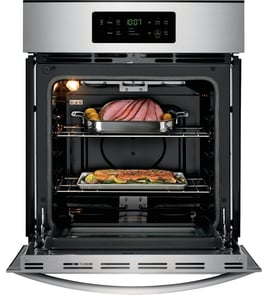


Are wall ovens a standard size?
Yes, wall ovens are built around a few common “standard” cabinet cutout sizes, but the exact cutout dimensions still vary by model. For Kenmore Elite wall oven model 79048129801, the installation requirements cover 27-inch and 30-inch single-oven cutouts, so you should match your cabinet opening to the specified cutout measurements in the installation guide.
Most single electric wall ovens are designed to fit one of these cabinet widths:
- 24-inch (less common in many kitchens)
- 27-inch
- 30-inch
Even when the width is “standard,” the cutout height and depth can differ, and those dimensions determine whether the oven trim sits flush and the oven centers correctly.
The installation instructions for this Kenmore Elite wall oven call out key fit and safety details that matter as much as width:
- Cutout depth is critical for proper installation and trim fit
- Do not remove spacers (if equipped); they help center the oven to prevent excess heat buildup
- Allow at least 21 inches of clearance in front of the oven for the door when open
- Cabinet base support requirements vary by size (27-inch vs 30-inch)
| What you’re checking | What “standard” means | What to do for 79048129801 |
|---|---|---|
| Width | Usually 27 or 30 inches | Confirm whether your cabinet is a 27-inch or 30-inch cutout |
| Height | Varies by model and trim | Verify the cutout height range in the install specs |
| Depth | Often the deal-breaker | Confirm the required cutout depth so trim sits correctly |
A wall oven that is “close” to standard can still install poorly. Incorrect cutout depth or missing spacers can cause the oven to sit off-center, create heat buildup around cabinetry, and lead to noisy operation on convection models.
Last updated: January 2026
Are electric wall ovens 110 or 220?
Kenmore Elite electric wall ovens like model 79048129801 are typically wired for 208/240 volts (often called “220V”), not standard 110/120V plug-in power. The installation instructions for this type of built-in oven call out a 208/240-volt junction connection rather than a regular outlet.
- Most electric built-in wall ovens use a hardwired junction box connection.
- The circuit is commonly 208/240V with a dedicated breaker.
- A standard 120V outlet is not used to power the heating elements.
- Wire size and breaker size must match the oven’s electrical rating.
- If you are replacing an older oven, confirm the existing supply is correct before installation.
The most reliable place to confirm the required voltage, amperage, and wiring method for your exact unit is the documentation for 79048129801:
- Check the electrical connection section in the installation guide.
- For model identification details (helpful when ordering parts or verifying specs), use the 79048129801 owner's manual to locate the serial plate.
| Item | 120V (110V) circuit | 208/240V (220V) circuit |
|---|---|---|
| Typical use | Small appliances, gas oven controls | Electric wall ovens, electric ranges |
| Connection style | Plug and outlet | Junction box (hardwired) |
| Heating capability | Limited | Designed for high-wattage heating |
Using the correct voltage and a properly sized circuit helps your wall oven heat correctly, prevents nuisance breaker trips, and reduces the risk of wiring damage during baking, broiling, or self-clean cycles.
Last updated: January 2026
What is the best electric wall oven to buy?
If you’re shopping for a new electric wall oven, the “best” choice is the one that fits your cabinet cutout, electrical supply (typically 208/240V), and cooking needs (single vs. double oven, convection, self-clean). If you already own Kenmore Elite model 79048129801, keeping it running with the right parts and setup often delivers the best value.
- Fit first: Confirm the cabinet cutout and support requirements before you buy.
- Power compatibility: Verify your home wiring matches the oven’s electrical requirements.
- Cooking features: Decide if you want convection, self-clean, and a double cavity.
- Controls and usability: Look for clear electronic controls and a timer/clock you will actually use.
- Serviceability: Choose a model with readily available replacement parts.
| Priority | What to look for | Best for |
|---|---|---|
| Fit and install | Correct cutout, proper mounting brackets | Avoiding returns and install delays |
| Performance | Convection fan, stable temperature control | Even baking and roasting |
| Reliability | Proven design, available parts | Long-term ownership |
| Features | Self-clean, double oven | High-volume cooking |
For this Kenmore Elite wall oven, common “keep it cooking” repairs include restoring heat, fixing temperature accuracy, and replacing the oven light.
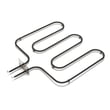
- If baking is weak or uneven, the bake element is a common suspect: frigidaire range bake element 318254902
- If temperatures seem off, the sensor is a frequent cause: frigidaire range oven temperature sensor 316217002
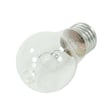
- If the oven light is out, start with the bulb: range oven light bulb 316538904
Wall ovens are built-in appliances; the wrong size or install approach can create expensive rework. Using the correct installation steps and maintaining key heating and sensing parts helps protect performance and extend the oven’s useful life.
For installation and fit guidance specific to this model, use the installation guide.
Last updated: January 2026
Can a 30 inch wall oven fit in a 30 inch cabinet?
Yes. A “30-inch” Kenmore Elite wall oven such as model 79048129801 is designed to fit a properly sized 30-inch cabinet cutout, but the cabinet opening is not a full 30 inches wide. Use the exact cutout dimensions and clearances in the 79048129801 installation guide before installing.
For a 30-inch single wall oven installation, the guide shows a cutout width of 28 1/2 inches (72.4 cm) and a minimum cutout height of 30 1/8 inches (76.5 cm).
- Measure the cutout width inside the opening (left to right)
- Measure the cutout height inside the opening (top to bottom)
- Confirm the cutout depth called out in the guide (depth affects whether trim sits flush)
- Keep required spacing and any side/back spacers in place (they help center the oven)
- Verify the cabinet base can support the oven’s weight and stays level
| What you are measuring | What to compare it to |
|---|---|
| Cutout width | 28 1/2 in (for 30-inch single wall oven cutout) |
| Cutout height (minimum) | 30 1/8 in min |
| Cutout depth | The specified cutout depth in the installation instructions |
“30-inch” is a nominal size. The oven’s decorative trim overlaps the cabinet face, so the rough opening is smaller than 30 inches. The correct cutout lets the oven slide in, center properly, and vent heat as designed.
If the cutout is too narrow, too short, or too shallow, the oven can bind during installation, the trim may not sit flush, and heat can build up around the cabinet opening.
Last updated: January 2026